
Slippery When Wet at 40: The Album Bon Jovi Almost Got Wrong
Forty years ago today, a New Jersey band put out a record with a garbage bag on the cover, and the 80s bent around it.
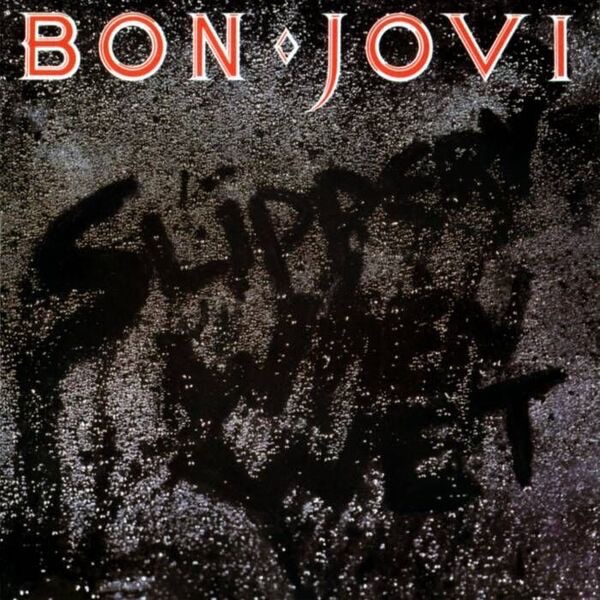
Slippery When Wet was released on August 18, 1986 by Mercury Records, and today is its 40th anniversary. You know how this one ends. Two number one singles, a decade rearranged, and a chorus that still empties the bar into the aisle at last call. What is easy to forget is how close it came to being a different record entirely. The song everyone knows almost did not make it. The cover everyone pictures was a panic replacement. And the title on the tape boxes for most of the sessions was not Slippery When Wet at all.
Where Bon Jovi actually stood in early 1986
Not where you think. Two albums in, they were a band with one real hit.
The 1985 record 7800 Fahrenheit had done moderate business without making anybody a superstar. Writing for Observer on the album’s 30th anniversary, Bryan Reesman put the problem plainly: the only bona fide hit across those first two albums was “Runaway.” The band could fill a set. They could not fill an arena.
So they changed the machinery. They brought in Desmond Child as a co-writer, a connection that came through members of Kiss, and the first session at Richie Sambora’s childhood home produced “You Give Love a Bad Name” on the spot. Then they did something no band with an ego does: they wrote roughly 30 songs and auditioned them for local New Jersey and New York teenagers, and let those kids’ opinions set the album’s running order.
Here is the part that makes the whole thing funnier. “You Give Love a Bad Name” was not new. Child had written that chorus once already, for Bonnie Tyler, as a song called “If You Were a Woman (And I Was a Man),” commissioned by her producer Jim Steinman. It underperformed. So Child took the tune back, rewrote it with Jon Bon Jovi and Sambora, and turned a flop into the number one record in America.
The song Jon Bon Jovi did not want on the album
“Livin’ on a Prayer.” The signature song. The one that outlived the band’s own haircuts.
He did not think it was good enough. Sambora argued him out of it, and the band went back and cut it again, rebuilt with a new bassline, different drum fills, and Sambora running the main riff through a talk box, which is the sound you have been imitating badly at parties since the Reagan administration. The original version they were going to leave behind eventually surfaced as a hidden track on a box set.
Think about the margin there. One guitar player in one argument is the entire reason that song exists in the form the world knows.
The cover you picture is not the cover they made
The album was supposed to be called Wanted Dead or Alive, with the band photographed in full cowboy regalia. That got scrapped. Those cowboy photos did not go to waste, though: they turned up later on the single sleeve for the song of the same name.
What replaced it was not the garbage bag either. Photographer Mark Weiss shot a cover of a woman in a wet yellow T-shirt with the album title across the front. That is the version the band submitted, and per Observer it was killed for America and Europe at the 11th hour. The reasons on record: label fears that the dominant record store chains of the day would simply refuse to stock it, plus Jon Bon Jovi’s own dislike of the bright pink border around the photo.
Sambora, quoted in the album’s entry: “Our label freaked out a bit when they saw what we’d done. They thought it would be banned by American stores…”
So somebody wrote the title in water on a black garbage bag and shot that instead. Sambora’s own verdict on the result was “So simple, and not very impressive.” Japan got the T-shirt. America got the trash bag, and the trash bag sold to the moon.
As for the name itself, it came from a Vancouver strip club called the No. 5 Orange, which the band visited while recording. There is your 1986 in one sentence.
What the charts actually did, week by week
This is the part that gets repeated loosely, so here it is off Billboard’s own dated charts.
Slippery When Wet entered the Billboard 200 at number 45 on the chart dated September 13, 1986. It first reached number one on the chart dated October 25, 1986. Wikipedia’s entry counts eight weeks at the top in total, and it was not a clean run: on the chart dated November 29, 1986, the album is sitting at number 3, behind a Bruce Springsteen live box that had just debuted at number one and Boston’s Third Stage, with Huey Lewis and the News at number 4. Billboard’s page for that week lists the album’s RIAA certification as Diamond.
The singles are better. “You Give Love a Bad Name” entered the Hot 100 at number 93 on September 6, 1986, and hit number one on the chart dated November 29, 1986, its thirteenth week on. The record it knocked off the top was “Human” by The Human League.
Then “Livin’ on a Prayer” entered at number 83 on December 13, 1986 and took number one on the chart dated February 14, 1987, climbing from number 3 the week before. The record it displaced was Madonna‘s “Open Your Heart.”
Read that sequence again, because the order matters and almost everybody gets it backwards. The album was number one in America a month before the single was. This band did not get carried up the charts by a hit. They put out a record that sold on its own, and the singles caught up afterward. “Wanted Dead or Alive,” the third single, went to number 7.
That was the summer and fall of 1986, and it was ours too. Bobby had been on the air at the Dance Party USA studio since 1985 and Jason came on as a regular in 1986, so this record broke while we were in the studio every week watching what the crowd did when a song landed. You could feel a song like “Livin’ on a Prayer” coming across a room before anybody could tell you why.
Little Mountain Sound, and the man who made it sound like that
The whole thing was cut between January and July 1986 at Little Mountain Sound Studios in Vancouver, which is a long way from New Jersey and exactly the point.
The producer was Bruce Fairbairn. Jon Bon Jovi went looking for him after hearing what Fairbairn had done with the sound quality on a 1985 Black ‘n Blue record, and Fairbairn brought his protege Bob Rock in to mix. If those two names look like the entire back half of the decade to you, that is because they nearly were. Fairbairn’s client list runs Loverboy, Blue Oyster Cult, Poison, Aerosmith, AC/DC, Scorpions, Van Halen, Kiss and Yes. Bob Rock went on to produce Motley Crue and Metallica.
Fairbairn’s very next major job after this one was Aerosmith’s Permanent Vacation, and Steven Tyler’s line about him is that he “helped relight the fire under Aerosmith.” Producers who worked nearby heard it immediately. Kevin Shirley, who later engineered for the band: “I dug the sound of it, I dug the energy of the songs, I dug the energy of the mix and the sonics.” His summary of hearing it in 1987 was “I hadn’t heard anything like it.”
Fairbairn kept working until he died in Vancouver in May 1999, at 49. He is not a household name, and half your favorite records from that stretch have his fingerprints on the drums.
Jon Bon Jovi’s own account of what Vancouver did for them, given to Q magazine in 2007, is short and telling. It was, he said, “the first time, we were allowed to be us in the studio.”
What it did to every band on the Strip
Before this record, the formula had exactly one proven winner. Reesman’s line in Observer: “Other than Def Leppard with the guitar-heavy Pyromania, no one had achieved monster success with the formula.”
Bon Jovi proved it twice over, and the industry did what the industry does. They toured behind it forever, opening for Judas Priest, .38 Special and Queensryche before headlining an eight-month North American run with Cinderella in support, a band Jon had helped land a deal at his own label. By the end of 1987 Slippery When Wet was the best-selling album of the year.
Then the gold rush. Per Observer, radio opened up to this style of music in 1987, and “a second, more peroxide laden, and more international wave of hair bands infiltrated pop culture, for better or worse.” Whitesnake sanded off the raunch and came back with cleaner-looking players and radio-shaped songs. Great White leaned Zeppelin. Def Leppard went glossier still and sold millions with Hysteria. The rest of the Strip, Ratt included, adjusted or got left.
Reesman’s summary of the whole run: “Until the fall of 1991 when grunge began to take over, glam bands, many inspired by Bon Jovi, stormed the charts, most of them today reduced to musical footnotes.” If you want to know where all those bands went, we track them in the where-are-they-now file.
The published verdict on the record itself is about as blunt as music writing gets. The album’s entry carries two characterizations from print: that it turned heavy metal into a radio-friendly pop format, sourced to a 2011 academic survey of 1980s music, and that it was a breakthrough for hair metal, sourced to Reesman’s Observer piece. Both are ways of saying the same thing. Bon Jovi took a genre that had been selling danger and figured out how to sell it on the radio at noon.
What is actually out for the anniversary
Here is where we do the thing most anniversary posts do not, which is check.
There is a Slippery When Wet Deluxe Edition, and it is genuinely good. It carries an acoustic version of “Wanted Dead or Alive” that collectors chased for years, four live recordings from the 1987 Slippery When Wet Tour including two never heard before, and unreleased mixes of “Livin’ on a Prayer” and “Raise Your Hands.” The live material includes “Wanted Dead or Alive” from Cobo Arena in Detroit on March 11, 1987, and a “Let It Rock” from Nassau Coliseum. It came in a stack of physical formats too, among them a liquid-filled vinyl disc capped at 1,300 copies, a picture disc limited to 1,500, and a run of 500 cassettes.
The dates matter, though. That reissue was announced on January 7, 2025 and released on February 28, and Rock Cellar Magazine ran its “out now” piece on March 4, 2025. It is a reissue that exists and is worth your money. It is not a 40th anniversary campaign timed to this week, and as of today the band’s own site is not running anniversary news. If something new lands for the actual anniversary, it lands after this was written.
Forty years later
Here is where we land. Slippery When Wet is not a deep record and was never trying to be. It is ten songs, five a side, built by a band that had just figured out it was allowed to want this, cut by a producer who knew how to make a snare drum sound like a door slamming in a stadium.
What makes it hold up is the margin of error running all the way through it. A chorus rescued from a Bonnie Tyler flop. A signature song that got argued back onto the tracklist. A cover killed at the last minute. A title borrowed from a strip club in a city nobody in the band was from. None of that reads like a plan. It reads like five guys and a producer getting a lot of small calls right in a row, in Vancouver, in the first half of 1986.
Play it front to back tonight. Not the greatest hits version, the album, in order, the order those Jersey and New York teenagers picked. It is the sound of a band crossing over in real time, and forty years on, the whole decade still tips toward it. More on how the band’s decade went in our Bon Jovi in the 80s feature, and on where they sit among the icons of 80s music.
FAQ
When did Slippery When Wet come out?
Slippery When Wet was released on August 18, 1986, by Mercury Records in North America and Vertigo internationally, which makes August 18, 2026 its 40th anniversary. It was recorded between January and July 1986 at Little Mountain Sound Studios in Vancouver.
How many number one singles did Slippery When Wet have?
Two. “You Give Love a Bad Name” reached number one on the Billboard Hot 100 chart dated November 29, 1986, and “Livin’ on a Prayer” reached number one on the chart dated February 14, 1987. The third single, “Wanted Dead or Alive,” peaked at number 7.
Did Slippery When Wet go to number one on the album chart?
Yes. It entered the Billboard 200 at number 45 on the chart dated September 13, 1986 and first reached number one on the chart dated October 25, 1986, a month before its first single topped the Hot 100. Wikipedia’s entry counts eight weeks at number one in total.
Why is it called Slippery When Wet?
The band took the name from the No. 5 Orange, a Vancouver strip club they visited while recording the album there in 1986. An earlier working title was Wanted Dead or Alive.
What was the original Slippery When Wet cover?
A photograph by Mark Weiss of a woman in a wet yellow T-shirt with the album title across the front. It was replaced shortly before release with the black garbage bag cover, partly over fears that major record store chains would refuse to stock the original, and partly because Jon Bon Jovi disliked the pink border on the photo. Most Japanese releases used the original artwork.
Who produced Slippery When Wet?
Bruce Fairbairn produced it, with Bob Rock mixing, at Little Mountain Sound Studios in Vancouver. Fairbairn went on to produce Aerosmith’s Permanent Vacation, Pump and Get a Grip and AC/DC’s The Razors Edge. He died in Vancouver in May 1999 at the age of 49.
Is there a Slippery When Wet 40th anniversary reissue?
A Slippery When Wet Deluxe Edition is available, with seven bonus tracks including an acoustic “Wanted Dead or Alive,” unreleased mixes and four live recordings from the 1987 tour. It was announced on January 7, 2025 and released that February, so it predates the album’s actual 40th anniversary rather than marking it. As of August 2026, the band’s official site lists no separate anniversary announcement.
Sources
- Billboard, Hot 100, chart dated November 29, 1986 (“You Give Love a Bad Name” at number one, debut and peak dates, weeks on chart): billboard.com/charts/hot-100/1986-11-29
- Billboard, Hot 100, chart dated February 14, 1987 (“Livin’ on a Prayer” at number one, debut and peak dates): billboard.com/charts/hot-100/1987-02-14
- Billboard, Billboard 200, chart dated November 29, 1986 (album debut position and date, peak date, RIAA certification, that week’s top five): billboard.com/charts/billboard-200/1986-11-29
- Wikipedia, “Slippery When Wet” (release date and label, recording dates and studio, Desmond Child sessions, the cover art switch, the Sambora quote, chart totals): en.wikipedia.org
- Wikipedia, “You Give Love a Bad Name” (the Bonnie Tyler original, the Jim Steinman commission, the November 29, 1986 number one): en.wikipedia.org
- Wikipedia, “Livin’ on a Prayer” (Jon Bon Jovi’s reluctance, the rerecording, the talk box riff): en.wikipedia.org
- Wikipedia, “Bruce Fairbairn” (career, client list, Little Mountain Sound, the Steven Tyler quote, dates of birth and death): en.wikipedia.org
- Bryan Reesman, “How Bon Jovi Changed the World With ‘Slippery When Wet’,” Observer, August 18, 2016 (the Kiss connection, the Weiss cover, the touring history, the Kevin Shirley quotes, the wave that followed): observer.com
- uDiscover Music, “Bon Jovi Announce ‘Slippery When Wet’ Deluxe Reissue,” published January 7, 2025 (reissue formats and pressing counts): udiscovermusic.com
- Rock Cellar Magazine, “Out Now: Bon Jovi Revisits ‘Slippery When Wet’ with Deluxe Edition,” March 4, 2025 (bonus track detail and live recording dates): rockcellarmagazine.com