Category: Awesome 80s TV Shows

Spin the giant wheel, call a letter, and watch a glamorous woman in an evening gown stride across the stage to light up the board. Every night, in tens of millions of American homes, dinner got scheduled around it. In the 80s, Wheel of Fortune wasn’t just a game show. It was a national bedtime ritual.

Wheel of Fortune logo

Wheel of Fortune launched its wildly successful syndicated nighttime edition on September 19, 1983, hosted by Pat Sajak with letter-turner Vanna White. Contestants spin a wheel for cash, then guess letters to solve a hangman-style word puzzle. Though the show had existed on daytime since 1975, it was the 80s nighttime version that turned it into the most-watched syndicated program in America.

The simplest great idea in game shows

The genius of Wheel is how little you have to explain. It’s Hangman with money attached. Spin the wheel to set a dollar value, guess a consonant, and if it’s in the puzzle you bank that amount per letter. Buy a vowel for a flat fee. Solve the puzzle and keep your winnings. That’s it, a game anyone from a kid to a grandparent could play along with from the couch, shouting the answer before the contestants. That universal accessibility is exactly why it conquered the dinner hour.

Pat and Vanna, America’s couple

The 80s locked in one of television’s most enduring duos. Pat Sajak took over hosting duties and became the easygoing, quick-witted ringmaster. Vanna White, who joined in 1982, turned the seemingly simple job of walking to the board and turning letters into genuine stardom, her gowns, her wave, and her cheerful presence made her a household name and a pop-culture fixture. Together they became so familiar they felt less like TV personalities than like relatives who visited every night.

Remember when the puzzle was down to just a couple of blank letters and a contestant would confidently guess the whole phrase, “I’d like to solve the puzzle, Pat”, and the whole living room either erupted because they’d gotten it too, or groaned because they’d beaten the contestant to it minutes ago? That solve-it-from-the-couch moment was the heart of the show.

The show that owned the dinner hour

By the mid-80s, the nighttime Wheel of Fortune was drawing enormous audiences, routinely topping the syndication ratings and becoming a genuine cultural institution. Local stations built their evening schedules around it. It was appointment television without being a drama or a sitcom, just a word puzzle, a wheel, and two hosts the country adored, on every single night.

Why Wheel of Fortune keeps turning

The formula was so durable that the show never really stopped. It’s still running today, one of the longest-lived programs in television history, with Vanna White at the board for decades. But it was the 80s that made it a phenomenon and cemented the wheel, the puzzle board, and “I’d like to buy a vowel” into the American vocabulary.

The honest bottom line

It is Hangman. That is the whole game, and no amount of sequins changes it. What the 80s version figured out was that the game barely matters; the ritual does. Same wheel, same couple, same half hour before dinner, decades running. Critics kept waiting for America to get bored of a word puzzle. America is still not bored. Simplicity this durable is not a limitation, it is a moat.

FAQ

When did the nighttime Wheel of Fortune start?
The hit syndicated nighttime version premiered September 19, 1983, though the daytime show dated back to 1975.

Who hosted Wheel of Fortune in the 80s?
Pat Sajak hosted, with Vanna White turning the letters, a duo that became one of TV’s most famous.

How do you play Wheel of Fortune?
Contestants spin a wheel for a dollar value, guess consonants to fill in a word puzzle (and can buy vowels), then try to solve the phrase to win their accumulated cash.

When did Vanna White join the show?
Vanna White became the letter-turner in 1982 and went on to hold the role for decades.

Why was it so popular in the 80s?
Its simple, play-along format made it perfect family viewing, and the nighttime version became the most-watched syndicated show in America.

What’s the catchphrase associated with the show?
“I’d like to buy a vowel” and “I’d like to solve the puzzle” both became widely quoted lines.


Wheel of Fortune was the crown jewel of the great 80s game shows, spin through the rest there, or shout “Survey says!” over at Family Feud next.

A red Ferrari tearing down a Hawaiian coast road, a guy in a loud aloha shirt and short shorts behind the wheel, a grin under the most famous mustache on television, and paradise stretching out in every direction. Magnum, P.I. sold a fantasy so complete you could practically feel the trade winds coming off the screen.

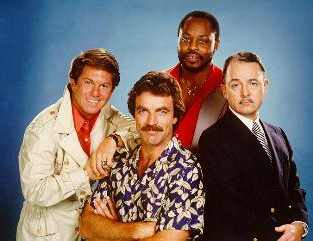
Magnum, P.I. (1980) cast photo

Magnum, P.I. premiered on CBS on December 11, 1980, and ran for eight seasons until 1988. It starred Tom Selleck as Thomas Magnum, a charming private investigator and Vietnam vet living in a beachfront estate on Oahu. Created by Donald P. Bellisario and Glen A. Larson, it made Selleck a superstar and turned a Hawaiian detective show into one of the decade’s defining hits.

The role that made Tom Selleck

Magnum was Tom Selleck. The easy charm, the physical size, the mustache, the twinkle. He made Thomas Magnum feel like the most likable guy on the planet, a war veteran living the dream by house-sitting a fortune’s worth of oceanfront property he could never afford himself. The part fit him so perfectly that it famously cost him another one: Selleck was offered Indiana Jones but was locked into Magnum, and the role went to Harrison Ford. He didn’t need it. Magnum made him a household name for good.

More than a guy in a Ferrari

The show had real texture under the sunshine. Magnum lived on the estate of the never-seen author Robin Masters, sparring constantly with the estate’s stuffy British majordomo, Higgins (John Hillerman), a comic double act that anchored the series. His Navy buddies T.C. (Roger E. Mosley), who ran a helicopter charter, and Rick (Larry Manetti) rounded out the crew. And beneath the fun, Magnum took its Vietnam-veteran backstory seriously, giving the character a weight and melancholy that occasionally surfaced in genuinely moving episodes.

Remember when every episode of Magnum, P.I. would drop into Thomas’s inner monologue, his wry voiceover narrating his own hunches, second-guessing himself with “I know what you’re thinking…”? That private-eye narration, half-joking and half-serious, was the show’s signature and let you ride shotgun inside his head.

Paradise as a co-star

Filmed entirely on location in Hawaii, Magnum used the islands the way Miami Vice used Miami, as a character, not a backdrop. The Ferrari 308, the beaches, the estate, the aloha shirts: it was escapism engineered down to the last palm tree. For millions of viewers freezing through a mainland winter, an hour in Magnum’s Hawaii was the best vacation on television.

Why Magnum still cruises

Magnum, P.I. nailed a balance a lot of shows chase and miss, light and breezy on the surface, with real character and even real sadness underneath. It made Tom Selleck a star, made the Ferrari 308 and the aloha shirt permanent 80s icons, and earned a modern reboot decades later. That mustache alone earned its own place in pop-culture history.

The honest bottom line

Plenty of episodes are pure case-of-the-week filler, and the wardrobe is a time capsule that borders on parody now. Here is what the reruns undersell: this was one of the first mainstream hits to treat Vietnam vets as full human beings instead of walking wounds, and underneath the Ferrari there was real melancholy. The show was funnier than a detective show needed to be and sadder than a hit was allowed to be. Better show than its wardrobe.

FAQ

When did Magnum, P.I. air?
It premiered December 11, 1980, on CBS and ran for eight seasons, ending in 1988.

Who played Thomas Magnum?
Tom Selleck, in the star-making role that defined his career.

Is it true Selleck turned down Indiana Jones?
He was cast as Indiana Jones but couldn’t take it because of his Magnum, P.I. commitment, and the role went to Harrison Ford.

Where was Magnum, P.I. filmed?
On location in Hawaii, primarily on the island of Oahu.

What car did Magnum drive?
A red Ferrari 308 GTS, one of the most iconic TV cars of the era.

Who was Higgins?
Jonathan Quayle Higgins III (John Hillerman), the proper British majordomo of the estate and Magnum’s constant sparring partner.


Magnum, P.I. was one pillar of 80s TV’s golden age, tour the rest in our 80s pop culture icons guide, or cruise over to Miami Vice next.

You could hear the theme song and feel your shoulders drop. A bar in Boston, a bartender with a grin, a barfly on his stool, and the whole crowd bellowing “NORM!” every time the door swung open. Cheers wasn’t about anything and it was about everything. It was the place you went, four nights removed, to be around people who felt like friends.

Cheers (1982) original cast photo

Cheers premiered on NBC on September 30, 1982, and ran for eleven seasons until 1993, set almost entirely inside a Boston bar. It starred Ted Danson as former baseball player and recovering ladies’ man Sam Malone, who owned the place. Created by James Burrows and brothers Glen and Les Charles, it grew from a ratings dud into one of the most acclaimed sitcoms ever made.

It almost got canceled before it started

Here’s the fact that stops people cold: Cheers nearly died in its crib. Its first season finished near the very bottom of the ratings, dead last in some weeks. NBC, itself struggling at the time, stuck with it on faith and critical praise, and slowly audiences found it. Within a few years it was a Thursday-night cornerstone and a Top 10 fixture. It’s the textbook example of a network’s patience paying off, a show that would never have survived a quicker trigger finger.

Sam and Diane, and the argument that ran for years

The engine of early Cheers was the will-they-won’t-they war between Sam Malone and Diane Chambers (Shelley Long), the brainy, pretentious grad student slumming as a waitress. Their bickering, attraction disguised as contempt, set the template a hundred sitcom couples would copy. When Long left, the show pivoted brilliantly to Rebecca Howe (Kirstie Alley), proving the bar was bigger than any one romance.

Remember when Norm Peterson walked through the door and the entire bar shouted “NORM!” in unison, and he’d fire back a perfect one-liner about beer or his wife Vera before he even reached his stool? That call-and-response happened nearly every episode, and it never once got old.

The regulars made it a home

The supporting bench is what turned Cheers into an institution: Norm (George Wendt) on his permanent stool; know-it-all mailman Cliff Clavin (John Ratzenberger); dim, sweet bartender Woody (Woody Harrelson); acid-tongued waitress Carla (Rhea Perlman); and pompous psychiatrist Frasier Crane (Kelsey Grammer), who was so good he got his own hit spinoff. It was an ensemble in the truest sense. You came for the bar, and the bar was those people.

Why Cheers still pours

Cheers perfected the “hangout sitcom”, no premise beyond a place and the people in it, and everything from Friends to How I Met Your Mother is drinking from its tap. Its finale in 1993 was a national event. And that theme song still promises the thing everyone actually wants: somewhere they’re always glad you came, where everybody knows your name.

The honest bottom line

Honesty from the barstool: the Sam and Diane years are better than the Rebecca years, and everybody arguing otherwise is just being contrary. Sam’s ladies-man routine plays differently now than it did in 1984, and the show itself started interrogating it before the decade was out. What has not aged a day is the room. Eleven seasons and the bar never once felt like a set. Television has been trying to build another room like that for forty years.

FAQ

When did Cheers air?
It premiered September 30, 1982, on NBC and ran for eleven seasons, ending in 1993.

Where was Cheers set?
In a fictional Boston bar called Cheers, inspired by a real Boston pub, the Bull & Finch.

Who starred in Cheers?
Ted Danson as Sam Malone, with Shelley Long, later Kirstie Alley, and an ensemble including George Wendt, John Ratzenberger, Rhea Perlman, Woody Harrelson, and Kelsey Grammer.

Is it true Cheers almost got canceled?
Yes: its first season ranked near the bottom of the ratings, but NBC kept it on for its critical acclaim, and it grew into a massive hit.

What spinoff came from Cheers?
Frasier, following Kelsey Grammer’s psychiatrist Frasier Crane to Seattle, became a hit in its own right.

What was the deal with “NORM!”?
Whenever regular Norm Peterson entered the bar, the crowd greeted him by shouting his name in unison, one of the show’s most beloved running gags.


Cheers was one landmark of the 80s TV golden age, pull up a stool to the rest in our 80s pop culture icons guide, or head home to Family Ties next.

Mismatched shoes, brightly clashing socks, a bandana, a huge grin, and a golden retriever named Brandon at her side. Punky Brewster looked like a kid who got dressed in a rainbow explosion, and that was exactly the point. Under all the color was one of the warmest, most bittersweet premises on 80s television.

Punky Brewster (Soleil Moon Frye) publicity still

Punky Brewster premiered on NBC on September 16, 1984, and ran through 1988. It starred Soleil Moon Frye as Penelope “Punky” Brewster, a spirited young girl abandoned by her mother, who’s unofficially taken in by Henry Warnimont, a grumpy older photographer and apartment manager who slowly becomes her foster father. Beneath its bright, kid-friendly surface, it was a genuinely tender show about a found family.

Heartbreak under the rainbow

Here’s what people forget about Punky Brewster: the setup is heartbreaking. Punky is a little girl whose mother left her in a shopping-mall parking lot, and she ends up squatting in an empty Chicago apartment with her dog until the building’s gruff manager, Henry (George Gaynes), discovers her. What follows is the slow thaw of a lonely old man and the placement of a kid nobody wanted into a real home. The show wrapped that emotional core in optimism and color, which is exactly why it landed. It earned its sweetness.

Punky Power

Punky’s whole philosophy fit into two words: “Punky Power.” It meant optimism, resilience, and being unapologetically yourself no matter what life threw at you, a message aimed straight at kids and delivered without preaching. Soleil Moon Frye played her with such natural energy that Punky became a genuine role model, and her wildly mismatched, colorful wardrobe turned into a real fashion craze among kids who wanted to dress just like her.

Remember when Punky Brewster aired its famous episode dealing with the Challenger space shuttle disaster, pausing the usual fun to help kids process something real and frightening that had just happened on live TV? It’s the moment the show proved it took its young audience seriously.

The “very special” episodes

Like a lot of 80s kids’ programming, Punky Brewster wasn’t afraid to get serious. It tackled tough subjects, grief, danger, saying no to strangers, the Challenger tragedy, trusting kids to handle real feelings if you framed them with care. That mix of bright, silly fun and unexpectedly heavy lessons is a very 80s combination, and it gave the show a depth that keeps it fondly remembered.

Why Punky Brewster still shines

Punky Brewster proved a kids’ show could be both goofy and genuinely moving, a found-family story with a huge heart and a killer wardrobe. It spun off an animated version, launched Soleil Moon Frye’s career, and even returned decades later for a revival. “Punky Power” and those mismatched socks remain one of the decade’s most endearing images.

The honest bottom line

The show could be saccharine to the point of toothache, the very-special episodes were a genre unto themselves, and the sitcom around the premise was ordinary. The premise was not. A kid abandoned in a parking lot, taken in by a lonely old man, is heavy material that the show mostly earned, and Soleil Moon Frye sold every ounce of it. Kids watched for the socks. The socks were hiding a show about being unwanted and getting chosen anyway.

FAQ

When did Punky Brewster air?
It premiered September 16, 1984, on NBC and continued in syndication through 1988.

Who played Punky Brewster?
Soleil Moon Frye, in the role that made her a childhood star.

What is the show about?
A young girl abandoned by her mother is taken in by Henry, a gruff older photographer, who becomes her foster father, a warm found-family story.

What was “Punky Power”?
Punky’s catchphrase and philosophy, optimism, resilience, and being yourself no matter what.

Why is the Challenger episode remembered?
The show aired a special episode helping child viewers cope with the 1986 Challenger space shuttle disaster, a notable moment of kids’ TV taking real events seriously.

Was Punky Brewster revived?
Yes: it inspired an animated spinoff and later a revival series decades after the original.


Punky Brewster was one of the biggest hearts on 80s TV, meet the rest of the gang in our 80s pop culture icons guide, or catch the glam of Jem and the Holograms next.

Locked in a room with a bomb ticking down, no gun, no backup, just a paperclip, a stick of chewing gum, and a Swiss Army knife. Where every other 80s action hero would kick down the door, MacGyver would build something out of the doorknob. He was the smartest man on television, and his superpower was a high school science class.

MacGyver (1985) TV series logo

MacGyver premiered on ABC on September 29, 1985, and ran for seven seasons until 1992. It starred Richard Dean Anderson as Angus MacGyver, a resourceful secret agent who solved problems and escaped danger using science, everyday objects, and improvisation instead of weapons. Created by Lee David Zlotoff, it turned brains into the coolest thing on TV and made “MacGyver” a verb.

A hero who hated guns

MacGyver had a genuine point of view, and it ran against the grain of its whole genre. In a decade of Rambos and machine-gun montages, MacGyver refused to carry a firearm. He fought with knowledge, chemistry, physics, engineering, turning household junk into tools, escapes, and gadgets. A candy bar could plug a leak; a chocolate bar and some lye could patch a sulfuric-acid hole. The show even fudged details on purpose so kids wouldn’t build anything dangerous. It was action television that quietly told a generation that being smart was heroic.

Richard Dean Anderson and the mullet heard ’round the world

Anderson made MacGyver likable in a very specific way, calm, understated, a little wry, never showing off despite being the cleverest person in every room. The feathered hair became a defining 80s look, and the character’s laid-back competence made him a role model without a single speech about it. It was the role of Anderson’s career, years before he’d anchor Stargate SG-1.

Remember when MacGyver would get trapped somewhere impossible, the music would go quiet, and the camera would zoom in on some random pile of junk, a battery, a length of wire, a rubber mat, while his voiceover calmly walked you through exactly how he was going to MacGyver his way out? That “here’s what I’ve got to work with” moment was the whole show in a nutshell.

The Phoenix Foundation and a quiet kind of good

MacGyver worked for the Phoenix Foundation and the fictional Department of External Services, taking on missions that were as likely to involve saving a village’s water supply or rescuing kids as stopping a villain. The show leaned earnest and optimistic, MacGyver cared about the environment, science education, and doing right, which gave it a warmth a lot of harder-edged action shows lacked. He was a hero you’d actually want your kid to copy.

Why MacGyver still improvises

The ultimate proof of the show’s cultural dent: the name became a word. To “MacGyver” something is to fix or build it cleverly out of whatever’s lying around, a term that’s outlived the series by decades and landed in the dictionary. A rebooted series arrived years later, but the original’s legacy is bigger than any one show. MacGyver made ingenuity iconic.

The honest bottom line

Episode to episode, MacGyver was a formula show, and some of the science was fudged on purpose so kids could not follow along at home. Watch three in a row and you will see the gears. Watch one with a twelve-year-old and you will see why nobody cared. Television that made smart look heroic was rare then, and it is rarer now.

FAQ

When did MacGyver air?
It premiered September 29, 1985, on ABC and ran for seven seasons, ending in 1992.

Who played MacGyver?
Richard Dean Anderson, in his signature role as Angus “Mac” MacGyver.

What was MacGyver’s whole gimmick?
He solved problems and escaped danger using science and everyday objects, paperclips, duct tape, chewing gum, rather than guns, which he refused to carry.

Who created MacGyver?
Lee David Zlotoff.

Did the show use real science?
It was grounded in real principles but deliberately altered or omitted key details so viewers couldn’t actually build dangerous devices at home.

Is “MacGyver” really a word now?
Yes: “to MacGyver” something, meaning to improvise a clever fix from whatever’s on hand, entered common use and the dictionary because of the show.


MacGyver was one of the sharpest minds of 80s TV, meet the rest of the class in our 80s pop culture icons guide, or ride along with Knight Rider next.

A sleek black sports car with a red light sweeping back and forth across its nose, purring one-liners in a dry British accent while a guy in a leather jacket and a perm leaned on the hood. Knight Rider took the oldest fantasy a kid can have, a car that’s your best friend, and built a whole primetime hit on it.

Knight Rider (1982) TV series logo

Knight Rider premiered on NBC on September 26, 1982, and ran for four seasons until 1986. It starred David Hasselhoff as Michael Knight, a crime-fighter paired with KITT, the Knight Industries Two Thousand, an artificially intelligent, nearly indestructible Pontiac Firebird Trans Am. Created by Glen A. Larson, it turned a talking car into one of the decade’s most beloved TV icons.

The car was the real star

Let’s be honest about who the audience tuned in for. KITT, voiced by William Daniels in that unflappable, faintly superior tone, was the coolest character on the show. He could drive himself, talk back, scan for danger, deploy gadgets, and hit “Turbo Boost” to leap over obstacles. That scanning red light on the front grille and the digital voice modulator became instantly iconic. Kids didn’t want to be Michael Knight so much as they wanted to ride shotgun with his car.

Hasselhoff before he was The Hoff

Knight Rider made David Hasselhoff a household name years before Baywatch and his oddly enormous music career in Germany. As Michael Knight, a former cop given a new face and a new identity after being left for dead. He was the human anchor the show needed: earnest, good-looking, and happy to let a car steal every scene. It was the role that launched one of the most improbable celebrity runs of the era.

Remember when KITT would hit Turbo Boost and launch the Trans Am off a ramp, soaring over a wall or a river or a line of bad guys in slow motion? It happened constantly, it looked amazing, and no kid watching ever once questioned the physics of it.

A hero on the side of the little guy

The show’s mission statement was pure comic-book morality. Michael and KITT worked for the Foundation for Law and Government (FLAG), backed by the wealthy Wilton Knight’s dying wish: “one man can make a difference.” Each week they’d roll into some town, help ordinary people being pushed around by crooks the law couldn’t touch, and roll out again. It was a Western with a supercar instead of a horse, a lone hero and his impossibly loyal ride.

Why Knight Rider still cruises

Strip it down and Knight Rider is a perfect little 80s machine: one great gimmick, executed with total conviction, wrapped around a hero, a mission, and the coolest car on television. The scanning red light and KITT’s voice are permanent pop-culture shorthand, and the show has been revived and rebooted more than once. Some ideas are just too fun to leave parked.

The honest bottom line

The car was the best actor on the show, and everyone including Hasselhoff seems in on that joke by now. The plots were thin, the stunts recycled, and the science was pure hand waving. None of that mattered to a ten-year-old and it does not matter now, because KITT is the fantasy in its purest form: a best friend who happens to be a Trans Am. Some shows age into camp. This one was camp on delivery and honest about it.

FAQ

When did Knight Rider air?
It premiered September 26, 1982, on NBC and ran for four seasons, ending in 1986.

What kind of car was KITT?
KITT was a modified 1982 Pontiac Firebird Trans Am, presented as the artificially intelligent “Knight Industries Two Thousand.”

Who voiced KITT?
Actor William Daniels provided KITT’s calm, dry voice, though he went uncredited during the original run at his own request.

Who played Michael Knight?
David Hasselhoff, in the role that made him a star before Baywatch.

Who created Knight Rider?
Prolific TV producer Glen A. Larson, who was also behind shows like Magnum, P.I. and Battlestar Galactica.

What was Turbo Boost?
KITT’s signature gadget, a rocket-assisted jump that let the car leap over walls, ravines, and obstacles, one of the show’s most repeated visual thrills.


Knight Rider was one gear in the machine of 80s TV, see the whole lineup in our 80s pop culture icons guide, or roll out with The A-Team next.

“Big money, big money, no Whammies, STOP!” Nobody yelled at a television in the 80s quite like they yelled at Press Your Luck. A flashing board, piles of cash one square away from a grinning red cartoon devil who’d steal it all. It was the most nerve-shredding thirty minutes in daytime television.

Press Your Luck Big Board (1984)

Press Your Luck premiered on CBS on September 19, 1983, and ran until 1986. Contestants answered trivia to earn spins on the “Big Board,” trying to land on cash and prizes while avoiding the Whammy, a cartoon creature that wiped out their entire winnings. Hosted by Peter Tomarken, it turned pure greed-versus-fear into one of the decade’s most beloved game shows.

The Big Board and the Whammy

The whole game lived on that board: a ring of squares flashing randomly between cash, prizes, extra spins, and the dreaded Whammy. You’d hit your buzzer to stop the light, and either bank a fortune or watch a little red animated gremlin scamper on screen and gleefully zero you out. Land four Whammies and you were done. The tension of choosing whether to keep spinning or pass your spins to an opponent, greed pulling one way, terror the other, was the entire appeal. “No Whammies!” became a national catchphrase.

The heist: Michael Larson breaks the board

Here’s the story that makes Press Your Luck legendary. In 1984, an unemployed ice cream truck driver from Ohio named Michael Larson went on the show having spent months studying tapes of the Big Board at home. He’d figured out that the “random” light wasn’t random at all. It followed a small number of memorizable patterns, and two squares never held a Whammy and always offered cash plus another spin. On air, he hit those squares over and over, running up spin after spin without ever getting Whammied, until he’d amassed $110,237 in cash and prizes, the biggest one-day haul in the show’s history and one of the most famous moments in game show history.

Remember when the studio audience and even the host slowly realized Michael Larson wasn’t going to stop, spin after spin after spin, the total climbing past $100,000 while everyone watched in disbelief? CBS was stunned, investigated whether he’d cheated, and ultimately had to pay him because he’d broken no rules. He’d just outsmarted the board.

The aftermath and the legend

CBS quietly reprogrammed the Big Board afterward, adding far more patterns so the trick could never work again. Larson’s run was so improbable that it became the subject of documentaries and specials decades later, the ultimate underdog beating a TV game at its own game. It’s the story that keeps Press Your Luck famous long after most of its daytime peers were forgotten.

Why Press Your Luck still spins

Between the primal cash-or-Whammy tension, Peter Tomarken’s game host energy, and the single most audacious contestant in game show history, Press Your Luck punched way above its weight. It was revived decades later for a new generation, and “No Whammy, no Whammy, STOP!” remains one of the most quoted lines the genre ever produced.

The honest bottom line

The game was a coin flip dressed in lights, the budget was visibly thin, and the board’s randomness turned out to be a handful of patterns a determined man could memorize, which is exactly what Michael Larson did. CBS called it cheating, then had to admit it was not. The show never fully recovered and honestly did not need to. It gave daytime TV its greatest heist, and the Whammy gave the 80s a mascot for losing everything. Immortality achieved either way.

FAQ

When did Press Your Luck air?
It premiered September 19, 1983, on CBS and ran until 1986, hosted by Peter Tomarken.

What was the Whammy?
A red cartoon creature that appeared when a contestant landed on its square and wiped out all of their accumulated winnings.

Who was Michael Larson?
An Ohio contestant who, in 1984, memorized the Big Board’s patterns and won a record $110,237 in a single appearance without ever hitting a Whammy.

Did Michael Larson cheat?
No: CBS investigated but found he broke no rules. He’d simply studied the board’s patterns from home, so the network had to pay him.

What was the show’s catchphrase?
“No Whammies!”, shouted by contestants (and viewers) hoping to avoid the money-stealing Whammy.

Was Press Your Luck ever revived?
Yes: it returned in later years, including a primetime revival, keeping the Whammy alive for new audiences.


Press Your Luck was one of the wildest of the great 80s game shows, see the full board of them there, or get messy with Double Dare next.

Pink hair, wild makeup, star-shaped earrings, and a secret identity powered by a holographic supercomputer. Jem and the Holograms took the 80s obsession with rock stardom, glam fashion, and neon everything and poured it into a cartoon aimed squarely at a generation of kids, with a toy line waiting at the end of every episode. It was “truly, truly, truly outrageous,” and it knew it.

Jem and the Holograms music video still

Jem (also known as Jem and the Holograms) aired from 1985 to 1988. It followed Jerrica Benton, a young music-company owner who uses a holographic computer named Synergy to transform into glamorous rock star Jem, fronting the band the Holograms while battling the rival group the Misfits. Produced by Hasbro’s animation arm, it was a stylish, music-packed series built hand-in-hand with a doll line.

A secret identity built on holograms

The premise was pure 80s wish-fulfillment. Jerrica Benton runs Starlight Music and a foster home for girls, and when she needs to become a star, she touches her star-shaped earrings and summons Synergy, a holographic AI her late father built, to project the dazzling disguise of “Jem.” As Jem, she leads the Holograms to fame while keeping her real identity hidden, all while running a business and caring for the Starlight Girls. Secret pop star by night, responsible guardian by day: it was a fantasy tailor-made for its audience.

Music videos in cartoon form

What set Jem apart was the music. Nearly every episode stopped for full-blown animated “music videos”, original songs by the Holograms or the Misfits, staged with the era’s MTV sensibility. The show essentially delivered a mini music video several times an episode, which made it feel current and cool in a way few Saturday-morning cartoons did. The songs were catchy enough that they were released on records, blurring the line between cartoon and real pop act.

Remember when the Holograms and the villainous Misfits would face off in some flashy on-stage battle of the bands, each launching into a full animated music video mid-episode, “We are the Misfits, our songs are better!”, while Jem’s earrings flashed and Synergy worked her holographic magic? Those musical showdowns were the whole appeal.

Fashion, feuds, and a toy line

Jem was as much about style as story. The over-the-top outfits, the neon color palette, the glam-rock looks of both bands. It was a fashion show with a plot. And the rivalry with the Misfits gave it real conflict: a snarling, punky girl group forever scheming to sabotage the Holograms. Every character, outfit, and instrument was, of course, also a doll or accessory you could buy, making the show a masterclass in the 80s art of the toy-driven cartoon.

Why Jem is still truly outrageous

Jem and the Holograms has aged into a beloved cult favorite, celebrated for its glam style, its catchy songs, and its rare-for-the-era focus on ambitious young women running the show. It inspired comics, merchandise revivals, and a 2015 live-action movie. “Truly outrageous” remains one of the most quotable catchphrases the decade’s cartoons produced.

The honest bottom line

Full disclosure: this was a toy commercial. Every episode existed to sell dolls, the songs existed to move product, and the plots bent wherever the new playset needed them to. And inside that machine, real artists smuggled out a show with better music, better fashion and better villains than it had any right to have. The Misfits songs were legitimately the superior product; do not let anyone tell you otherwise. Being born to sell something does not stop a thing from becoming loved.

FAQ

When did Jem and the Holograms air?
It ran from 1985 to 1988, produced in connection with Hasbro’s doll line.

Who is Jem, really?
Jerrica Benton, a music-company owner who transforms into the rock star Jem using a holographic computer called Synergy.

What is Synergy?
A holographic supercomputer built by Jerrica’s late father that projects Jem’s disguise and other illusions, activated through Jerrica’s star-shaped earrings.

Who were the Misfits?
A rival girl band and the show’s recurring villains, constantly trying to outdo and sabotage the Holograms.

Why was the show unusual for its time?
It packed original songs and music-video-style sequences into nearly every episode and centered ambitious young women, standing out from typical 80s cartoons.

What’s the show’s famous catchphrase?
“Jem is truly outrageous, truly, truly, truly outrageous,” from its theme song.


Jem was one of the most stylish faces of 80s TV, meet the rest in our 80s pop culture icons guide, or hang out with ALF next.

Four women of a certain age sharing a Miami ranch house, gathered around the kitchen table at 2 a.m. over yet another cheesecake, trading insults sharp enough to draw blood and stories filthy enough to make you gasp. The Golden Girls took a group television had always ignored, older women, and made them the funniest, warmest, most quotable people on the air.

The Golden Girls (1985) cast photo

The Golden Girls premiered on NBC on September 14, 1985, and ran for seven seasons until 1992. It followed four mature single women living together in Miami: substitute teacher Dorothy, naive Rose, man-hungry Blanche, and Dorothy’s razor-tongued mother Sophia. Created by Susan Harris, it was a massive hit and a genuine landmark, a top-rated comedy built entirely around women over fifty.

The four-woman engine

The chemistry was the whole show. Bea Arthur’s Dorothy Zbornak was the tall, dry, long-suffering brains of the group. Betty White’s Rose Nylund was the sweet, dim naïf forever telling baffling stories about her hometown of St. Olaf. Rue McClanahan’s Blanche Devereaux was the Southern belle with an endless dating life and no shame about it. And Estelle Getty’s Sophia Petrillo, Dorothy’s tiny, ancient mother, fresh from a stroke that “broke the part of the brain that censors what you say”, fired off the cruelest and best lines in the house. Four archetypes, perfectly cast, bouncing off each other for seven years.

It made “old” funny and fearless

What was quietly radical about The Golden Girls is that it never treated its characters as past their prime. These women dated, argued about sex, chased careers, buried husbands, took in the world’s problems, and refused to be invisible. The show tackled subjects a lot of “younger” sitcoms wouldn’t touch, and it did it while being flat-out hilarious. A generation of viewers grew up wanting to age exactly like them.

Remember when the four of them would end up around the kitchen table in their robes in the middle of the night, working through a crisis over a cheesecake, and somebody would launch into a St. Olaf story while Sophia said “Picture it: Sicily, 1922…”? That table was the emotional center of the whole show.

Sophia’s “Picture it” and other permanent quotes

Few sitcoms have left behind as many catchphrases. Sophia’s stories always opened “Picture it: Sicily…” Blanche purred about her many gentleman callers. Rose derailed every conversation with St. Olaf nonsense. And Dorothy’s exasperated “Rose…” could carry an entire scene. The writing was fast, filthy, and generous, jokes that respected the audience’s intelligence and the characters’ dignity at the same time.

Why The Golden Girls still shines

Decades on, The Golden Girls has only gotten bigger, beloved by new generations who found it in reruns and streaming, quoted endlessly, its four leads treated as icons. It proved that the audience for smart, warm, dirty comedy about friendship has no age limit. Thank you for being a friend, indeed.

The honest bottom line

A few of the era’s jokes have curdled, and the sitcom machinery, the setup-punchline rhythm and the tidy resolutions, is very 1985. Everything else is ahead of schedule by about forty years. Television still has not built another hit around four women over fifty, which tells you the landmark was never repeated, just admired. And the cheesecake table remains the best writers-room device of the decade: sit them down, let them talk, get out of the way.

FAQ

When did The Golden Girls air?
It premiered September 14, 1985, on NBC and ran for seven seasons, ending in 1992.

Who were the four Golden Girls?
Dorothy (Bea Arthur), Rose (Betty White), Blanche (Rue McClanahan), and Sophia (Estelle Getty).

Where was the show set?
In a shared house in Miami, Florida.

Who created The Golden Girls?
Susan Harris, an acclaimed sitcom writer-producer also known for Soap.

Why was the show considered groundbreaking?
It was a top-rated network comedy centered entirely on women over fifty, treating them as vibrant, funny, and fully alive at a time TV usually sidelined them.

What was Sophia’s catchphrase?
She began her stories with “Picture it: Sicily…” followed by a year, before launching into a tall tale.


The Golden Girls was one jewel of the 80s TV golden age, see the rest of the crown in our 80s pop culture icons guide, or pull up a barstool at Cheers next.

Two former flower children raising a teenage son who idolized Richard Nixon, carried a briefcase to high school, and read The Wall Street Journal for fun. Family Ties built its whole comedy on the funniest generational flip of the decade: the rebellious kid rebelling by becoming a Reagan Republican.

Family Ties (1982) cast photo

Family Ties premiered on NBC on September 22, 1982, and ran for seven seasons until 1989. It followed the Keaton family of suburban Ohio, ex-hippie parents Steven and Elyse and their money-loving, conservative eldest son Alex. Created by Gary David Goldberg, it captured the exact moment America pivoted from the 60s to the 80s, and it turned Michael J. Fox into a superstar.

The kid who stole the whole show

Alex P. Keaton wasn’t supposed to be the lead. The show was pitched around the parents, Steven (Michael Gross) and Elyse (Meredith Baxter), decent liberals bewildered by the Reagan era. But Michael J. Fox’s Alex, with his sweater vests, his worship of wealth, and his rapid-fire wit, was so magnetic that the writers followed the laughs. Within a season Family Ties was Alex’s show, and audiences loved him for it. It’s one of TV’s great examples of a supporting character quietly taking over.

Michael J. Fox becomes the biggest kid in America

Family Ties made Fox the definitive young star of the 80s. He was so beloved that he shot Back to the Future at night while filming the sitcom by day, sleeping a few hours in between, because producers wanted him badly enough to work around the schedule. The result: for a stretch in the mid-80s he had the number-one movie and one of the number-one shows in the country at the same time. Alex P. Keaton and Marty McFly, running in tandem.

Remember when an episode would suddenly turn serious, Alex losing a friend, or grieving, or facing something real, and the laugh track just stopped? Family Ties pioneered the “very special episode,” and Fox could pivot from punchline to heartbreak in the same scene without missing a beat.

A whole decade in one living room

What made Family Ties more than a gag machine was its premise: it was literally about America changing. The parents were the idealistic 60s; Alex was the ambitious, money-minded 80s; and the show let them argue it out around the dinner table every week with genuine affection on both sides. It didn’t pick a winner. It just made the collision funny, and, often, unexpectedly moving.

Why Family Ties still holds

The show’s a snapshot of a country mid-transformation, anchored by one of the most charming performances of the decade. It launched Michael J. Fox into the stratosphere, gave the Reagan years their sharpest sitcom mirror, and proved a comedy could break your heart when it wanted to. That theme song, “Sha la la la”, still cues up the whole warm, wood-paneled world in an instant.

The honest bottom line

Take Michael J. Fox out and this is a pleasant, ordinary family sitcom with a premise that was already dating by 1987. The parents never quite got the material, the younger kids were furniture, and the very-special episodes creak. But Alex P. Keaton is one of the great sitcom performances, period, a kid so charming he made greed adorable, and the show knew enough to hand him the keys. One performance can carry a series into history. Here is the proof.

FAQ

When did Family Ties air?
It premiered September 22, 1982, on NBC and ran for seven seasons, ending in 1989.

Who played Alex P. Keaton?
Michael J. Fox, in the breakout role that made him a star and won him multiple Emmy Awards.

What was the show’s central joke?
Ex-hippie liberal parents raising a proudly conservative, money-obsessed son, a comic reversal of the usual generation gap.

Who created Family Ties?
Gary David Goldberg, who based elements of the show on his own generational experience.

Did Michael J. Fox really film Back to the Future at the same time?
Yes: he shot the 1985 movie at night while filming Family Ties during the day, holding down both at the peak of his fame.

What is a “very special episode”?
A term popularized partly by Family Ties for an episode that drops the comedy to tackle a serious subject like grief, addiction, or loss.


Family Ties was one cornerstone of 80s TV, visit the rest of the neighborhood in our 80s pop culture icons guide, or pull up a barstool at Cheers next.

An announcer bellows your name, you leap out of your studio seat screaming, sprint down the aisle high-fiving strangers, and take your place at Contestants’ Row, all for the chance to guess what a can of beans costs. In the 80s, The Price Is Right turned the price of ordinary groceries into the most joyful hour on daytime television.

Bob Barker, longtime host of The Price Is Right

The Price Is Right, hosted by Bob Barker, dominated 80s daytime on CBS. Contestants guess the prices of everyday products and prizes across a series of pricing games, competing to reach the Showcase Showdown and win cars, trips, and cash. Already running since 1972, the show hit its beloved stride in the 80s and became a permanent fixture of American mornings.

“Come on down!” and Contestants’ Row

The whole ritual started with those three words. Announcer Rod Roddy would call four names, and the studio would explode as contestants bolted to Contestants’ Row to bid on a prize, closest without going over got called up on stage to play a pricing game. That opening jolt of pure, screaming excitement set the tone: this was a show about ordinary people getting an extraordinary shot at winning big, and the audience’s joy was half the entertainment.

The pricing games everybody knew

The Price Is Right wasn’t one game. It was dozens, each with its own props and rules, and viewers knew them all. Plinko, introduced in 1983, became the most famous: drop a chip down a peg-covered board and pray it lands in the big-money slot. There was also Cliff Hangers with its little yodeling mountain climber, the Big Wheel contestants spun trying to hit a dollar without busting, and the grand Showcase Showdown finale where finalists bid on lavish prize packages. The variety is exactly why you could watch every day and never get bored.

Remember when a contestant on Plinko would let go of the chip at the top of the board and the entire studio would lean and sway with it, groaning and screaming as it bounced from peg to peg, before dropping into a slot and either winning a fortune or almost nothing? That single pricing game became so iconic it now stands for the whole show.

Bob Barker, the eternal host

For 80s viewers, The Price Is Right was Bob Barker, tanned, silver-haired, unfailingly smooth, guiding contestants through their nerves with a microphone that famously tapered to a point. By the 80s he was already a daytime institution, and he closed every show with his signature plea to “help control the pet population, have your pets spayed or neutered,” a line he made a national public-service catchphrase. He hosted the show for an astonishing 35 years.

Why The Price Is Right is still on

The formula proved close to immortal. The Price Is Right is the longest-running game show in American television history, still airing today, though Barker eventually passed the microphone to Drew Carey. But for a whole generation, the 80s version, Barker, Rod Roddy’s “Come on down!”, Plinko, and the Big Wheel, is the definitive one, comfort-food TV at its very best.

The honest bottom line

Honesty first: the whole show is a hymn to buying stuff, the moments of pure joy were about winning a dinette set, and the decade’s critics called it consumerism with a stage. Correct, and beside the point. Watch any episode and what you actually see is strangers hugging strangers, a studio full of people rooting for whoever is closest to the price of soup. The 80s did not produce a happier hour of television. The prices changed. The happiness holds.

FAQ

Who hosted The Price Is Right in the 80s?
Bob Barker, who hosted the show for 35 years before handing it to Drew Carey in 2007.

What is “Come on down!”?
The catchphrase announcer Rod Roddy used to call selected audience members to Contestants’ Row to start bidding.

When was Plinko introduced?
Plinko debuted in 1983 and became the show’s most iconic pricing game.

How does the show work?
Contestants guess the prices of products and prizes through a series of pricing games, advancing toward the Showcase Showdown to win big prizes like cars and trips.

What was Bob Barker’s famous sign-off?
He ended each episode urging viewers to “help control the pet population, have your pets spayed or neutered.”

Is The Price Is Right still on the air?
Yes: it’s the longest-running game show in U.S. television history and continues today.


The Price Is Right was daytime royalty among the great 80s game shows, see them all there, or spin over to Wheel of Fortune next.

A black-and-red GMC van, a plan coming together, and roughly ten thousand rounds of ammunition fired every week without anybody actually getting hurt. If you were a kid in the 80s, The A-Team wasn’t a show. It was an event, and it always ended the same gloriously satisfying way: the bad guys’ truck flips over, they crawl out dazed, and the good guys drive off.

The A-Team (1983) TV series title card

The A-Team premiered on NBC on January 23, 1983, and ran for five seasons until 1987. It followed four Vietnam vets, framed for “a crime they didn’t commit,” on the run from the military, and working as soldiers of fortune who help the little guy. Created by Stephen J. Cannell and Frank Lupo, it became one of the decade’s biggest action hits by being cartoonishly violent and completely harmless at the same time.

The four guys everybody could name

The genius was the team itself. Colonel John “Hannibal” Smith (George Peppard) was the cigar-chomping mastermind who loved it when a plan came together. Templeton “Faceman” Peck (Dirk Benedict) was the smooth-talking con artist who could scam anything they needed. “Howling Mad” Murdock (Dwight Schultz) was the unhinged pilot the others sprang from a mental hospital every episode. And B.A. Baracus (Mr. T) was the gold-draped, mohawked mechanic who could weld a tank out of a tractor by lunchtime, and was terrified of flying.

Four archetypes, instantly readable, endlessly repeatable. Every kid on the playground knew exactly which one he wanted to be.

Mr. T becomes a phenomenon

The A-Team made Mr. T one of the most recognizable humans on the planet. The gold chains, the mohawk, the “I pity the fool” attitude, the growl, B.A. Baracus jumped straight off the screen into cartoons, cereal, action figures, and a whole cottage industry of catchphrases. For a couple of years there, you genuinely could not escape him. He was less a TV character than a national mascot.

Remember when the team would get locked in a barn or a warehouse by the bad guys, and instead of panicking, they’d find a pile of scrap metal and a welding torch and build an armored assault vehicle out of it, montage and all? That “captured-guys-build-a-tank” sequence happened so often it basically became the show’s signature move.

The violence that never drew blood

Here’s the odd magic of The A-Team: it was one of the most explosive shows on television, and almost nobody ever died. Cars flipped, machine guns roared, buildings blew up, and the occupants always staggered out shaken but fine. It was action as pure spectacle, engineered to thrill kids without alarming parents. Critics rolled their eyes; audiences didn’t care. That weightless, consequence-free bang is exactly what makes it feel so unmistakably 80s.

Why the A-Team still rolls

The show’s a time capsule of a very specific kind of 80s fun: loud, dumb in the best way, built around four guys you’d follow anywhere, and wrapped up in under an hour with a bad guy in a flipped truck. It spawned a 2010 movie and a permanent place in pop-culture shorthand. When someone says “I love it when a plan comes together,” they’re quoting Hannibal Smith, whether they know it or not.

The honest bottom line

It was the same episode every single week, and we mean that literally: capture, escape, montage in a barn, truck flip, cigar. The violence was a cartoon where thousands of bullets never touched anyone, which critics hated and eight-year-olds understood perfectly. This is not a show that holds up to adult scrutiny. It was never built for adults. It was built for kids on a school night, and for them it remains undefeated.

FAQ

When did The A-Team air?
It premiered January 23, 1983, on NBC and ran for five seasons, ending in 1987.

Who were the members of the A-Team?
Hannibal Smith (George Peppard), Templeton “Faceman” Peck (Dirk Benedict), “Howling Mad” Murdock (Dwight Schultz), and B.A. Baracus (Mr. T).

Who created The A-Team?
It was created by Stephen J. Cannell and Frank Lupo.

What was B.A. Baracus afraid of?
Flying. The team constantly had to trick or sedate B.A. to get him on a plane or helicopter, a running gag across the whole series.

Why did the A-Team never seem to kill anyone?
The show was deliberately made as bloodless action spectacle, endless gunfire and explosions, but villains almost always survived, to keep it thrilling for kids without being too graphic.

What was Hannibal’s catchphrase?
“I love it when a plan comes together,” usually delivered with a cigar as the episode’s scheme paid off.


The A-Team was one engine in a golden age of 80s TV, see the whole lineup in our 80s pop culture icons guide, or shift into high gear with Knight Rider next.

Two families lined up across a bright, spinning-topped set, a host reading a survey question, and everybody at home shouting a guess at the screen a half-second before the buzzer. “We surveyed 100 people…” In the 80s, Family Feud took the simplest premise imaginable, guess what other people said, and turned it into daytime gold.

Richard Dawson hosting Family Feud

Family Feud pits two families against each other to guess the most popular answers to survey questions posed to 100 people. In the 80s it was defined by host Richard Dawson, whose showmanship, and famous habit of kissing contestants, made him a daytime star, before a hit 1988 revival brought on host Ray Combs. It was one of the most quotable game shows of the decade.

“Survey says!” and the perfect format

The beauty of Family Feud is that anyone can play it. There’s no trivia to know, just a feel for what regular people would say. Name a reason you’d call in sick. Name something you find in a purse. Contestants guessed, the board revealed the survey’s top answers with that satisfying ding, and the host’s “Survey says!” turned every reveal into a little drama. Two wrong answers from a stealing family and the round flipped. It was social intuition as a game, and families at home played right along, arguing over every answer.

Richard Dawson, the kissing host

For most of the 80s, Family Feud was Richard Dawson’s show. The British-born host, already famous from Hogan’s Heroes, brought a lounge-singer charm, a quick wit, and one very memorable habit: he kissed nearly every female contestant, often on the lips, as a good-luck greeting. It was his trademark, controversial even then, and utterly inseparable from his era of the show. His warmth with contestants and his command of the studio made him one of the definitive game show hosts of the decade.

Remember when a contestant would blurt out a wild, obviously-wrong answer, the host would repeat it deadpan to the studio, and everyone held their breath waiting for the board, before that big red X and the buzzer dropped and the whole family groaned? Those gloriously bad answers were half the reason to watch.

The reboot and Ray Combs

Dawson’s original run ended in 1985, but the format was too good to stay gone. In 1988, Family Feud came roaring back with a new host, Ray Combs, whose energetic, comedic style won over a fresh audience and kept the show a fixture into the 90s. (Dawson would even return briefly.) The late-80s revival proved the Feud engine could outlive any single host, a lesson the show has demonstrated many times since.

Why Family Feud still surveys

Family Feud turned out to be one of the most resilient formats in television, revived again and again with new hosts for new generations. But the 80s gave it its identity: the survey board, the two-family showdown, “Survey says!”, and Richard Dawson’s charm (and kisses). Every version since is playing the game those years perfected.

The honest bottom line

Richard Dawson kissed every female contestant for a decade, which was charming in 1980, a punchline by 1990, and a compliance seminar today. The surveys rewarded the most common answer over the right one, which infuriated smart players and was secretly the whole genius: it is a game about knowing people, not facts. That is why the format has survived every host and every era since. People do not change. Survey says they never will.

FAQ

How does Family Feud work?
Two families compete to guess the most popular answers to questions asked of a 100-person survey, racking up points and stealing rounds from each other.

Who hosted Family Feud in the 80s?
Richard Dawson hosted through 1985, and the show was revived in 1988 with host Ray Combs.

Why was Richard Dawson famous on the show?
For his charm and quick wit, and for his trademark habit of kissing female contestants as a greeting, which became inseparable from his era.

What’s the show’s catchphrase?
“Survey says!”, the host’s cue as the board revealed whether a guess made the survey’s top answers.

When was Family Feud revived?
In 1988, with Ray Combs as host, after Dawson’s original run ended in 1985.

Do you need trivia knowledge to play?
No: the game rewards guessing what ordinary people would say, not knowing facts, which is a big part of its wide appeal.


Family Feud was one of the most quotable great 80s game shows, see the whole lineup there, or come on down to The Price Is Right next.

A furry, wise-cracking alien with a snout and an appetite for house cats crash-lands his spaceship into a suburban family’s garage, and then just… moves in. ALF was one of the strangest premises ever to become a mainstream hit, and for a few years in the late 80s that sarcastic little puppet was absolutely everywhere.

ALF (1986) TV series logo

ALF premiered on NBC on September 22, 1986, and ran for four seasons until 1990. It followed the Tanner family, an ordinary suburban household hiding an alien, Gordon Shumway, nicknamed ALF for “Alien Life Form”, after he crashes into their garage. Created by Paul Fusco and Tom Patchett, it became a merchandising juggernaut and one of the decade’s most recognizable characters.

An alien from Melmac with an attitude

ALF wasn’t a cuddly E.T. He was a middle-aged, cynical smart aleck from the destroyed planet Melmac, forever cracking jokes at the family’s expense, causing chaos, and eyeing their cat Lucky as a snack, because on Melmac, cats were a delicacy. That mix of adorable puppet and sarcastic, slightly menacing personality is exactly what made him funny. He was a houseguest who would never, ever leave, and never stop insulting the drapes.

A puppet that took over a studio

Behind the scenes, ALF was a genuine production headache, an elaborate puppet operated largely by creator Paul Fusco from beneath the set, with much of the furniture built on raised platforms to hide the puppeteers. Scenes took forever to shoot. But the payoff was a character so alive that audiences completely bought him as a member of the family. Fusco performed and voiced ALF himself, and that single-minded creative control is a big part of why the character had such a specific, consistent personality.

Remember when ALF would sneak into the kitchen at night, corner the family cat Lucky, and the whole running joke was whether he’d finally eat him, while the Tanners kept catching him mid-stalk? That cat-hunting gag ran the entire series and somehow never crossed the line from funny to disturbing.

Merchandise mania

For a stretch, ALF’s face was on everything: plush dolls, lunchboxes, T-shirts, a Saturday-morning cartoon, comic books, records, and a legendary run of appearances where the puppet “hosted” and ad-libbed at other celebrities. He guest-“interviewed,” crashed talk shows, and became a marketing machine. The character arguably got bigger than the show itself, which is why so many people who never watched a full episode can still picture him instantly.

Why ALF still lands

ALF is pure 80s in a way few things are, a bizarre high-concept idea, executed with total commitment, wrapped around a wise-guy character built for the merchandise aisle. He’s been revived, rebooted, and endlessly memed. That furry face from Melmac, forever plotting against the family cat, is baked into the decade’s pop-culture DNA.

The honest bottom line

It was one joke, and by season three the joke was tired and everyone on that set knew it. The production was famously miserable, a four-foot puppet turning every scene into a technical siege, and the show ended on a cliffhanger NBC never resolved. And still, when the alien insulted the drapes, the whole country laughed. Some shows are built to last. This one was built to be exactly 1987, and it nailed it.

FAQ

When did ALF air?
It premiered September 22, 1986, on NBC and ran for four seasons, ending in 1990.

What does ALF stand for?
“Alien Life Form”, the nickname the Tanners give their houseguest, whose real name is Gordon Shumway.

Where is ALF from?
The planet Melmac, which was destroyed, leaving him stranded on Earth.

Why does ALF want to eat the cat?
On his home planet Melmac, cats were considered food, so the family cat, Lucky, is a constant temptation and a running gag.

Who created and voiced ALF?
Paul Fusco co-created the show and performed and voiced ALF himself, operating the puppet from below the set.

Was ALF hard to film?
Yes: the elaborate puppet and hidden puppeteers made shooting slow and complicated, with sets built to conceal the operators.


ALF was one of the weirdest, biggest characters of 80s TV, meet the rest of the gang in our 80s pop culture icons guide, or drop in on The Golden Girls next.

Two teams of kids, a trivia question, and a way out: if you didn’t know the answer, you could “dare” the other team, they could “double dare” you back, and eventually somebody had to take the physical challenge, which almost always meant getting absolutely covered in slime, whipped cream, or something worse. Double Dare was every kid’s fantasy: a TV show where making a giant mess was the whole point.

Double Dare obstacle course challenge

Double Dare premiered on Nickelodeon on October 6, 1986, hosted by Marc Summers. Two teams competed by answering trivia and taking on messy physical challenges, culminating in an elaborate, gunk-filled obstacle course for the grand prize. It became Nickelodeon’s signature show and helped define what 80s kids’ television felt like, loud, gross, and gloriously fun.

Dares, double dares, and the physical challenge

The rules were pure playground logic. A team faced a trivia question; if they didn’t want to answer, they could dare their opponents to do it for more money. The opponents could double dare it back. When the dares maxed out, the team stuck holding it took a physical challenge instead, some ridiculous, timed, messy stunt like passing an egg down a line using only their chins, or fishing a flag out of a giant nose full of goo. Getting the answer wrong had never looked so appealing.

The obstacle course finale

The whole show built to the finale: the Double Dare obstacle course, eight stations of pure mess that the winning team raced through against the clock to grab flags for prizes. The One-Armed Bandit, the Sundae Slide, and, most famously, the giant human nose you had to reach into and pull a flag out of a wall of green snot. Kids in the studio ended each show soaked, slimed, and grinning. Every kid watching at home desperately wanted a turn.

Remember when a contestant had to dig through a giant papier-mâché nose oozing with green slime to find the flag, coming out dripping head to toe, and the entire studio of kids went absolutely wild? That messy obstacle course finale was the reason a whole generation begged their parents to get them on the show.

Marc Summers, ringmaster of the mess

Host Marc Summers was the perfect ringmaster, quick, energetic, unbothered by the chaos, and always ready with the rules and a grin. What almost nobody knew at the time is that Summers privately struggled with obsessive-compulsive disorder, which made hosting the messiest show on television a genuinely difficult act of will. He kept it up for years, becoming one of the most recognizable faces on kids’ TV and forever tied to the green slime.

Why Double Dare still sticks

Double Dare basically invented the template for the messy kids’ game show and made slime a permanent part of Nickelodeon’s identity, a legacy that runs straight through to the Kids’ Choice Awards. It was revived multiple times across the decades because the core idea never gets old: give kids trivia, dares, and a giant nose full of goo, and you’ve got television magic.

The honest bottom line

Honest admission: the trivia was a formality and everyone knew it. Kids tanked questions on purpose to get to the slime, the physical challenges were the entire show, and the obstacle course was ninety percent of the reason America tuned in. That is not a flaw. That is a program understanding its audience with a precision most prestige television never achieves. The mess was the mission statement, and the mission was accomplished all over everybody.

FAQ

When did Double Dare premiere?
It debuted on Nickelodeon on October 6, 1986, hosted by Marc Summers.

How did the game work?
Teams answered trivia or “dared” each other; whoever got stuck took a messy physical challenge, and the winning team ran a gunk-filled obstacle course for prizes.

Who hosted Double Dare?
Marc Summers, who became a defining face of 80s Nickelodeon.

What was the obstacle course?
An eight-station messy race, including the famous giant nose full of green slime, that the winning team ran against the clock to grab flags for prizes.

Why is Double Dare so associated with slime?
Its messy challenges and gooey obstacle course helped make green slime a signature part of Nickelodeon’s brand for decades.

Was Double Dare ever revived?
Yes: it returned in multiple later versions, including revivals decades after the original run.


Double Dare was the messiest of the great 80s game shows, see them all there, or test your luck with Press Your Luck next.

You set the alarm yourself. You crept out before your parents were up, poured a bowl of something sugary, sat cross-legged three feet from the TV in your pajamas, and didn’t move for four straight hours. For kids in the 80s, Saturday morning wasn’t a time slot. It was a sacred weekly ritual, and the cartoons were the whole religion.

A vintage TV set, the altar of 80s Saturday mornings

80s Saturday morning cartoons were a block of animated programming the major networks aired every Saturday, and for a generation of kids it was the highlight of the week, a lineup of colorful, toy-tied, wildly imaginative shows watched over cereal in pajamas. It was appointment television before anyone used the phrase, and it’s one of the decade’s most fondly remembered institutions.

The lineup that owned the morning

The 80s were arguably the peak of Saturday morning animation, and the shows came fast and bright. The Smurfs was a Saturday juggernaut for years, a whole village of little blue creatures that dominated the block. Muppet Babies reimagined Jim Henson’s characters as toddlers in a nursery, powered by pure imagination. Alvin and the Chipmunks brought the singing rodents back. The Real Ghostbusters spun the hit movie into a beloved animated series. And glam favorites like Jem and the Holograms packed music videos into every episode. Whatever you were into, the morning had a show for it.

Toys that became TV, and TV that became toys

A defining feature of 80s cartoons was the tight bond between shows and toy aisles. Transformers, G.I. Joe, He-Man and the Masters of the Universe, My Little Pony, and Care Bears all existed in a loop where the cartoon sold the toy and the toy sold the cartoon. Regulators and parents debated whether these were “programs” or “half-hour commercials,” but kids didn’t care. They just wanted more Optimus Prime. That business model defined the decade’s animation and produced some of its most enduring characters.

Remember when the networks would air those “coming this fall” preview specials hyping the new Saturday morning lineup, and you’d study it like a battle plan, mapping out exactly which shows you’d watch and in what order before the season even started? Planning your Saturday was half the fun.

Cereal, commercials, and the whole experience

Part of what made it magic was everything around the cartoons: the sugary-cereal commercials with their own cartoon mascots, the “the more you know”-style public-service spots, the toy ads that doubled as wish lists. It was a complete, self-contained kid universe that existed only for those few hours on Saturday. When the last cartoon ended and the sports or infomercials came on, the spell broke, and you started the countdown to next week.

Why we still miss Saturday mornings

The ritual eventually faded, cable, 24-hour cartoon channels, and later streaming made cartoons available every hour of every day, which is wonderful and also quietly killed the specialness. That’s exactly why 80s kids remember Saturday mornings so vividly: the shows were great, but the scarcity made them an event. For one generation, the best part of the whole week arrived with a cereal bowl and a theme song.

The honest bottom line

Honest confession from two people who lived it: most of those cartoons were not good. The animation was cheap, the writing was toy-driven, and if you rewatch a random episode today the magic evaporates by the second commercial break. The ritual was the masterpiece: the alarm you set yourself, the cereal, the four hours of freedom before anyone asked anything of you. Nobody misses the shows. Everybody misses the morning.

FAQ

What were the most popular 80s Saturday morning cartoons?
Favorites included The Smurfs, Muppet Babies, The Real Ghostbusters, Alvin and the Chipmunks, and toy-tied hits like Transformers, G.I. Joe, He-Man, My Little Pony, and Care Bears.

Why were 80s cartoons so tied to toys?
Many shows were created alongside toy lines, in a loop where the cartoon promoted the toys and vice versa, a business model that defined the era and sparked debate over “program-length commercials.”

When did kids watch Saturday morning cartoons?
Networks aired a block of cartoons on Saturday mornings, typically for several hours, which kids watched over breakfast.

Why did the Saturday morning cartoon ritual fade?
The rise of cable, 24-hour cartoon channels, and later streaming made animation available all the time, removing the scarcity that made Saturday mornings feel special.

Were the cartoons only on one channel?
No: the major broadcast networks each aired their own competing Saturday morning lineups, and choosing between them was part of the ritual.


Saturday mornings were the heartbeat of 80s kids’ TV, explore more of the decade in our 80s pop culture icons guide, or tune into Jem and the Holograms next.

There’s a look people mean when they say “the 80s”, the pastel blazer over a t-shirt, the loafers with no socks, the neon skyline, the stubble. Half of that look didn’t just appear in the 80s. It came out of one TV show, on one night, on NBC.

Miami Vice (1984) NBC promotional photo of Crockett and Tubbs

Miami Vice premiered on September 16, 1984, and ran five seasons until 1989. It followed two undercover detectives, Sonny Crockett (Don Johnson) and Ricardo Tubbs (Philip Michael Thomas), busting drug runners across a sun-soaked, pastel-drenched Miami. Created by Anthony Yerkovich and driven by executive producer Michael Mann, it didn’t just air in the 80s. It defined how the decade looked, sounded, and dressed.

“MTV cops”, and they meant it as a pitch

The legend is that the show started from a two-word network memo: “MTV cops.” Whether or not that’s exactly how it went, that’s exactly what landed on screen. Mann took big-screen production techniques, real film stock, real Miami locations, moody lighting, and pointed them at a Friday-night cop show. Nobody had done that. Television suddenly looked like cinema.

And it sounded like nothing else on TV. Miami Vice spent up to $10,000 an episode on original recordings, dropping tracks from U2, Todd Rundgren, and Frankie Goes to Hollywood straight into the action. Instead of a score telling you how to feel, you got the actual hits of 1985 scoring a speedboat chase. Jan Hammer’s pulsing synth theme became a genuine chart-topper, a TV instrumental that people bought on purpose.

Remember when the pilot let a Ferrari cruise through the Miami night while Phil Collins’ “In the Air Tonight” played almost end to end, no dialogue, just mood? That scene is the moment TV realized it could be a music video and get away with it.

The style that escaped the screen

Don Johnson’s Crockett walked out of the TV and into every mall in America. The unstructured blazers, the t-shirts underneath, the pushed-up sleeves, the deliberate stubble, the no socks, men who had never heard of Armani were suddenly dressing like a Miami vice cop. The show’s palette (flamingo pink, teal, white) got painted onto everything from bedrooms to actual buildings.

That’s the rare TV show that didn’t just reflect the culture. It handed the culture a wardrobe and a color scheme and said here, wear this for a decade.

Why it still feels like the 80s in a bottle

Later cop dramas spent years trying to recapture what Miami Vice did by accident: the marriage of music, style, and city into one unmistakable vibe. Few ever got close. Watch five minutes of it now and you’re not watching a rerun. You’re watching a time capsule with the lid off. It’s the show that made the 80s look like the 80s.

The honest bottom line

Half the plots were interchangeable and the last two seasons ran on fumes, and if you rewatch expecting tight cop drama you will notice. You will also stop caring within ten minutes, because the show was never really about the cases. It was about how things looked and sounded at 10 p.m. on a Friday in 1985, and no show before or since has been more completely about that. Style over substance is only an insult when the style is not this good.

FAQ

When did Miami Vice premiere?
It premiered September 16, 1984, on NBC and ran for five seasons, ending June 28, 1989.

Who starred in Miami Vice?
Don Johnson as Detective Sonny Crockett and Philip Michael Thomas as Detective Ricardo Tubbs, filmed on location in Miami.

Who created Miami Vice?
It was created by Anthony Yerkovich, with Michael Mann as executive producer shaping its signature cinematic style.

Why was the music such a big deal?
The show spent as much as $10,000 per episode licensing original recordings from major artists, using real hits, not just a background score. Jan Hammer’s synth theme became a chart hit itself.

Why is Miami Vice considered so influential?
It brought film-quality production and a music-video sensibility to prime-time TV, and its pastel-and-no-socks style spilled off the screen and defined 80s men’s fashion.


Miami Vice was one pillar of a golden age of 80s TV, cruise the rest of it in our 80s pop culture icons guide, or shift gears with Knight Rider next.

While every other 80s sitcom was serving up warm hugs and lessons learned, one show gave us a miserable shoe salesman, hand permanently in his waistband, insulting his family from a beat-up couch. Married… with Children was the anti-sitcom, loud, crude, and gleefully mean, and it helped launch an entire television network.

Married... with Children (1987) Bundy family photo

Married… with Children premiered on April 5, 1987, as one of the first shows on the brand-new Fox network. It followed the Bundys, sad-sack shoe salesman Al, his loud wife Peggy, and their kids Kelly and Bud, a proudly dysfunctional family in suburban Chicago. Created by Ron Leavitt and Michael G. Moye, it ran for eleven seasons and became Fox’s first breakout hit.

The family TV said you weren’t allowed to have

The whole joke was a middle finger to the wholesome family sitcom. Al Bundy (Ed O’Neill) hated his job, his life, and mostly his family, a former high school football hero reduced to selling women’s shoes and reliving the four touchdowns he scored at Polk High. Peggy (Katey Sagal) was a big-haired, bon-bon-eating wife who never cleaned or cooked. Kelly (Christina Applegate) was the dim, boy-crazy daughter; Bud (David Faustino) the scheming, luckless son. Nobody hugged. Nobody learned. It was the exact opposite of the Huxtables or the Keatons, and audiences found it hilarious.

The show that built Fox

Married… with Children mattered beyond its laughs: it was foundational to Fox itself. When the fledgling fourth network launched, it needed something loud enough to make people notice, and the Bundys delivered. The show’s crude, working-class edge became part of Fox’s early identity and paved the way for the network’s later willingness to be provocative, a lineage that runs straight to The Simpsons and beyond.

Remember when a protest campaign against the show’s raunchiness, led by an offended viewer writing to sponsors, actually backfired and made Married… with Children more famous than ever? The controversy handed the show a wave of free publicity, and its ratings climbed as the whole country tuned in to see what the fuss was about.

Al Bundy, working-class antihero

Ed O’Neill’s Al Bundy became an unlikely icon, the patron saint of the beaten-down American dad. Everything about him was funny and a little tragic: the Polk High glory days, the loathing for his customers, the way he’d flop onto the couch and stick his hand in his pants like a man who’d given up. He was a cartoon, but a recognizable one, and O’Neill played him with such deadpan commitment that Al outlasted almost every “nicer” sitcom dad of the era.

Why Married… with Children still stings

The show proved there was a huge audience hungry for something that didn’t pretend family life was a greeting card. It made stars of its cast, helped build a network from scratch, and its cheerfully nasty tone influenced a generation of comedies. Whenever a sitcom leans into dysfunction instead of warmth, it’s walking a path the Bundys paved.

The honest bottom line

Let us not sand this one down: the show was crude on purpose, plenty of jokes punch down, and a fair number would not survive a modern table read. That was the entire brand, and the outrage was part of the business model; one angry letter campaign handed them their best ratings ever. Underneath the leers, though, was the only 80s sitcom honest about what a dead-end job feels like. Al Bundy was a punchline with a truth inside. The truth is why it ran eleven years.

FAQ

When did Married… with Children premiere?
It debuted April 5, 1987, as one of the first programs on the new Fox network, and ran for eleven seasons.

Who starred in the show?
Ed O’Neill as Al Bundy, Katey Sagal as Peggy, Christina Applegate as Kelly, and David Faustino as Bud.

What did Al Bundy do for a living?
He was a women’s shoe salesman who constantly reminisced about scoring four touchdowns in a single game at Polk High.

Who created Married… with Children?
Ron Leavitt and Michael G. Moye.

Why was the show important to Fox?
It was one of the network’s first hits and helped establish Fox’s edgier identity in its early years.

Did a protest campaign really boost the show?
Yes: an organized boycott effort over the show’s content drew national attention and ended up increasing its ratings and fame.


Married… with Children was the black sheep of 80s TV, meet the whole family in our 80s pop culture icons guide, or visit the far tidier Keatons on Family Ties next.

1980s game show host at the podium

Hair to dye for.

It seemed like they were always on.

Every host had that particular suit, type of delivery, and host haircut.

You know the one. (look left)

There were a few that stuck out but more or less you could trade in one for another and not skip a beat.  Now the games themselves were a whole lot different than the HD effects laden modern shows on tv today.

Here are a few of the great 80s game shows that really stuck out:

The great 80s game shows included Press Your Luck, Card Sharks, Win Lose or Draw, and Love Connection, plus a bench of daytime staples that felt like they were always on somewhere. Flashing boards, one-liner hosts, and prizes worth screaming over.

Continue reading

Scroll to top