
Garbage Pail Kids: The Gross-Out Cards That Got Banned From School
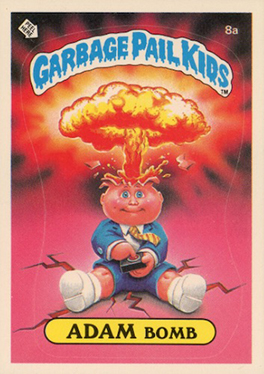
If the Cabbage Patch Kids were the sweet, huggable face of the 80s toy craze, the Garbage Pail Kids were its evil twin, literally. Where one had dimpled cheeks and adoption papers, the other had a kid named Adam Bomb whose head was exploding into a mushroom cloud. And every 80s kid knew exactly which one was cooler.
Garbage Pail Kids were a series of Topps sticker trading cards launched in 1985 as a deliberate parody of the wildly popular Cabbage Patch Kids dolls, featuring grotesque, darkly funny characters with punny names, a phenomenon that got the cards banned from schools and Topps sued by the doll’s rights holders. They were gross, they were brilliant, and they were exactly what kids wanted.
Born from a Cabbage Patch joke
The origin is perfect. When Topps was considering licensing the actual Cabbage Patch Kids for a card set, art director and future Pulitzer Prize winner Art Spiegelman, working with Mark Newgarden and Len Brown, hatched the idea of parodying them instead. Artist John Pound painted the first series of characters, each one a cartoonishly revolting send-up of the wholesome dolls.
The gimmick sealed it: every card had a character with two punny name variations, Adam Bomb and Blasted Billy, Nasty Nick and Evil Eddie, showing kids vomiting, oozing, smoking, and generally reveling in everything the Cabbage Patch Kids weren’t. They were stickers, so you could stick them everywhere, and the first series alone gave kids a whole cast of little monsters to collect and trade.
Banned, sued, and more popular for it
Naturally, the adults hated them, which naturally made kids love them more. Teachers banned the cards from many schools, citing them as classroom distractions and objecting to the grotesque art and the mischievous card backs that “encouraged” kids to skip school, stay up late, and misbehave.
Then came the lawsuit. In 1986, Original Appalachian Artworks, the company behind the Cabbage Patch Kids, sued Topps for infringement. Topps argued parody and fair use, but the court didn’t buy it, and the case settled out of court, with Topps agreeing to alter the characters’ appearance and change the logo so they less closely resembled the dolls. The controversy only made the cards more notorious.
Remember when trading a doubles for the one card you were missing felt like a high-stakes deal, and getting caught with them in class meant a one-way trip to the teacher’s desk drawer?
Why they became icons
Garbage Pail Kids tapped something real: kids’ delight in the gross, the forbidden, and the subversive. In a decade full of sanitized, marketing-driven toys, here was something that felt like it was made by the naughtiest kid in class. The craze cooled after the late-80s peak (a critically panned 1987 movie didn’t help), but the cards never truly died, Topps has revived the series again and again, and vintage cards are genuinely collectible today. Not bad for a bunch of stickers your teacher confiscated.
The honest bottom line
Let us be honest about what these were: mean, gross, and designed to horrify adults, which is precisely why we loved them. The parents and principals were not wrong, they were just outnumbered. Topps settled with the Cabbage Patch people and softened nothing that mattered. And the fact that the parody was art-directed by a future Pulitzer winner is the most 80s footnote imaginable: the gross-out cards in your locker were, technically, fine art in disguise. The Transformers sold a better future; the Garbage Pail Kids sold a grosser present. Both were designed to move product, and both turned out to be art.
FAQ
What are Garbage Pail Kids?
Garbage Pail Kids are Topps sticker trading cards, first released in 1985, that parody the Cabbage Patch Kids with grotesque, darkly humorous characters and punny names.
Who created Garbage Pail Kids?
The concept came from Topps’ Art Spiegelman, working with Mark Newgarden and Len Brown, with artist John Pound painting the first series of characters.
Why were Garbage Pail Kids banned from schools?
Many schools banned them as classroom distractions and objected to their grotesque imagery and the mischievous messages printed on the card backs.
Did Cabbage Patch Kids sue Garbage Pail Kids?
Yes. In 1986, Cabbage Patch rights holder Original Appalachian Artworks sued Topps; the case settled out of court, with Topps agreeing to change the characters’ look and the logo.
Was there a Garbage Pail Kids movie?
Yes: a 1987 live-action film was released, but it was widely panned and is often cited as one of the worst movies of the era.
Card series dates and the lawsuit story got the usual homework before we published. They existed only to mock their sweeter cousins, read about the Cabbage Patch Kids they parodied, or dig into more in our 80s pop culture icons guide.