Month: April 2026

Winger arrived at the tail end of the 80s with all the hallmarks — the hair, the hooks, the ballads, the MTV polish — and rode them to platinum success. Then they became an unlikely punchline. And then, in the most surprising twist of any hair-metal story, their frontman quietly reinvented himself as a serious classical composer. Stick with this one; it goes somewhere you won’t expect.

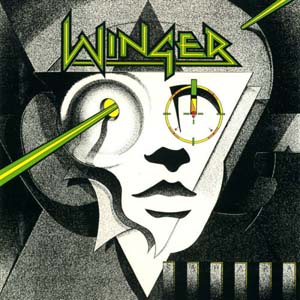
Winger – Winger (1988) album cover

Winger is the American glam-metal band, led by singer-bassist Kip Winger, whose 1988 self-titled debut went platinum on the strength of hits like “Seventeen” and “Headed for a Heartbreak.” They were among the last big breakouts of the hair-metal era — and their leader had far more range than the label suggested.

The hits that made them stars

Winger’s debut landed in August 1988 on Atlantic Records and quickly went platinum. “Seventeen” became their signature single, reaching No. 26 on the Billboard Hot 100, with a video that stayed in heavy MTV rotation. “Headed for a Heartbreak” followed as a successful power ballad. Kip Winger — polished, trained, and technically accomplished — brought a musicianship to the band that stood out even as the hooks stayed radio-friendly. For a moment, they were one of the hottest new acts in rock.

From punchline to composer

Here’s the arc almost nobody sees coming. As grunge swept in and hair metal fell out of fashion, Winger became an easy target — the band’s name was even used as shorthand for everything uncool about the era (famously worn as a mocking t-shirt on an animated MTV show). It was a rough fall.

But Kip Winger had the last laugh in the most unexpected way. A classically trained musician, he pivoted to composing serious orchestral and classical music — earning genuine critical acclaim, commissions, and even award recognition in the classical world. The guy the 90s wrote off as the ultimate hair-metal lightweight turned out to be one of the most legitimately accomplished musicians to come out of the whole scene. It’s the perfect rebuke to anyone who assumed the genre was all fluff.

Remember when a band’s name became a national punchline — and it turned out the joke was on the people making it? Kip Winger’s second act as a respected composer is one of the great “don’t judge a book by its cover” stories in 80s music.

Why Winger endures

Winger’s story is a two-parter that’s better than either half alone: a genuine platinum-selling hair-metal act, and a frontman whose talent outran the trend that made him famous. The 80s hits still hold up on any glam-metal playlist, and Kip’s classical career gives the band a legacy no one predicted. Underestimate the guy with the big hair at your own risk.

Real players behind the polish

Lost in the mockery Winger took in the 90s is a simple fact: they were genuinely skilled musicians. Guitarist Reb Beach was a technical standout — his riff for “Seventeen” reportedly came from something he’d written at just 15 — and went on to a respected career with other major rock acts. Kip Winger himself had trained as a musician and even toured with Alice Cooper before forming the band. That depth is why the group’s reunion albums in later years earned real critical praise, and why Kip’s move into serious classical composition made sense to anyone who’d actually listened closely. The “Winger” name became lazy shorthand for hair-metal excess, but the joke never accounted for the talent in the room. Sometimes the most underrated bands are the ones a trend decided to make an example of.

FAQ

What are Winger’s biggest hits?
“Seventeen” and “Headed for a Heartbreak,” both from their platinum 1988 debut album.

Who is the frontman of Winger?
Kip Winger, the band’s singer and bassist, a classically trained musician.

What did Kip Winger do after the hair-metal era?
He became an acclaimed classical and orchestral composer, earning serious recognition far outside the rock world.

When did Winger break out?
With their self-titled debut in 1988, one of the last major hair-metal breakthroughs before grunge.

Who is the guitarist in Winger?
Reb Beach, a highly regarded technical guitarist who wrote the riff to “Seventeen” and later played with other major rock acts, including Whitesnake.


Winger had a surprising second act — meet more of the scene in our best 80s hair bands guide, or head to White Lion next.
Two families lined up across a bright, spinning-topped set, a host reading a survey question, and everybody at home shouting a guess at the screen a half-second before the buzzer. “We surveyed 100 people…” In the 80s, Family Feud took the simplest premise imaginable — guess what other people said — and turned it into daytime gold.

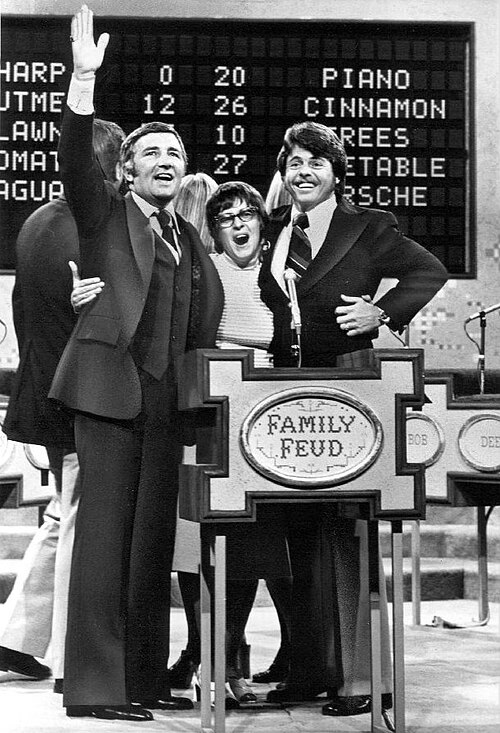
Richard Dawson hosting Family Feud

Family Feud pits two families against each other to guess the most popular answers to survey questions posed to 100 people. In the 80s it was defined by host Richard Dawson, whose showmanship — and famous habit of kissing contestants — made him a daytime star, before a hit 1988 revival brought on host Ray Combs. It was one of the most quotable game shows of the decade.

“Survey says!” and the perfect format

The beauty of Family Feud is that anyone can play it. There’s no trivia to know — just a feel for what regular people would say. Name a reason you’d call in sick. Name something you find in a purse. Contestants guessed, the board revealed the survey’s top answers with that satisfying ding, and the host’s “Survey says!” turned every reveal into a little drama. Two wrong answers from a stealing family and the round flipped. It was social intuition as a game, and families at home played right along, arguing over every answer.

Richard Dawson, the kissing host

For most of the 80s, Family Feud was Richard Dawson’s show. The British-born host — already famous from Hogan’s Heroes — brought a lounge-singer charm, a quick wit, and one very memorable habit: he kissed nearly every female contestant, often on the lips, as a good-luck greeting. It was his trademark, controversial even then, and utterly inseparable from his era of the show. His warmth with contestants and his command of the studio made him one of the definitive game show hosts of the decade.

Remember when a contestant would blurt out a wild, obviously-wrong answer, the host would repeat it deadpan to the studio, and everyone held their breath waiting for the board — before that big red X and the buzzer dropped and the whole family groaned? Those gloriously bad answers were half the reason to watch.

The reboot and Ray Combs

Dawson’s original run ended in 1985, but the format was too good to stay gone. In 1988, Family Feud came roaring back with a new host, Ray Combs, whose energetic, comedic style won over a fresh audience and kept the show a fixture into the 90s. (Dawson would even return briefly.) The late-80s revival proved the Feud engine could outlive any single host — a lesson the show has demonstrated many times since.

Why Family Feud still surveys

Family Feud turned out to be one of the most resilient formats in television, revived again and again with new hosts for new generations. But the 80s gave it its identity: the survey board, the two-family showdown, “Survey says!”, and Richard Dawson’s charm (and kisses). Every version since is playing the game those years perfected.

FAQ

How does Family Feud work?
Two families compete to guess the most popular answers to questions asked of a 100-person survey, racking up points and stealing rounds from each other.

Who hosted Family Feud in the 80s?
Richard Dawson hosted through 1985, and the show was revived in 1988 with host Ray Combs.

Why was Richard Dawson famous on the show?
For his charm and quick wit — and for his trademark habit of kissing female contestants as a greeting, which became inseparable from his era.

What’s the show’s catchphrase?
“Survey says!” — the host’s cue as the board revealed whether a guess made the survey’s top answers.

When was Family Feud revived?
In 1988, with Ray Combs as host, after Dawson’s original run ended in 1985.

Do you need trivia knowledge to play?
No — the game rewards guessing what ordinary people would say, not knowing facts, which is a big part of its wide appeal.


Family Feud was one of the most quotable great 80s game shows — see the whole lineup there, or come on down to The Price Is Right next.

Most hair-metal ballads were about girls, breakups, and lighters in the air. Then White Lion released a song that pleaded, gently and directly, for a better world to hand to the next generation — and it hit No. 3 in the country. There was always a little more heart in White Lion than the spandex let on, and one acoustic song made sure everybody knew it.

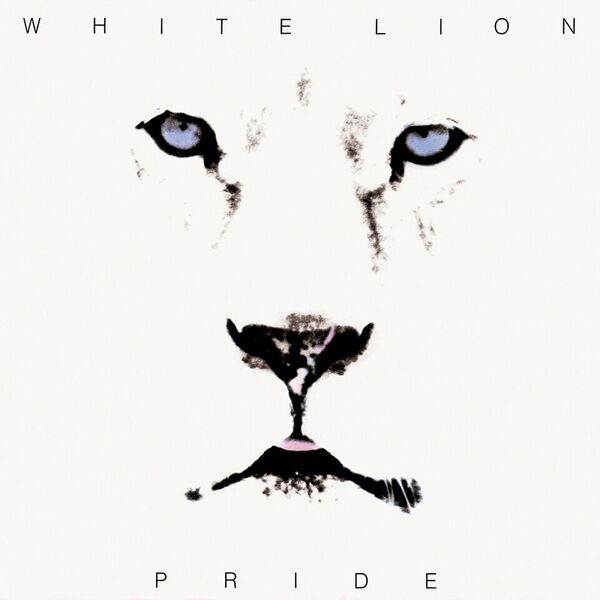
White Lion – Pride (1987) album cover

White Lion is the New York glam-metal band, formed in 1983 by Danish singer Mike Tramp and guitarist Vito Bratta, best known for the hits “Wait” and the tender anti-war ballad “When the Children Cry.” They paired genuine musicianship with a surprising streak of sincerity.

Breaking through with Pride

White Lion came together in New York City in 1983, built around the partnership of frontman Mike Tramp and lead guitarist Vito Bratta. Their breakthrough was the 1987 album Pride, which went double platinum and delivered two major hits: “Wait,” which reached No. 8 on the Billboard Hot 100, and “When the Children Cry,” which climbed all the way to No. 3. That’s a serious chart run, and it put White Lion firmly in the top tier of the late-80s hair-metal scene.

A ballad with something to say

“When the Children Cry” stood apart from the pack. Written shortly after the Live Aid benefit concerts, it’s a gentle acoustic plea for peace and a better future for the world’s children — subject matter a world away from the party anthems dominating the charts. Mike Tramp has said the song drew on his own childhood; his father left when he was around five, leaving his mother to raise three boys. That real personal ache gave the song its weight, and audiences responded, sending it to No. 3 and making it White Lion’s signature.

Remember when a hair band closed its album not with a party anthem but with a quiet, acoustic call for peace — and it became their biggest hit? “When the Children Cry” proved there was room in the loudest genre of the decade for genuine tenderness.

The guitar hero who walked away

There’s a poignant footnote that fans still talk about. Vito Bratta, White Lion’s guitarist, was regarded as one of the most gifted and inventive players of the entire era — a genuine guitar hero mentioned in the same breath as the scene’s best. Yet when White Lion wound down, Bratta largely stepped away from the music business and stayed out of the spotlight, leaving behind a small but revered body of work. It gives the band an air of “what might have been” that only deepens their cult appeal.

Why White Lion endures

White Lion combined chart success, real musical talent, and a rare streak of sincerity that helped their best songs age gracefully. “Wait” still rips, “When the Children Cry” still moves, and the legend of Vito Bratta’s underappreciated brilliance keeps the band a favorite among serious fans of the era. Proof, once again, that the 80s glam scene had more soul in it than its critics ever admitted.

The tapping virtuoso

Vito Bratta’s playing deserves its own spotlight. In an era crowded with flashy shredders, Bratta stood out for his fluid two-handed tapping technique and melodic, tasteful solos — the kind of playing that had guitar magazines and fellow musicians raving. Many fans and critics ranked him among the very best guitarists of the entire glam-metal era, often noting how much feeling he brought to his technical fireworks. That’s what makes his near-total disappearance from music after White Lion so haunting to fans: a player of that caliber choosing to walk away, leaving behind just a couple of albums’ worth of brilliance. Frontman Mike Tramp, by contrast, kept the flame alive for decades with solo work and reworked versions of the White Lion catalog. Together they left a small, potent legacy that rewards anyone who digs past the band’s biggest ballad.

FAQ

Who were the main members of White Lion?
Danish singer Mike Tramp and American guitarist Vito Bratta, who formed the band in New York City in 1983.

What are White Lion’s biggest hits?
“Wait” (No. 8) and “When the Children Cry” (No. 3), both from their 1987 album Pride.

What is “When the Children Cry” about?
It’s a gentle anti-war ballad calling for a better future for the world’s children, written after Live Aid and drawing on Mike Tramp’s own childhood.

Why is guitarist Vito Bratta notable?
He was one of the most respected guitarists of the era but largely left the music business when the band ended, becoming a cult figure among fans.


White Lion brought the heart — find more of the scene in our best 80s hair bands guide, or get bluesy with Cinderella next.

A furry, wise-cracking alien with a snout and an appetite for house cats crash-lands his spaceship into a suburban family’s garage — and then just… moves in. ALF was one of the strangest premises ever to become a mainstream hit, and for a few years in the late 80s that sarcastic little puppet was absolutely everywhere.

ALF (1986) TV series logo

ALF premiered on NBC on September 22, 1986, and ran for four seasons until 1990. It followed the Tanner family, an ordinary suburban household hiding an alien — Gordon Shumway, nicknamed ALF for “Alien Life Form” — after he crashes into their garage. Created by Paul Fusco and Tom Patchett, it became a merchandising juggernaut and one of the decade’s most recognizable characters.

An alien from Melmac with an attitude

ALF wasn’t a cuddly E.T. He was a middle-aged, cynical smart aleck from the destroyed planet Melmac, forever cracking jokes at the family’s expense, causing chaos, and eyeing their cat Lucky as a snack — because on Melmac, cats were a delicacy. That mix of adorable puppet and sarcastic, slightly menacing personality is exactly what made him funny. He was a houseguest who would never, ever leave, and never stop insulting the drapes.

A puppet that took over a studio

Behind the scenes, ALF was a genuine production headache — an elaborate puppet operated largely by creator Paul Fusco from beneath the set, with much of the furniture built on raised platforms to hide the puppeteers. Scenes took forever to shoot. But the payoff was a character so alive that audiences completely bought him as a member of the family. Fusco performed and voiced ALF himself, and that single-minded creative control is a big part of why the character had such a specific, consistent personality.

Remember when ALF would sneak into the kitchen at night, corner the family cat Lucky, and the whole running joke was whether he’d finally eat him — while the Tanners kept catching him mid-stalk? That cat-hunting gag ran the entire series and somehow never crossed the line from funny to disturbing.

Merchandise mania

For a stretch, ALF’s face was on everything: plush dolls, lunchboxes, T-shirts, a Saturday-morning cartoon, comic books, records, and a legendary run of appearances where the puppet “hosted” and ad-libbed at other celebrities. He guest-“interviewed,” crashed talk shows, and became a marketing machine. The character arguably got bigger than the show itself — which is why so many people who never watched a full episode can still picture him instantly.

Why ALF still lands

ALF is pure 80s in a way few things are — a bizarre high-concept idea, executed with total commitment, wrapped around a wise-guy character built for the merchandise aisle. He’s been revived, rebooted, and endlessly memed. That furry face from Melmac, forever plotting against the family cat, is baked into the decade’s pop-culture DNA.

FAQ

When did ALF air?
It premiered September 22, 1986, on NBC and ran for four seasons, ending in 1990.

What does ALF stand for?
“Alien Life Form” — the nickname the Tanners give their houseguest, whose real name is Gordon Shumway.

Where is ALF from?
The planet Melmac, which was destroyed, leaving him stranded on Earth.

Why does ALF want to eat the cat?
On his home planet Melmac, cats were considered food — so the family cat, Lucky, is a constant temptation and a running gag.

Who created and voiced ALF?
Paul Fusco co-created the show and performed and voiced ALF himself, operating the puppet from below the set.

Was ALF hard to film?
Yes — the elaborate puppet and hidden puppeteers made shooting slow and complicated, with sets built to conceal the operators.


ALF was one of the weirdest, biggest characters of 80s TV — meet the rest of the gang in our 80s pop culture icons guide, or drop in on The Golden Girls next.

Two teams of kids, a trivia question, and a way out: if you didn’t know the answer, you could “dare” the other team, they could “double dare” you back, and eventually somebody had to take the physical challenge — which almost always meant getting absolutely covered in slime, whipped cream, or something worse. Double Dare was every kid’s fantasy: a TV show where making a giant mess was the whole point.

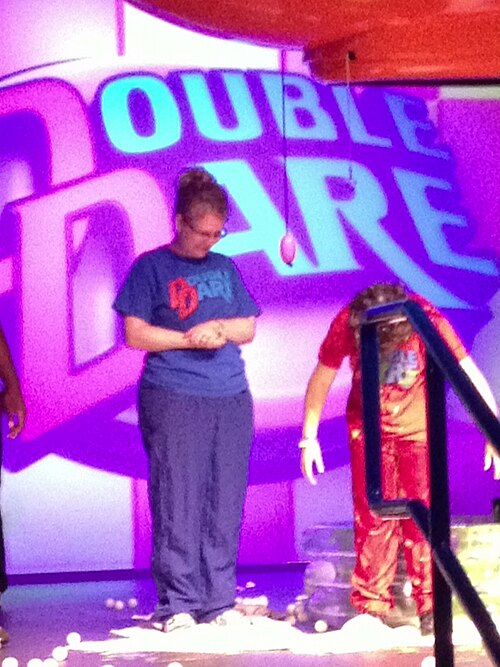
Double Dare obstacle course challenge

Double Dare premiered on Nickelodeon on October 6, 1986, hosted by Marc Summers. Two teams competed by answering trivia and taking on messy physical challenges, culminating in an elaborate, gunk-filled obstacle course for the grand prize. It became Nickelodeon’s signature show and helped define what 80s kids’ television felt like — loud, gross, and gloriously fun.

Dares, double dares, and the physical challenge

The rules were pure playground logic. A team faced a trivia question; if they didn’t want to answer, they could dare their opponents to do it for more money. The opponents could double dare it back. When the dares maxed out, the team stuck holding it took a physical challenge instead — some ridiculous, timed, messy stunt like passing an egg down a line using only their chins, or fishing a flag out of a giant nose full of goo. Getting the answer wrong had never looked so appealing.

The obstacle course finale

The whole show built to the finale: the Double Dare obstacle course, eight stations of pure mess that the winning team raced through against the clock to grab flags for prizes. The One-Armed Bandit, the Sundae Slide, and — most famously — the giant human nose you had to reach into and pull a flag out of a wall of green snot. Kids in the studio ended each show soaked, slimed, and grinning. Every kid watching at home desperately wanted a turn.

Remember when a contestant had to dig through a giant papier-mâché nose oozing with green slime to find the flag, coming out dripping head to toe — and the entire studio of kids went absolutely wild? That messy obstacle course finale was the reason a whole generation begged their parents to get them on the show.

Marc Summers, ringmaster of the mess

Host Marc Summers was the perfect ringmaster — quick, energetic, unbothered by the chaos, and always ready with the rules and a grin. What almost nobody knew at the time is that Summers privately struggled with obsessive-compulsive disorder, which made hosting the messiest show on television a genuinely difficult act of will. He kept it up for years, becoming one of the most recognizable faces on kids’ TV and forever tied to the green slime.

Why Double Dare still sticks

Double Dare basically invented the template for the messy kids’ game show and made slime a permanent part of Nickelodeon’s identity — a legacy that runs straight through to the Kids’ Choice Awards. It was revived multiple times across the decades because the core idea never gets old: give kids trivia, dares, and a giant nose full of goo, and you’ve got television magic.

FAQ

When did Double Dare premiere?
It debuted on Nickelodeon on October 6, 1986, hosted by Marc Summers.

How did the game work?
Teams answered trivia or “dared” each other; whoever got stuck took a messy physical challenge, and the winning team ran a gunk-filled obstacle course for prizes.

Who hosted Double Dare?
Marc Summers, who became a defining face of 80s Nickelodeon.

What was the obstacle course?
An eight-station messy race — including the famous giant nose full of green slime — that the winning team ran against the clock to grab flags for prizes.

Why is Double Dare so associated with slime?
Its messy challenges and gooey obstacle course helped make green slime a signature part of Nickelodeon’s brand for decades.

Was Double Dare ever revived?
Yes — it returned in multiple later versions, including revivals decades after the original run.


Double Dare was the messiest of the great 80s game shows — see them all there, or test your luck with Press Your Luck next.

You set the alarm yourself. You crept out before your parents were up, poured a bowl of something sugary, sat cross-legged three feet from the TV in your pajamas, and didn’t move for four straight hours. For kids in the 80s, Saturday morning wasn’t a time slot — it was a sacred weekly ritual, and the cartoons were the whole religion.

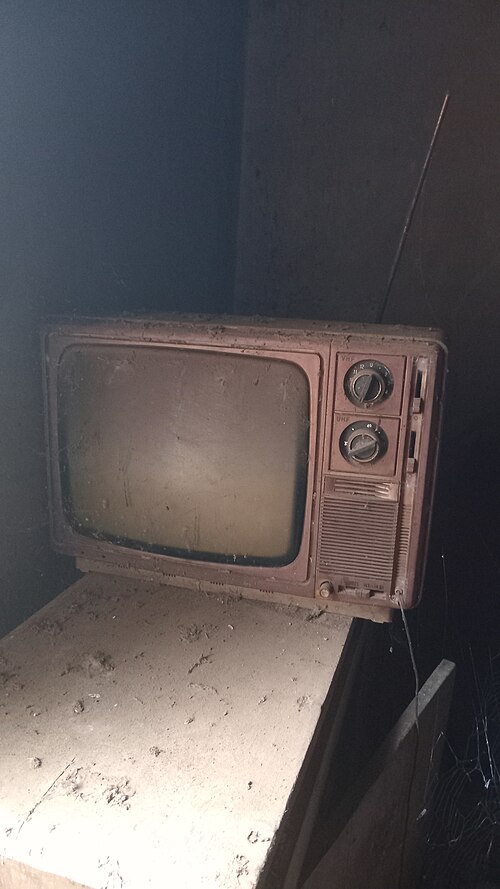
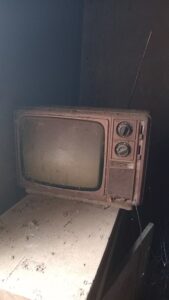
A vintage TV set, the altar of 80s Saturday mornings

80s Saturday morning cartoons were a block of animated programming the major networks aired every Saturday, and for a generation of kids it was the highlight of the week — a lineup of colorful, toy-tied, wildly imaginative shows watched over cereal in pajamas. It was appointment television before anyone used the phrase, and it’s one of the decade’s most fondly remembered institutions.

The lineup that owned the morning

The 80s were arguably the peak of Saturday morning animation, and the shows came fast and bright. The Smurfs was a Saturday juggernaut for years, a whole village of little blue creatures that dominated the block. Muppet Babies reimagined Jim Henson’s characters as toddlers in a nursery, powered by pure imagination. Alvin and the Chipmunks brought the singing rodents back. The Real Ghostbusters spun the hit movie into a beloved animated series. And glam favorites like Jem and the Holograms packed music videos into every episode. Whatever you were into, the morning had a show for it.

Toys that became TV — and TV that became toys

A defining feature of 80s cartoons was the tight bond between shows and toy aisles. Transformers, G.I. Joe, He-Man and the Masters of the Universe, My Little Pony, and Care Bears all existed in a loop where the cartoon sold the toy and the toy sold the cartoon. Regulators and parents debated whether these were “programs” or “half-hour commercials,” but kids didn’t care — they just wanted more Optimus Prime. That business model defined the decade’s animation and produced some of its most enduring characters.

Remember when the networks would air those “coming this fall” preview specials hyping the new Saturday morning lineup — and you’d study it like a battle plan, mapping out exactly which shows you’d watch and in what order before the season even started? Planning your Saturday was half the fun.

Cereal, commercials, and the whole experience

Part of what made it magic was everything around the cartoons: the sugary-cereal commercials with their own cartoon mascots, the “the more you know”-style public-service spots, the toy ads that doubled as wish lists. It was a complete, self-contained kid universe that existed only for those few hours on Saturday. When the last cartoon ended and the sports or infomercials came on, the spell broke — and you started the countdown to next week.

Why we still miss Saturday mornings

The ritual eventually faded — cable, 24-hour cartoon channels, and later streaming made cartoons available every hour of every day, which is wonderful and also quietly killed the specialness. That’s exactly why 80s kids remember Saturday mornings so vividly: the shows were great, but the scarcity made them an event. For one generation, the best part of the whole week arrived with a cereal bowl and a theme song.

FAQ

What were the most popular 80s Saturday morning cartoons?
Favorites included The Smurfs, Muppet Babies, The Real Ghostbusters, Alvin and the Chipmunks, and toy-tied hits like Transformers, G.I. Joe, He-Man, My Little Pony, and Care Bears.

Why were 80s cartoons so tied to toys?
Many shows were created alongside toy lines, in a loop where the cartoon promoted the toys and vice versa — a business model that defined the era and sparked debate over “program-length commercials.”

When did kids watch Saturday morning cartoons?
Networks aired a block of cartoons on Saturday mornings, typically for several hours, which kids watched over breakfast.

Why did the Saturday morning cartoon ritual fade?
The rise of cable, 24-hour cartoon channels, and later streaming made animation available all the time, removing the scarcity that made Saturday mornings feel special.

Were the cartoons only on one channel?
No — the major broadcast networks each aired their own competing Saturday morning lineups, and choosing between them was part of the ritual.


Saturday mornings were the heartbeat of 80s kids’ TV — explore more of the decade in our 80s pop culture icons guide, or tune into Jem and the Holograms next.

There’s a look people mean when they say “the 80s” — the pastel blazer over a t-shirt, the loafers with no socks, the neon skyline, the stubble. Half of that look didn’t just appear in the 80s. It came out of one TV show, on one night, on NBC.

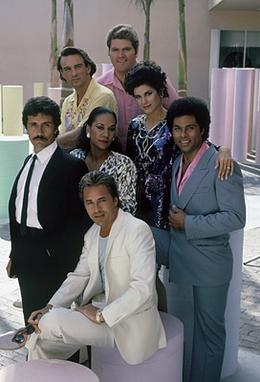
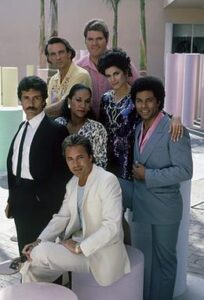
Miami Vice (1984) NBC promotional photo of Crockett and Tubbs

Miami Vice premiered on September 16, 1984, and ran five seasons until 1989. It followed two undercover detectives — Sonny Crockett (Don Johnson) and Ricardo Tubbs (Philip Michael Thomas) — busting drug runners across a sun-soaked, pastel-drenched Miami. Created by Anthony Yerkovich and driven by executive producer Michael Mann, it didn’t just air in the 80s. It defined how the decade looked, sounded, and dressed.

“MTV cops” — and they meant it as a pitch

The legend is that the show started from a two-word network memo: “MTV cops.” Whether or not that’s exactly how it went, that’s exactly what landed on screen. Mann took big-screen production techniques — real film stock, real Miami locations, moody lighting — and pointed them at a Friday-night cop show. Nobody had done that. Television suddenly looked like cinema.

And it sounded like nothing else on TV. Miami Vice spent up to $10,000 an episode on original recordings, dropping tracks from U2, Todd Rundgren, and Frankie Goes to Hollywood straight into the action. Instead of a score telling you how to feel, you got the actual hits of 1985 scoring a speedboat chase. Jan Hammer’s pulsing synth theme became a genuine chart-topper — a TV instrumental that people bought on purpose.

Remember when the pilot let a Ferrari cruise through the Miami night while Phil Collins’ “In the Air Tonight” played almost end to end — no dialogue, just mood? That scene is the moment TV realized it could be a music video and get away with it.

The style that escaped the screen

Don Johnson’s Crockett walked out of the TV and into every mall in America. The unstructured blazers, the t-shirts underneath, the pushed-up sleeves, the deliberate stubble, the no socks — men who had never heard of Armani were suddenly dressing like a Miami vice cop. The show’s palette (flamingo pink, teal, white) got painted onto everything from bedrooms to actual buildings.

That’s the rare TV show that didn’t just reflect the culture — it handed the culture a wardrobe and a color scheme and said here, wear this for a decade.

Why it still feels like the 80s in a bottle

Later cop dramas spent years trying to recapture what Miami Vice did by accident: the marriage of music, style, and city into one unmistakable vibe. Few ever got close. Watch five minutes of it now and you’re not watching a rerun — you’re watching a time capsule with the lid off. It’s the show that made the 80s look like the 80s.

FAQ

When did Miami Vice premiere?
It premiered September 16, 1984, on NBC and ran for five seasons, ending June 28, 1989.

Who starred in Miami Vice?
Don Johnson as Detective Sonny Crockett and Philip Michael Thomas as Detective Ricardo Tubbs, filmed on location in Miami.

Who created Miami Vice?
It was created by Anthony Yerkovich, with Michael Mann as executive producer shaping its signature cinematic style.

Why was the music such a big deal?
The show spent as much as $10,000 per episode licensing original recordings from major artists — using real hits, not just a background score. Jan Hammer’s synth theme became a chart hit itself.

Why is Miami Vice considered so influential?
It brought film-quality production and a music-video sensibility to prime-time TV, and its pastel-and-no-socks style spilled off the screen and defined 80s men’s fashion.


Miami Vice was one pillar of a golden age of 80s TV — cruise the rest of it in our 80s pop culture icons guide, or shift gears with Knight Rider next.

You know the logo before you know your own phone number. You can hum the theme. And if someone asks “who you gonna call?” your mouth answers before your brain does. That’s the footprint Ghostbusters left on the 80s — and it all runs on four guys who felt less like heroes than like coworkers you’d actually want.

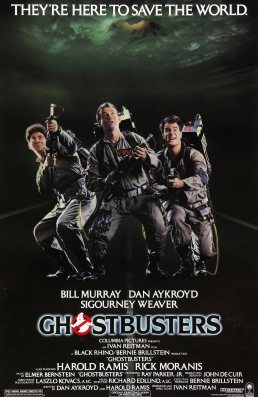
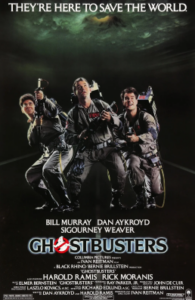
Ghostbusters (1984) movie poster

The Ghostbusters characters are Peter Venkman, Ray Stantz, Egon Spengler, and Winston Zeddemore — a crew of paranormal exterminators who start a ghost-catching business in New York City in the 1984 comedy. Bill Murray, Dan Aykroyd, Harold Ramis, and Ernie Hudson turned “parapsychologist” into the coolest job a kid could imagine.

The team, and what each one brought

  • Dr. Peter Venkman (Bill Murray): the smooth-talking front man. He’s got more social game than science, talks the mayor into backing the team, and treats the apocalypse like a mild inconvenience. Murray’s deadpan is the movie’s engine.
  • Dr. Ray Stantz (Dan Aykroyd): the heart. Ray believes — in ghosts, in the mission, in the firehouse. He literally mortgaged the house he was born in to fund the company. Nobody loves the job more.
  • Dr. Egon Spengler (Harold Ramis): the brain. Bespectacled, laconic, deadly serious, Egon builds the science — and delivers the immortal warning: “Don’t cross the streams.”
  • Winston Zeddemore (Ernie Hudson): the everyman. He joins because it’s a steady paycheck, which makes him the audience’s stand-in — the regular guy reacting to the insanity exactly the way we would.

Four experts, one perfect balance

The reason the team clicks is that nobody overlaps. Venkman sells it, Ray believes it, Egon builds it, Winston grounds it. Drop any one and the chemistry collapses. It’s the rare movie ensemble where you can name everyone’s job in the group and their personality in the same breath — which is exactly why kids spent the rest of the decade arguing over who they’d be.

Remember when the giant Stay Puft Marshmallow Man came stomping down the street — a hundred-foot sailor-suited dessert as the form of a world-ending god? That’s Ghostbusters in a nutshell: genuinely scary, and completely ridiculous, at the same time.

Why the crew endures

Ghostbusters worked because it treated the supernatural like a small business problem — permits, clients, unlicensed nuclear accelerators strapped to your back. The proton packs and the Ecto-1 are the toys, but the characters are the reason it stuck. Four distinct guys, one firehouse, zero fear. Who you gonna call? You already know.

The theme, the gear, and the empire

Some of what made these characters immortal is everything bolted around them. Ray Parker Jr.’s “Ghostbusters” theme became an inescapable hit — a song built around a question (“Who you gonna call?”) that the whole world learned to shout back. The gear became legend too: the proton packs, the ghost traps, the PKE meter, and the Ecto-1, that converted 1959 ambulance wailing through Manhattan. Kids didn’t just watch Ghostbusters; they wanted the equipment.

The team was popular enough to fuel a 1989 sequel, an animated series (The Real Ghostbusters), a mountain of toys, and revivals decades later. But it always came back to the four guys. The reason the franchise keeps getting rebooted — and the reason each new version gets measured against the original — is that Venkman, Ray, Egon, and Winston set an impossibly high bar for movie-team chemistry. You can hand new actors the packs and the car, but you can’t easily recapture four personalities that locked together this perfectly. That’s why, forty years on, the answer to “who you gonna call?” hasn’t changed.

FAQ

Who are the four Ghostbusters?
Peter Venkman (Bill Murray), Ray Stantz (Dan Aykroyd), Egon Spengler (Harold Ramis), and Winston Zeddemore (Ernie Hudson).

Who wrote Ghostbusters?
Dan Aykroyd and Harold Ramis co-wrote the 1984 film; it was directed by Ivan Reitman.

What’s the most famous Ghostbusters line?
“Don’t cross the streams,” delivered by Egon — plus the theme song’s “Who you gonna call? Ghostbusters!”

Which Ghostbuster is the regular guy?
Winston Zeddemore, who joins for the paycheck and reacts to the chaos like a normal person — the audience’s stand-in.

What is the Ecto-1?
The Ghostbusters’ iconic ride — a converted 1959 Cadillac ambulance, sirens blaring, packed with ghost-catching gear. Along with the proton packs and the firehouse headquarters, it’s one of the most recognizable pieces of movie equipment ever, and a big part of why kids wanted to be Ghostbusters, not just watch them.


The Ghostbusters are 80s comedy royalty — meet more in our 80s movie characters roundup, or say hi to Gizmo next.

At first glance they looked like all the others — the hair, the scarves, the spandex, the mid-80s glam-metal uniform. Then Tom Keifer opened his mouth and out came a rasp that sounded like it had been dragged through decades of Delta blues and cheap whiskey. Cinderella dressed like a hair band but played like something older and deeper, and that’s exactly what made them last.

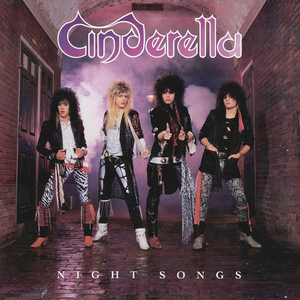
Cinderella – Night Songs (1986) album cover

Cinderella is the Philadelphia rock band fronted by Tom Keifer, who brought genuine blues grit to 80s glam metal with hits like “Nobody’s Fool” and “Don’t Know What You Got (Till It’s Gone).” They were the scene’s soulful outliers.

More blues than glitter

Cinderella arrived during the mid-80s hair-rock explosion and had the look to fit right in — but the sound told a different story. Keifer, the band’s lead singer, main songwriter, and guitarist, wrote from a bluesier, more traditional hard-rock place than most of his Sunset Strip peers. Their debut Night Songs went multi-platinum on the strength of “Nobody’s Fool,” and as the decade went on, the band leaned even harder into blues and roots rock, setting themselves apart from the party-anthem crowd.

The ballad that showed their depth

Cinderella’s biggest moment came with “Don’t Know What You Got (Till It’s Gone),” a power ballad from their 1988 album Long Cold Winter. Written by Keifer, it became the band’s most successful single, peaking at No. 12 on the Billboard Hot 100 in November 1988. Its video — filmed against the stark, beautiful backdrop of California’s Mono Lake and the ghost town of Bodie — got heavy MTV rotation and pushed the band to a new level.

What made the song hit wasn’t the hair or the video. It was Keifer’s voice, cracking with real ache on a lyric everyone understood: you don’t know what you’ve got till it’s gone. In a genre often accused of being all surface, Cinderella found something true.

Remember when you realized the guy with the biggest hair on the channel could actually sing — really sing, with a growl that belonged on an old blues record? Cinderella was the band that quietly rewarded anyone who listened past the look.

Why Cinderella endures

Cinderella’s blues foundation is exactly why they aged better than a lot of their flashier peers. When people dismiss 80s hair metal as all style and no substance, Cinderella is the counterexample — a band whose songs held up because there was real craft and real feeling underneath the glam packaging. Tom Keifer still performs those songs, and that unmistakable rasp still stops a room. Style got them in the door; the blues let them stay.

Going deeper into the blues

As the decade wore on, Cinderella didn’t chase the trends — they dug the other way, deeper into blues and classic rock. Albums like Long Cold Winter and Heartbreak Station traded some of the glam sparkle for slide guitar, horns, and a rootsier feel, with hits like “Gypsy Road” and “The Last Mile.” It was a bold move for a band that could have just kept cranking out radio-friendly ballads, and it’s a big reason their catalog holds up. Tom Keifer’s own story adds to the legend: he later battled serious vocal-cord problems that threatened to end his singing entirely, and fought his way back to performing — a fitting arc for a band that always had more grit and resilience than the glam label suggested.

FAQ

Who is the singer of Cinderella?
Tom Keifer, the band’s lead singer, primary songwriter, and guitarist, known for his distinctive bluesy rasp.

What is Cinderella’s biggest hit?
“Don’t Know What You Got (Till It’s Gone),” which reached No. 12 on the Billboard Hot 100 in 1988.

How were Cinderella different from other hair bands?
They looked the part but played with genuine blues and roots-rock grit, setting them apart from the party-anthem style of the scene.

Where is Cinderella from?
Philadelphia, Pennsylvania — they emerged from the East Coast rather than the Los Angeles Sunset Strip that spawned many of their glam-metal peers, part of what gave them a distinct, bluesier identity.

What are Cinderella’s other big songs?
Beyond “Don’t Know What You Got (Till It’s Gone),” the band scored with “Nobody’s Fool,” “Gypsy Road,” and “The Last Mile” as they leaned deeper into blues rock across their multi-platinum and platinum-selling albums.


Cinderella brought the soul — find more of the scene in our best 80s hair bands guide, or meet White Lion next.

While every other 80s sitcom was serving up warm hugs and lessons learned, one show gave us a miserable shoe salesman, hand permanently in his waistband, insulting his family from a beat-up couch. Married… with Children was the anti-sitcom — loud, crude, and gleefully mean — and it helped launch an entire television network.

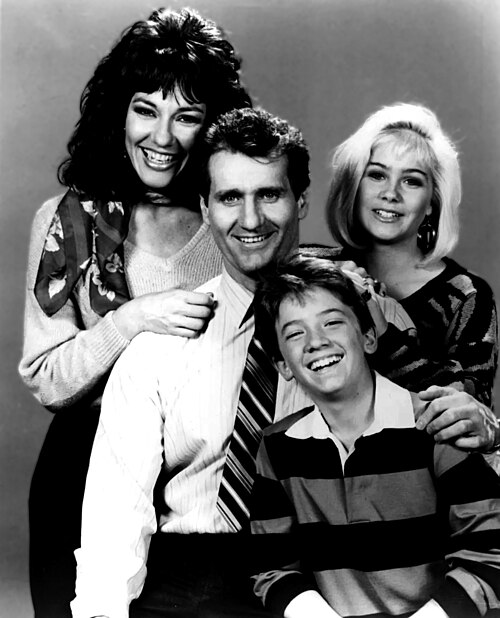
Married... with Children (1987) Bundy family photo

Married… with Children premiered on April 5, 1987, as one of the first shows on the brand-new Fox network. It followed the Bundys — sad-sack shoe salesman Al, his loud wife Peggy, and their kids Kelly and Bud — a proudly dysfunctional family in suburban Chicago. Created by Ron Leavitt and Michael G. Moye, it ran for eleven seasons and became Fox’s first breakout hit.

The family TV said you weren’t allowed to have

The whole joke was a middle finger to the wholesome family sitcom. Al Bundy (Ed O’Neill) hated his job, his life, and mostly his family — a former high school football hero reduced to selling women’s shoes and reliving the four touchdowns he scored at Polk High. Peggy (Katey Sagal) was a big-haired, bon-bon-eating wife who never cleaned or cooked. Kelly (Christina Applegate) was the dim, boy-crazy daughter; Bud (David Faustino) the scheming, luckless son. Nobody hugged. Nobody learned. It was the exact opposite of the Huxtables or the Keatons, and audiences found it hilarious.

The show that built Fox

Married… with Children mattered beyond its laughs: it was foundational to Fox itself. When the fledgling fourth network launched, it needed something loud enough to make people notice, and the Bundys delivered. The show’s crude, working-class edge became part of Fox’s early identity and paved the way for the network’s later willingness to be provocative — a lineage that runs straight to The Simpsons and beyond.

Remember when a protest campaign against the show’s raunchiness — led by an offended viewer writing to sponsors — actually backfired and made Married… with Children more famous than ever? The controversy handed the show a wave of free publicity, and its ratings climbed as the whole country tuned in to see what the fuss was about.

Al Bundy, working-class antihero

Ed O’Neill’s Al Bundy became an unlikely icon — the patron saint of the beaten-down American dad. Everything about him was funny and a little tragic: the Polk High glory days, the loathing for his customers, the way he’d flop onto the couch and stick his hand in his pants like a man who’d given up. He was a cartoon, but a recognizable one, and O’Neill played him with such deadpan commitment that Al outlasted almost every “nicer” sitcom dad of the era.

Why Married… with Children still stings

The show proved there was a huge audience hungry for something that didn’t pretend family life was a greeting card. It made stars of its cast, helped build a network from scratch, and its cheerfully nasty tone influenced a generation of comedies. Whenever a sitcom leans into dysfunction instead of warmth, it’s walking a path the Bundys paved.

FAQ

When did Married… with Children premiere?
It debuted April 5, 1987, as one of the first programs on the new Fox network, and ran for eleven seasons.

Who starred in the show?
Ed O’Neill as Al Bundy, Katey Sagal as Peggy, Christina Applegate as Kelly, and David Faustino as Bud.

What did Al Bundy do for a living?
He was a women’s shoe salesman who constantly reminisced about scoring four touchdowns in a single game at Polk High.

Who created Married… with Children?
Ron Leavitt and Michael G. Moye.

Why was the show important to Fox?
It was one of the network’s first hits and helped establish Fox’s edgier identity in its early years.

Did a protest campaign really boost the show?
Yes — an organized boycott effort over the show’s content drew national attention and ended up increasing its ratings and fame.


Married… with Children was the black sheep of 80s TV — meet the whole family in our 80s pop culture icons guide, or visit the far tidier Keatons on Family Ties next.

Scroll to top