Month: July 2026

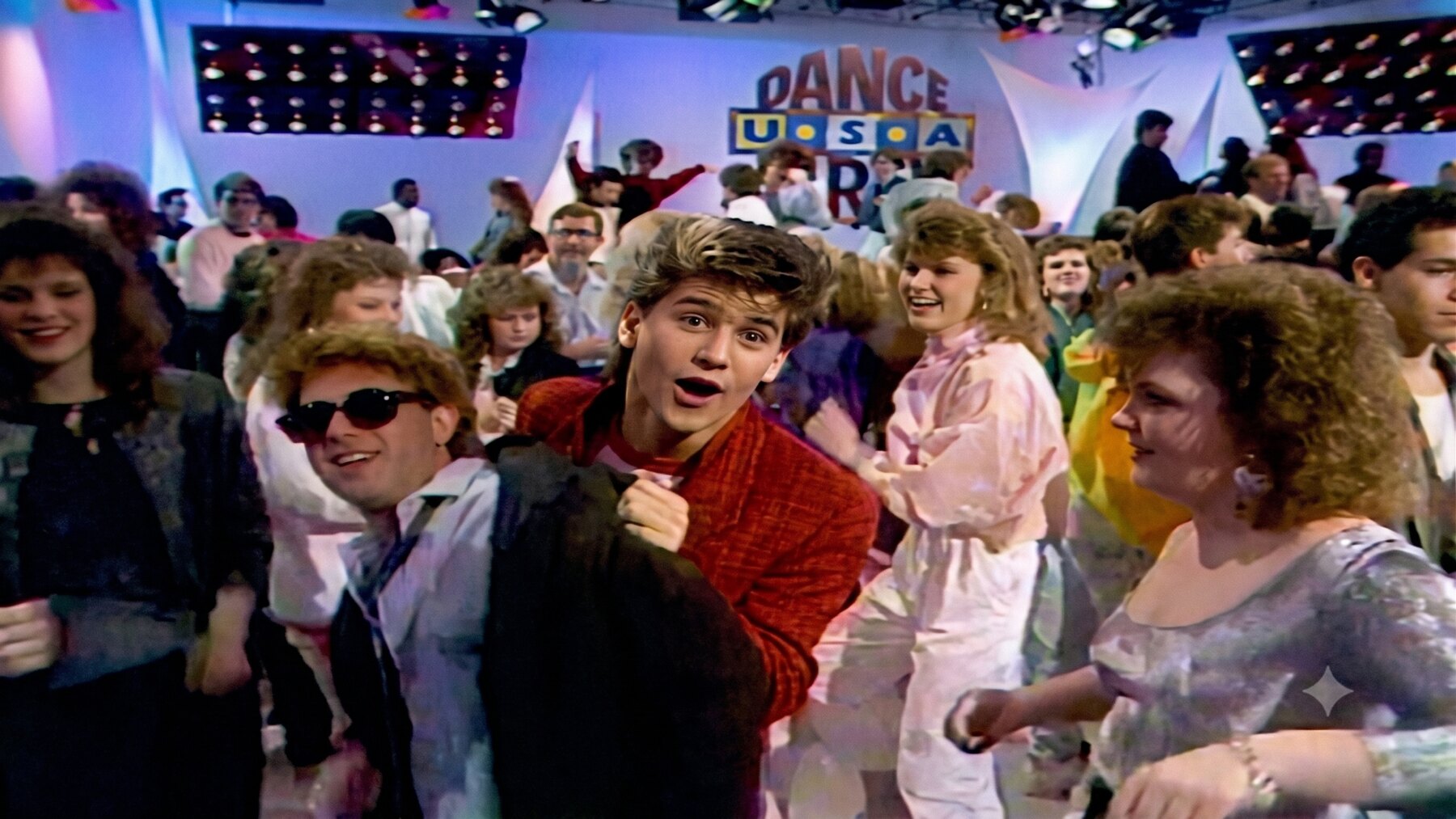
April 12, 1986. A half-hour dance show taped in Philadelphia quietly premiered on the USA Network.
Jason Pascoe front and center on the Dance Party USA floor

Nobody involved thought they were making history. We can say that with some authority, because we were there — and we can promise you that the main things on anyone’s mind were hair, clothes, and not looking at the camera at the wrong moment.

But Dance Party USA turned 40 this year, and forty years is the kind of number that makes you sit down for a second.

The short version, for the newcomers: the show ran from that April afternoon in 1986 all the way to June of 1992. It started as a half hour and got bumped to a full hour in 1987, because apparently America could not get enough of teenagers dancing in a Philadelphia TV studio — and honestly? America was right.

Bobby got there first, coming up through the Philly dance-show world in 1985, and ended up hosting the party from ’89 to ’91. Jason was the co-conspirator-in-chief in the studio from ’86 through ’88, back when the show was brand new and none of us knew what it would become. Between us we saw the whole arc — the regulars, the guest artists, the songs, the sunburns from Penns Landing remotes nobody warned us about.

What still gets us about that show isn’t the nostalgia, exactly. It’s that it was live-wire real in a way TV barely is anymore. Real teenagers. Real reactions. Somebody’s actual first heartbreak happening just off camera while the floor kept moving. You can’t write that. You could only point a camera at it, five days a week, and let it happen.

Forty years later, people still find the cast online, still send us their memories, still ask the same question: “was it as fun as it looked?”

It was more fun than it looked. And it looked like the most fun on television.

We talk about the show constantly on the Awesome 80s Podcast — the stories that never made air are half the reason the podcast exists. Forty years in, the party’s still going. It just has better parking now.

— Bobby and Jason

FAQ

When did Dance Party USA premiere?
Dance Party USA premiered on the USA Network on April 12, 1986, and ran until June 27, 1992.

Where was Dance Party USA filmed?
The show was taped in Philadelphia, at TV studios including WPHL-TV and WGBS, with famous remote shoots at spots like Penns Landing.

How long was each episode?
It began as a half-hour show in 1986 and expanded to a full hour in 1987.

Were Bobby and Jason really on Dance Party USA?
Yes — Bobby was part of the Philly dance-show scene from 1985 and hosted Dance Party USA from 1989 to 1991; Jason was a regular on the floor from 1986 to 1988.
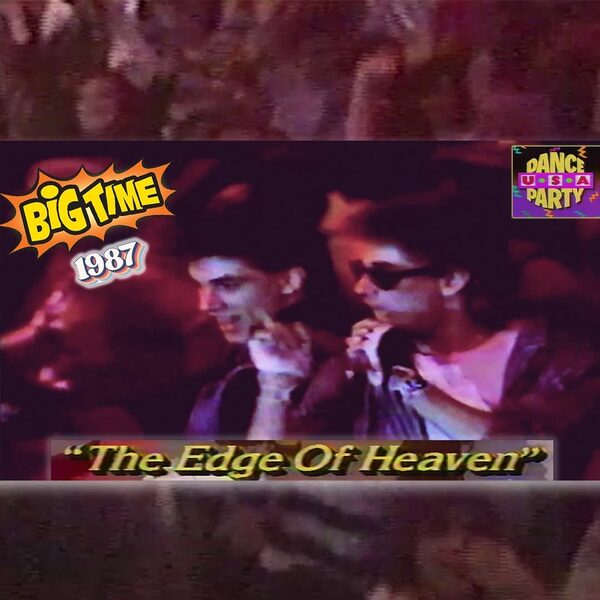
Forty years. Say it out loud and it still doesn’t sound right.

The Edge of Heaven lip-sync on Dance Party USA, 1987

On June 28, 1986, Wham! walked onto the stage at Wembley Stadium in front of 72,000 people and said goodbye. They called the show “The Final,” which was about as subtle as anything else in 1986 — meaning not at all, and we loved it that way. Elton John showed up. Simon Le Bon showed up. George and Andrew went out on top, at the absolute peak, in the sunshine.

And here’s the part that still gets us: while all that was happening across the ocean, we were keeping the party going on our side of it. That same summer, “The Edge of Heaven” was in heavy rotation on the Dance Party USA floor — and yes, there is tape of us performing it, and no, we will never stop bringing it up.

Wham! breaking up made zero sense to us at sixteen. Nobody walks away at the top! But that was always the George Michael move — he knew exactly where he was going, and where he went turned out to be one of the great solo runs in pop history. Looking back at it now, “The Final” wasn’t an ending. It was a handoff.

What we remember about that summer:

The singles just kept coming. “Everything She Wants.” “I’m Your Man.” “The Edge of Heaven.” You couldn’t turn on a radio in Philadelphia — or anywhere else — without George’s voice falling out of it. The greatest hits album (also called The Final, because again, subtlety) landed right before the show, and it was basically the soundtrack of our entire year.

If you were anywhere near a teenager in 1986, Wham! wasn’t a band. Wham! was the weather.

We said our real goodbye back in 2016, and we still mean every word of it. But an anniversary like this one isn’t sad. Forty years later the songs do exactly what they did the first time — three notes in and you’re back, mixtape spinning, whole summer ahead of you.

Play something from The Final today. Loud. That’s an order from two guys who owe that band more than we can ever say.

— Bobby and Jason

FAQ

When was Wham!’s final concert?
Wham! played their farewell concert, “The Final,” at Wembley Stadium in London on June 28, 1986, in front of about 72,000 fans.

Who appeared at Wham!’s farewell show?
Along with George Michael and Andrew Ridgeley, the show featured guests including Elton John and Duran Duran’s Simon Le Bon.

Why did Wham! break up in 1986?
The duo chose to end at their peak, with George Michael moving into the solo career that produced Faith the following year. They went out on top — on purpose.

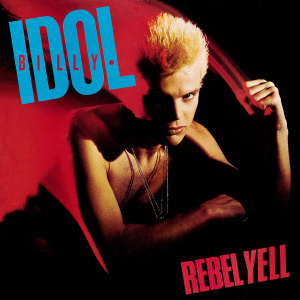
The spiky bleached hair. The curled-lip sneer. The leather, the fist, the “More! More! More!” Billy Idol took the raw attitude of British punk, polished it just enough for MTV, and became one of the most instantly recognizable rock stars of the 80s. He looked like trouble and sounded like a great time, and the combination was irresistible.

Billy Idol – Rebel Yell (1983) album cover

Billy Idol is the English rocker who brought a punk snarl to 80s MTV, scoring hits like “Rebel Yell,” “White Wedding,” and “Dancing with Myself” with his sneering charisma and video-ready image. He was rebellion you could dance to.

From punk to solo stardom

Idol got his start in the British punk scene as the frontman of Generation X. When that band broke up in the early 80s, he went solo — and reinvented himself for the music-video age. His 1982 self-titled debut album introduced the formula: punk energy, hard-rock hooks, and a look built for the camera. “White Wedding” and “Dancing with Myself” (the latter reworked from a Generation X track) became MTV staples and made Idol a star as part of the Second British Invasion.

Rebel Yell and the peak

Idol’s breakthrough came with his second album, Rebel Yell (1983), a major commercial success that went double platinum. Its title track — with that unforgettable “in the midnight hour” howl — became his signature anthem, and the moody ballad “Eyes Without a Face” showed he had more than one gear. The album made him a genuine arena-filling rock star while keeping the snarl fully intact. He’d found the sweet spot between danger and pop appeal, and audiences couldn’t get enough.

Made for MTV

Billy Idol’s rise is inseparable from MTV. His whole package — the sneer, the fist-pump, the bleached spikes, the leather — was tailor-made for the small screen, and he became one of the channel’s defining faces. His videos were high-energy, rebellious, and impossible to ignore, turning him into a visual icon as much as a musical one. In a way, he was proof that punk’s raw attitude could survive the transition to the glossy video era — you just had to know how to point it at a camera.

Remember when “Mony Mony” would come on at every school dance and the whole crowd would shout back the (unprintable) chant between the lines? Idol’s cover became a massive live favorite and a party-time institution, the kind of song that turned any gymnasium into a rowdy sing-along.

Why Billy Idol endures

Billy Idol’s 80s run made him one of the era’s most memorable rock stars — a bridge between punk’s rebellious spirit and MTV’s mainstream reach. His biggest songs still detonate at parties and on classic-rock radio, and that sneering, fist-raised image remains pure 80s shorthand for cool rebellion. He took the attitude of the underground and made it a permanent part of the decade’s pop landscape, without ever losing the snarl.

FAQ

What are Billy Idol’s biggest 80s hits?
“Rebel Yell,” “White Wedding,” “Dancing with Myself,” “Eyes Without a Face,” and his cover of “Mony Mony.”

What band was Billy Idol in before going solo?
He fronted the British punk band Generation X before launching his solo career in the early 1980s.

What is Billy Idol’s most famous album?
Rebel Yell (1983), a double-platinum success featuring the title track and “Eyes Without a Face.”

Why was Billy Idol so popular on MTV?
His rebellious punk image — the sneer, bleached spikes, and leather — combined with high-energy videos made him one of the channel’s defining stars.

Was “Dancing with Myself” originally a solo song?
No — it was first recorded with his earlier band Generation X before being reworked for his solo career.

What made Billy Idol stand out from other 80s pop stars?
He fused punk’s raw rebellious attitude with polished, video-friendly hard rock, creating a look and sound that was both dangerous and accessible.

Who helped create Billy Idol’s signature sound?
Much of it came from his long partnership with guitarist Steve Stevens, whose flashy playing defined tracks like “Rebel Yell,” along with producer Keith Forsey, who helped fuse Idol’s punk energy with polished, radio-ready rock.


Billy Idol brought the snarl — explore more of the decade in our 80s pop culture guide, or meet the video kings Duran Duran next.

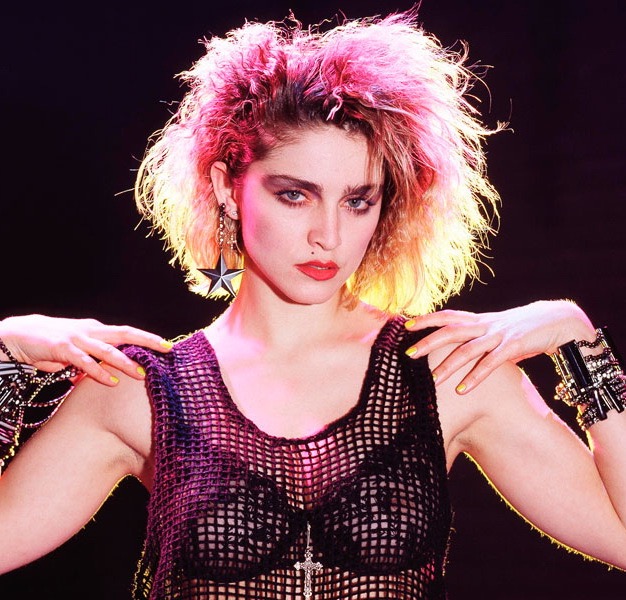
Lace gloves, a crucifix, stacked rubber bracelets, and hair like she’d just rolled out of bed and decided to conquer the world. In the 80s, you didn’t just hear Madonna — you saw a million teenage girls dressed exactly like her. She didn’t just make hits. She made a look, a movement, and ultimately herself into the most important pop star of the decade.

Madonna performing in the mid-1980s

Madonna is the singer who rose from New York clubs to become the Queen of Pop in the 1980s, defining the decade with hits like “Like a Virgin” and “Material Girl” and an image the whole world copied. She turned reinvention into an art form and never once looked back.

From the clubs to the crown

Madonna broke out with her 1983 self-titled debut and its dancefloor hits “Holiday,” “Lucky Star,” and “Borderline,” instantly making her one of the most exciting new artists around. But the album that made her a superstar was Like a Virgin (1984). The title track became her first No. 1, “Material Girl” hit No. 2, and suddenly she was everywhere. It proved she was no flash in the pan — she was a phenomenon.

Then came the run that sealed it: True Blue (1986), with “Papa Don’t Preach” and “La Isla Bonita,” and the bold, provocative Like a Prayer (1989), her most artistically ambitious work, which fused gospel and pop and courted controversy with a video tackling race and religion. Three landmark albums in one decade — and each one moved the culture.

The look that launched a million imitators

Here’s what separated Madonna from every other pop star: the fashion was as big as the music. Working with stylist Maripol, she built an instantly copyable look — lace tops, skirts over capri pants, fishnets, crucifix jewelry, armfuls of bracelets, and bleached, tousled hair. It exploded into what the media dubbed the “Madonna wannabe” phenomenon: teenage girls across the country dressing head to toe like her. Her 1985 tour rode that craze at its peak. No pop star had ever turned personal style into a mass movement quite like that.

Remember when she rolled around the stage in a wedding dress singing “Like a Virgin” at the very first MTV Video Music Awards in 1984? Everyone thought it was scandalous — and it instantly announced that Madonna was going to play by her own rules. That performance is still studied as one of the boldest star-making moments in pop history.

Reinvention as a superpower

The secret to Madonna’s staying power was already visible in the 80s: she never stood still. Club diva, material girl, provocateur, spiritual seeker — she changed her image, her sound, and her message from album to album, always staying a step ahead of what people expected. That refusal to be pinned down is exactly what let her rule not just the 80s but the decades after. She also proved a canny businesswoman and a movie presence (Desperately Seeking Susan, 1985), expanding what a pop star could be.

Why Madonna endures

Madonna didn’t just have hits in the 80s — she rewrote the rulebook for what a female pop star could be: in control of her image, her career, and her message, provocative on purpose, and impossible to ignore. Every pop icon who followed owes her a debt. The Queen of Pop earned that crown in the 1980s, and she’s never given it back.

FAQ

What are Madonna’s biggest 80s hits?
“Like a Virgin,” “Material Girl,” “Papa Don’t Preach,” “La Isla Bonita,” “Holiday,” and “Like a Prayer,” among many others.

What was the “Madonna wannabe” phenomenon?
A mass trend of young female fans copying Madonna’s early-80s look — lace, crucifixes, fishnets, stacked bracelets, and bleached hair — styled with Maripol.

What made Madonna’s MTV VMA performance famous?
Her 1984 performance of “Like a Virgin” in a wedding dress, rolling on the stage floor, became a bold, star-making moment that announced she’d do things her own way.

Why is Madonna called the Queen of Pop?
Her 80s dominance, constant reinvention, control of her own image, and enormous influence on every pop star who followed earned her the title.

Did Madonna act in movies in the 80s?
Yes — most notably Desperately Seeking Susan (1985), one of several film roles as she expanded her career well beyond music.

What are Madonna’s most important 80s albums?
Madonna (1983), Like a Virgin (1984), True Blue (1986), and Like a Prayer (1989) — a run of landmark records that each pushed pop culture forward.


Madonna defined 80s pop — explore more of the decade’s icons in our 80s pop culture guide, or meet fellow trailblazer Cyndi Lauper next.

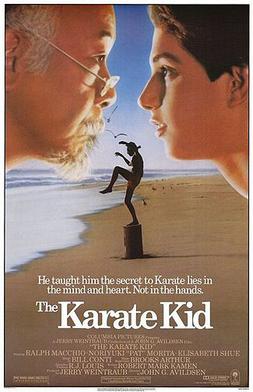
“Wax on. Wax off.” Two phrases and a hand motion, and an entire generation suddenly understood something about patience they couldn’t have put into words. The Karate Kid wasn’t really about karate. It was about an old man, a lonely kid, and the family they built out of nothing.

The Karate Kid (1984) movie poster

The Karate Kid characters center on Daniel LaRusso, a New Jersey teenager transplanted to Los Angeles, and Mr. Miyagi, the quiet handyman who becomes his karate teacher and father figure, in the 1984 film. Around them orbit the bullies of the Cobra Kai dojo — chief among them Johnny Lawrence — and the story that turned a martial-arts underdog movie into an 80s touchstone.

Daniel LaRusso — the underdog we all needed

Played by Ralph Macchio, Daniel is an Italian-American kid uprooted with his widowed mother to the Reseda neighborhood of L.A. He’s instantly a target: outsider, wrong side of town, and unlucky enough to have a crush on Ali Mills, the ex-girlfriend of local golden-boy bully Johnny. Daniel’s whole arc is learning that fighting back isn’t about being tougher — it’s about balance, discipline, and a mentor who believes in him.

Mr. Miyagi — the soul of the movie

Pat Morita plays Nariyoshi Miyagi, the eccentric, humble Okinawan handyman who fixes Daniel’s problems and, eventually, Daniel himself. Miyagi’s genius is the misdirection: he has Daniel wax cars, paint fences, and sand floors, and only later reveals that the boy has been drilling karate blocks the entire time. The relationship becomes a genuine father-and-surrogate-son bond — and it’s the beating heart the whole franchise runs on.

Remember when Miyagi caught a fly with chopsticks and Daniel, trying to copy him, gave up and grabbed the swatter? “Man who catch fly with chopstick accomplish anything.” It’s a throwaway gag that’s secretly the whole movie.

Johnny and Cobra Kai — the bullies that launched a universe

Johnny Lawrence and his Cobra Kai crew, coached by the merciless “sweep the leg” sensei, were the perfect 80s antagonists: rich, blond, and cruel. Decades later that very rivalry would fuel an entire revival series — proof that these weren’t cardboard villains, but characters people never stopped arguing about.

Why it endures

Directed by John G. Avildsen (who’d already made Rocky), The Karate Kid took the underdog formula and made it tender. The crane kick gets the cheers, but the reason people still tear up is Miyagi — the lonely man who found a son, and the kid who found a dad. That’s not a martial-arts movie. That’s the 80s at its warmest.

From crane kick to Cobra Kai

Pat Morita’s Mr. Miyagi wasn’t just beloved by fans — the performance earned him an Academy Award nomination for Best Supporting Actor, a rare honor for a role in a teen sports movie and proof of how much heart he poured into it. That’s the difference between a gimmick and a great character: the Academy noticed.

And the story genuinely never ended. The crane kick, the “sweep the leg” villainy, the Cobra Kai dojo — these stuck in the culture so deeply that decades later they powered Cobra Kai, a hit revival series that picked up the Daniel–Johnny rivalry as grown men and became a phenomenon all over again. Think about that: a rivalry between two teenagers in a 1984 movie was compelling enough to carry an entire new show a generation later. Most 80s movies give you a moment. The Karate Kid gave us characters people never stopped caring about — which is exactly why “wax on, wax off” is still shorthand for patience, and Miyagi is still the mentor every kid wishes they’d had.

FAQ

Who are the main Karate Kid characters?
Daniel LaRusso (Ralph Macchio), Mr. Miyagi (Pat Morita), and bully Johnny Lawrence, plus Daniel’s love interest Ali Mills.

What does “wax on, wax off” mean?
It’s Mr. Miyagi’s training trick — chores like waxing cars secretly drilled the muscle memory for karate blocks.

Who directed The Karate Kid?
John G. Avildsen, who had previously directed Rocky, directed the 1984 film, written by Robert Mark Kamen.

Who played Mr. Miyagi?
Pat Morita, in a performance widely praised as the emotional core of the film.

What is Cobra Kai?
The ruthless rival dojo whose “sweep the leg” cruelty made Daniel’s tournament win so satisfying. Decades later that same rivalry powered Cobra Kai, a hit sequel series that followed Daniel and Johnny as grown men — proof these characters had far more life in them than a single 1984 movie.


Daniel and Miyagi are 80s royalty — find more legends in our 80s movie characters roundup, or roll with The A-Team next.

A blonde bombshell cartwheeling across the hood of a Jaguar. A frontman with a voice like polished thunder. And a chorus — “here I go again on my own” — that somehow feels triumphant and lonesome at the same time. Whitesnake’s 1987 explosion is one of the most vivid images the whole decade produced, and it came from the unlikeliest place: a song the band had already released years earlier.

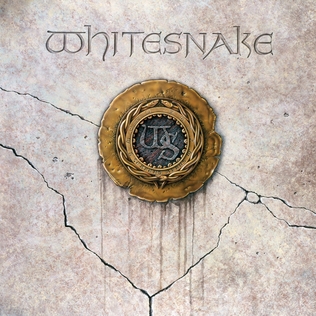
Whitesnake – Whitesnake (1987) album cover

Whitesnake is the hard-rock band fronted by former Deep Purple singer David Coverdale, who hit superstardom in 1987 when a glossy re-recording of “Here I Go Again” topped the American charts. It’s the ultimate 80s reinvention story.

From bluesy also-ran to glam-metal titan

Coverdale had built Whitesnake in the late 70s and early 80s as a bluesy British hard-rock outfit — respected, but not a chart-topping American act. Then came the reinvention. For the 1987 self-titled album Whitesnake, the band went bigger, glossier, and more MTV-ready, and it worked spectacularly: the album became a multi-platinum smash and made Coverdale a household name in the States.

The centerpiece was “Here I Go Again.” Coverdale had first released it back in 1982 as a bluesier, more modest tune. On the advice of record-label bosses, the band re-recorded it in 1987 as a soaring glam-metal anthem — and that version hit No. 1 on the Billboard pop chart on October 10, 1987. Same song, brand-new decade, completely different destiny.

The video that ate MTV

You can’t talk about 80s Whitesnake without the video. “Here I Go Again” starred model and actress Tawny Kitaen — who would marry Coverdale in 1989 — writhing and cartwheeling across the hoods of two Jaguars in a white negligee. It went into heavy MTV rotation and became one of the most iconic (and endlessly parodied) music videos of the era. It’s a perfect snapshot of what MTV did for hair metal: a great song, plus an unforgettable visual, equals a cultural moment.

Remember when re-recording your own old song for a new audience seemed almost like cheating — and then it became the biggest hit of your career? Whitesnake proved the 80s rewarded reinvention. The blues version was fine. The glam version was immortal.

Why Whitesnake endures

Whitesnake’s story is the decade in miniature: take something solid, wrap it in gloss, aim it at MTV, and watch it conquer. Coverdale’s remarkable voice was always the constant — the thing that made the reinvention believable rather than cynical. Decades later, “Here I Go Again” still fills rooms, and Coverdale toured on that 1987 magic for the rest of his career. Sometimes the second time really is the charm.

Not just one song

While “Here I Go Again” is the calling card, the 1987 Whitesnake album was stacked. “Is This Love” became a massive ballad hit, all smoldering romance, and “Still of the Night” was a thunderous, Led Zeppelin-sized rocker that showed the band could bring genuine heavy-rock muscle when they wanted to. Coverdale’s Deep Purple pedigree — that rich, powerful, blues-schooled voice — was the throughline connecting the bluesy early years to the glossy MTV superstardom. It’s why the 1987 reinvention never felt hollow: there was a world-class singer at the center of it. Whitesnake proved you could chase the mainstream and still deliver the goods, and for one blazing year they were about as big as a rock band could get.

FAQ

Who is the singer of Whitesnake?
David Coverdale, the former lead singer of Deep Purple, who founded and fronts Whitesnake.

Why was “Here I Go Again” re-recorded?
Whitesnake first released a bluesier version in 1982; they re-recorded it as a glam-metal track in 1987 on label advice, and that version hit No. 1.

Who was in the “Here I Go Again” video?
Model and actress Tawny Kitaen, who later married David Coverdale, in the famous scene atop two Jaguars.

What are Whitesnake’s biggest songs?
“Here I Go Again,” “Is This Love,” and “Still of the Night,” all from the blockbuster 1987 self-titled album — three staples of any serious 80s rock-radio playlist.

Was David Coverdale in another famous band?
Yes — before Whitesnake, Coverdale was a lead singer of the legendary British hard-rock band Deep Purple, where he first built his reputation as a powerhouse vocalist.


Whitesnake mastered the 80s reinvention — meet more of the scene in our best 80s hair bands guide, or plug in with Dokken next.

Spin the giant wheel, call a letter, and watch a glamorous woman in an evening gown stride across the stage to light up the board. Every night, in tens of millions of American homes, dinner got scheduled around it. In the 80s, Wheel of Fortune wasn’t just a game show — it was a national bedtime ritual.

Wheel of Fortune logo

Wheel of Fortune launched its wildly successful syndicated nighttime edition on September 19, 1983, hosted by Pat Sajak with letter-turner Vanna White. Contestants spin a wheel for cash, then guess letters to solve a hangman-style word puzzle. Though the show had existed on daytime since 1975, it was the 80s nighttime version that turned it into the most-watched syndicated program in America.

The simplest great idea in game shows

The genius of Wheel is how little you have to explain. It’s Hangman with money attached. Spin the wheel to set a dollar value, guess a consonant, and if it’s in the puzzle you bank that amount per letter. Buy a vowel for a flat fee. Solve the puzzle and keep your winnings. That’s it — a game anyone from a kid to a grandparent could play along with from the couch, shouting the answer before the contestants. That universal accessibility is exactly why it conquered the dinner hour.

Pat and Vanna, America’s couple

The 80s locked in one of television’s most enduring duos. Pat Sajak took over hosting duties and became the easygoing, quick-witted ringmaster. Vanna White, who joined in 1982, turned the seemingly simple job of walking to the board and turning letters into genuine stardom — her gowns, her wave, and her cheerful presence made her a household name and a pop-culture fixture. Together they became so familiar they felt less like TV personalities than like relatives who visited every night.

Remember when the puzzle was down to just a couple of blank letters and a contestant would confidently guess the whole phrase — “I’d like to solve the puzzle, Pat” — and the whole living room either erupted because they’d gotten it too, or groaned because they’d beaten the contestant to it minutes ago? That solve-it-from-the-couch moment was the heart of the show.

The show that owned the dinner hour

By the mid-80s, the nighttime Wheel of Fortune was drawing enormous audiences, routinely topping the syndication ratings and becoming a genuine cultural institution. Local stations built their evening schedules around it. It was appointment television without being a drama or a sitcom — just a word puzzle, a wheel, and two hosts the country adored, on every single night.

Why Wheel of Fortune keeps turning

The formula was so durable that the show never really stopped — it’s still running today, one of the longest-lived programs in television history, with Vanna White at the board for decades. But it was the 80s that made it a phenomenon and cemented the wheel, the puzzle board, and “I’d like to buy a vowel” into the American vocabulary.

FAQ

When did the nighttime Wheel of Fortune start?
The hit syndicated nighttime version premiered September 19, 1983, though the daytime show dated back to 1975.

Who hosted Wheel of Fortune in the 80s?
Pat Sajak hosted, with Vanna White turning the letters — a duo that became one of TV’s most famous.

How do you play Wheel of Fortune?
Contestants spin a wheel for a dollar value, guess consonants to fill in a word puzzle (and can buy vowels), then try to solve the phrase to win their accumulated cash.

When did Vanna White join the show?
Vanna White became the letter-turner in 1982 and went on to hold the role for decades.

Why was it so popular in the 80s?
Its simple, play-along format made it perfect family viewing, and the nighttime version became the most-watched syndicated show in America.

What’s the catchphrase associated with the show?
“I’d like to buy a vowel” and “I’d like to solve the puzzle” both became widely quoted lines.


Wheel of Fortune was the crown jewel of the great 80s game shows — spin through the rest there, or shout “Survey says!” over at Family Feud next.

Scroll to top