
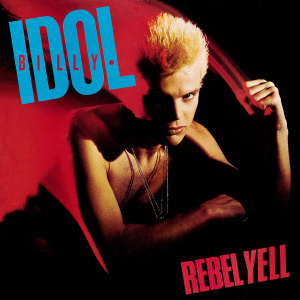
Billy Idol in the 80s: Punk Sneer Meets MTV Superstardom
The spiky bleached hair. The curled-lip sneer. The leather, the fist, the “More! More! More!” Billy Idol took the raw attitude of British punk, polished it just enough for MTV, and became one of the most instantly recognizable rock stars of the 80s. He looked like trouble and sounded like a great time, and the combination was irresistible.
Billy Idol is the English rocker who brought a punk snarl to 80s MTV, scoring hits like “Rebel Yell,” “White Wedding,” and “Dancing with Myself” with his sneering charisma and video-ready image. He was rebellion you could dance to.
From punk to solo stardom
Idol got his start in the British punk scene as the frontman of Generation X. When that band broke up in the early 80s, he went solo, and reinvented himself for the music-video age. His 1982 self-titled debut album introduced the formula: punk energy, hard-rock hooks, and a look built for the camera. “White Wedding” and “Dancing with Myself” (the latter reworked from a Generation X track) became MTV staples and made Idol a star as part of the Second British Invasion.
Rebel Yell and the peak
Idol’s breakthrough came with his second album, Rebel Yell (1983), a major commercial success that went double platinum. Its title track, with that unforgettable “in the midnight hour” howl, became his signature anthem, and the moody ballad “Eyes Without a Face” showed he had more than one gear. The album made him a genuine arena-filling rock star while keeping the snarl fully intact. He’d found the sweet spot between danger and pop appeal, and audiences couldn’t get enough.
Made for MTV
Billy Idol’s rise is inseparable from MTV. His whole package, the sneer, the fist-pump, the bleached spikes, the leather, was tailor-made for the small screen, and he became one of the channel’s defining faces. His videos were high-energy, rebellious, and impossible to ignore, turning him into a visual icon as much as a musical one. In a way, he was proof that punk’s raw attitude could survive the transition to the glossy video era. You just had to know how to point it at a camera.
Remember when “Mony Mony” would come on at every school dance and the whole crowd would shout back the (unprintable) chant between the lines? Idol’s cover became a massive live favorite and a party-time institution, the kind of song that turned any gymnasium into a rowdy sing-along.
Why Billy Idol endures
Billy Idol’s 80s run made him one of the era’s most memorable rock stars, a bridge between punk’s rebellious spirit and MTV’s mainstream reach. His biggest songs still detonate at parties and on classic-rock radio, and that sneering, fist-raised image remains pure 80s shorthand for cool rebellion. He took the attitude of the underground and made it a permanent part of the decade’s pop landscape, without ever losing the snarl.
The honest bottom line
Real talk: by the MTV years the punk was mostly costume. Actual punks said so at the time, loudly. But “Rebel Yell” still kicks the door in, “Eyes Without a Face” proved there was a real singer under the sneer, and the costume was fantastic. The 80s never demanded authenticity. They demanded commitment to the bit, and nobody committed harder. George Michael played the same game from the opposite direction: pretty first, prove the voice later.
FAQ
What are Billy Idol’s biggest 80s hits?
“Rebel Yell,” “White Wedding,” “Dancing with Myself,” “Eyes Without a Face,” and his cover of “Mony Mony.”
What band was Billy Idol in before going solo?
He fronted the British punk band Generation X before launching his solo career in the early 1980s.
What is Billy Idol’s most famous album?
Rebel Yell (1983), a double-platinum success featuring the title track and “Eyes Without a Face.”
Why was Billy Idol so popular on MTV?
His rebellious punk image, the sneer, bleached spikes, and leather, combined with high-energy videos made him one of the channel’s defining stars.
Was “Dancing with Myself” originally a solo song?
No: it was first recorded with his earlier band Generation X before being reworked for his solo career.
What made Billy Idol stand out from other 80s pop stars?
He fused punk’s raw rebellious attitude with polished, video-friendly hard rock, creating a look and sound that was both dangerous and accessible.
Who helped create Billy Idol’s signature sound?
Much of it came from his long partnership with guitarist Steve Stevens, whose flashy playing defined tracks like “Rebel Yell,” along with producer Keith Forsey, who helped fuse Idol’s punk energy with polished, radio-ready rock.
Rebel Yell was in heavy rotation on the show we danced on, so this one is close to home. Billy Idol brought the snarl, explore more of the decade in our 80s pop culture guide, or meet the video kings Duran Duran next.