Month: May 2026

If you were a teenager in the tri-state area in the late 80s, there was a good chance you rushed home, flipped on cable, and watched a studio full of kids your own age dance to the exact songs playing on your radio. That was Dance Party USA — and for a whole generation up and down the East Coast, it was appointment television before anyone used that phrase.
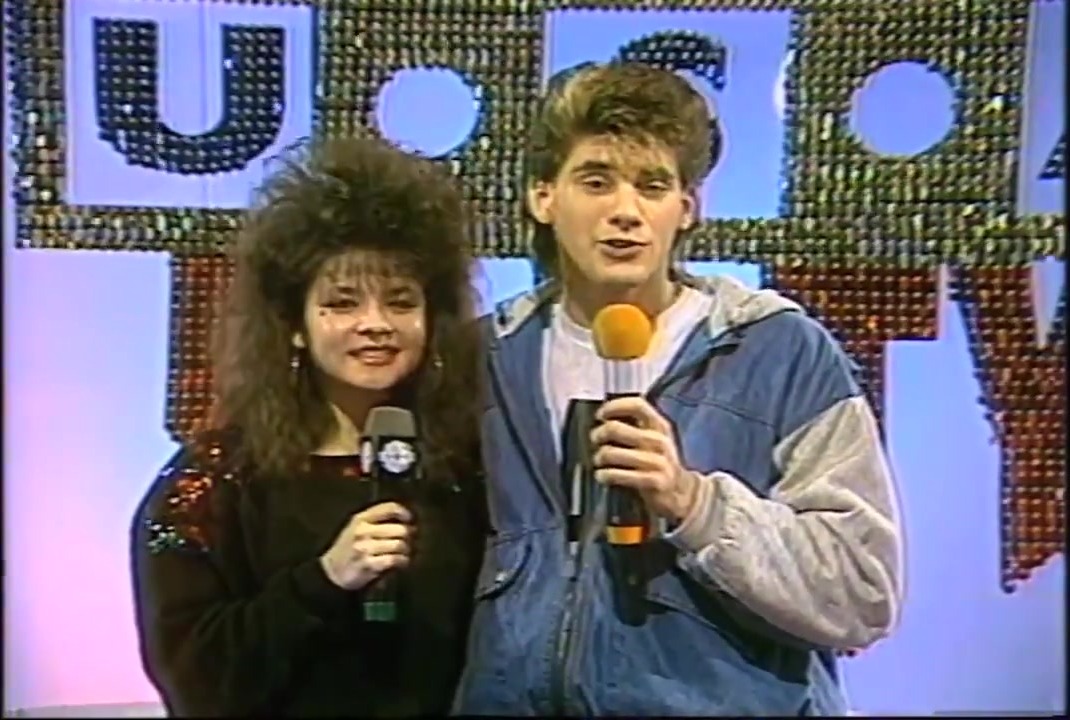
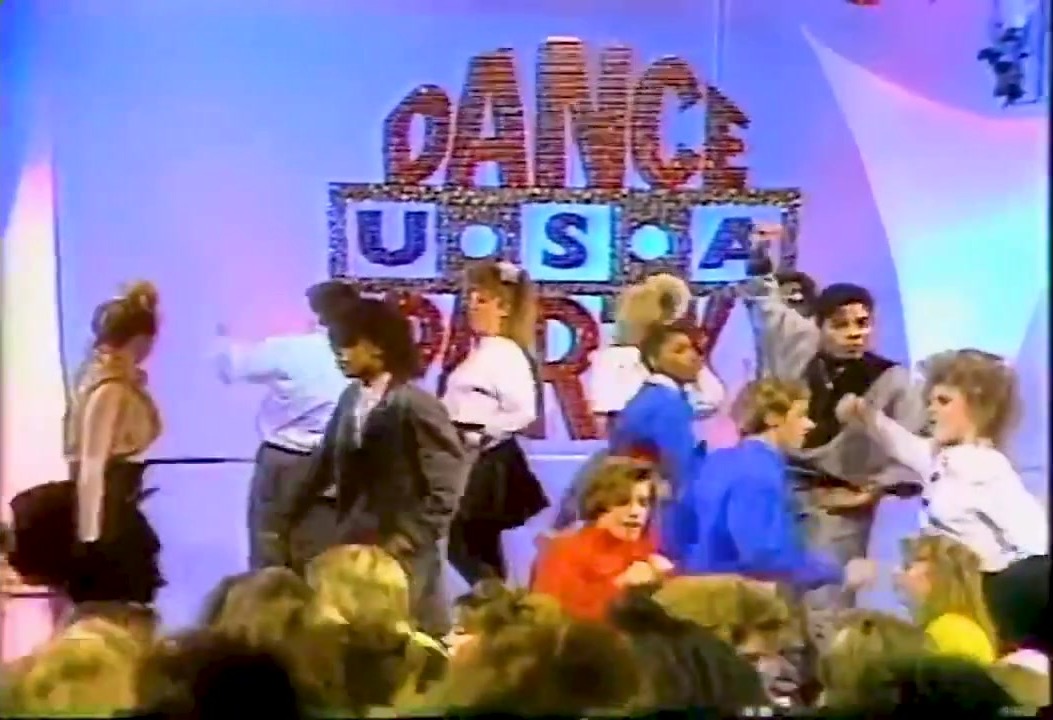
The Dance Party USA sign over the studio dance floor, from a late-80s promo tape

Dance Party USA was a daily teen dance show that aired on the USA Network from April 12, 1986 to June 27, 1992, filmed in Philadelphia, where a rotating cast of teenage regulars danced and lip-synced to the day’s biggest hits. It was the cable cousin of the older Philly dance program Dancin’ On Air, it minted local celebrities out of ordinary suburban kids, and it served as an early launchpad for future television stars.

The format: your friends, on TV, dancing to your music

The premise was beautifully simple. Fill a studio with photogenic, high-energy teenagers, cue up the current chart hits, and let them dance. Regulars had signature moves, on-camera nicknames, and fans who tuned in specifically to see them. There were lip-sync performances, spotlight dances, and the kind of unforced, sweaty fun that a modern reality producer would kill to fake. The exact records that ruled the studio floor are in our Dance Party USA songs rundown.

It started as a half-hour show in 1986 and was expanded to a full hour in 1987 once the audience took hold. The production was rooted in the Philadelphia–South Jersey corridor — the studios were WPHL-TV (channel 17) and WGBS in Philadelphia, with production offices across the river in Camden, New Jersey. That geography is why the show hit hardest in the tri-state area: these weren’t distant Hollywood kids, they were the kids from the next town over.

The hosts: Dave Raymond, Andy Gury, and a young Bobby Catalano

The show’s first host was Dave Raymond, a name Philadelphia sports fans know for a completely different reason — Raymond was the original performer inside the Phillie Phanatic costume. Andy Gury took over the main hosting duties for much of the run (1986–89, and again in 1992).

Then, from 1989 to 1991, one of the show’s own regulars stepped up to host: Bobby Catalano — yes, the same Bobby who now co-hosts Bobby and Jason’s Awesome 80s Podcast and this very site. He came up through the studio as a regular — first on the air in 1985 — and ended up in front of the camera as one of its hosts. The full then-and-now is in our Bobby Catalano story. His friend and co-conspirator, Jason Pascoe, was there too, as one of the show’s regulars from 1986 to 1988. Jason’s Dance Party USA story gets its own telling too. Two Jersey kids who lived the show from the inside — which is exactly why the 80s still feels like home turf to them.

Remember when the biggest flex in your town wasn’t being on national TV — it was being on Dance Party USA and having kids recognize you at the mall? For the regulars, that local fame was very, very real.

The regulars and dancers everyone remembers get their own roll call in our Dance Party USA dancers rundown.

Why it mattered

Dance Party USA sat in a lineage that runs from American Bandstand through Soul Train and Solid Gold — the great American tradition of putting real dancers on TV and letting the music do the rest. We mapped that whole family tree in our guide to 80s teen dance shows. What made it special wasn’t polish; it was proximity. The dancers looked like your classmates because, in the tri-state area, they basically were. It also proved to be a genuine launchpad: some of its teenage regulars went on to real television careers, and you can follow those threads in our Dance Party USA cast: where are they now? rundown. It ran for six years, survived the shift from half-hour to hour, and left behind a very specific, very warm memory for everyone who grew up watching it.

And you don’t have to settle for reading about it: a 24/7 broadcast of classic Dance Party USA episodes streams free at WatchParty USA. Their archive also keeps a complete guide to the show if you want every detail in one place.

FAQ

When did Dance Party USA air?
It ran daily on the USA Network from April 12, 1986 to June 27, 1992.

Where was Dance Party USA filmed?
In Philadelphia, at the WPHL-TV (channel 17) and WGBS studios, with production offices in Camden, New Jersey.

Who hosted Dance Party USA?
Dave Raymond was the original host, followed by Andy Gury for much of the run. Bobby Catalano hosted from 1989 to 1991 after coming up as one of the show’s regulars.

How long was each episode?
It began as a half-hour show in 1986 and was expanded to a full hour in 1987 as its audience grew.

Is Dance Party USA related to Dancin’ On Air?
Yes — Dance Party USA followed the same format as the earlier Philadelphia show Dancin’ On Air, and for a time the two shared studio space, regulars, and even a weekly radio spot.

Is Dance Party USA on anywhere today?
There’s no official streaming home, but a devoted fan community keeps clips, episodes, and reunions alive online, and several former cast members — including Bobby and Jason — still celebrate the show today.


Dance Party USA is one corner of a whole decade of pop culture we love — start with our 80s pop culture icons guide, or find out where the Dance Party USA cast is now.
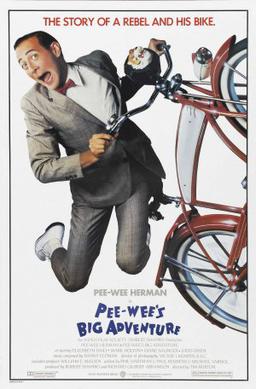
The gray glen-plaid suit two sizes too tight. The red bow tie. The white shoes. That impossible giggle and the comeback every 80s kid deployed on the playground: “I know you are, but what am I?” Pee-wee Herman wasn’t like any other character of the decade — he was a cartoon come to life, and he was everywhere.

Pee-wee's Big Adventure (1985) movie poster

Pee-wee Herman is the giddy, bow-tied man-child created and played by comedian Paul Reubens, who broke through in Tim Burton’s 1985 film Pee-wee’s Big Adventure and became a Saturday-morning phenomenon. He’s an adult who acts like a hyperactive kid, and the 80s couldn’t get enough of him.

From the Groundlings to a stolen bicycle

Reubens built Pee-wee at the Los Angeles improv troupe the Groundlings in the 1970s. After a failed Saturday Night Live audition, he doubled down and launched The Pee-wee Herman Show as a stage act in 1981 — and it caught fire. That momentum carried the character to the big screen in Pee-wee’s Big Adventure (1985), the debut feature of a young director named Tim Burton.

The plot is almost aggressively simple: somebody steals Pee-wee’s beloved bicycle, and he goes on a cross-country quest to get it back. That’s it. And it’s wonderful — a live-action cartoon full of surreal detours, powered entirely by Reubens’ total commitment to the bit.

Why the man-child worked

Pee-wee’s genius is that he plays a child with zero winking. He throws tantrums, hoards toys, tells secrets to the audience, and finds pure joy in the dumbest things. Reubens never once signals “I’m an adult pretending” — he just is Pee-wee, completely. That absolute conviction is what separated the character from a novelty and turned him into an icon kids and adults both adored.

Remember when he begged the biker gang for mercy, then took the dance floor to “Tequila” in those giant platform shoes — and won the whole bar over? “Big Shoe Dance” is the moment Pee-wee’s Big Adventure tips from funny into legendary.

The Playhouse and the world it built

Pee-wee’s Big Adventure did more than launch a character — it launched careers. It was Tim Burton’s feature debut, and it carried the first major film score by a young composer named Danny Elfman, kicking off one of the great director-composer partnerships in movie history. Not bad for a movie about a stolen bicycle.

Then came the crown jewel: Pee-wee’s Playhouse. The Emmy-winning CBS series (1986–1991) was unlike anything else on Saturday mornings — a riot of talking furniture, claymation, puppets, and a secret word that made the whole cast scream. It was genuinely subversive kids’ TV, and a generation grew up quoting it. Reubens even brought Pee-wee back for a second feature, Big Top Pee-wee (1988). Across the films and the Playhouse, Pee-wee Herman became one of the most original creations the decade produced — a reminder that the 80s had a big, weird heart, and room for a grown man in a too-tight suit who found pure joy in absolutely everything.

FAQ

Who created and played Pee-wee Herman?
Comedian Paul Reubens created and played the character, developing him at the Groundlings improv troupe in the 1970s.

What is Pee-wee’s Big Adventure about?
Pee-wee’s prized bicycle is stolen, and he sets off on a surreal cross-country journey to recover it — in Tim Burton’s 1985 feature debut.

What’s Pee-wee’s famous catchphrase?
“I know you are, but what am I?”

What was Pee-wee’s Playhouse?
An Emmy-winning children’s series that ran on CBS from 1986 to 1991 — a gleefully surreal world of talking furniture, puppets, claymation, and a “secret word” that made everyone scream. It became appointment TV for a generation and cemented Pee-wee as one of the decade’s most original creations.


Pee-wee is one of the decade’s most original characters — meet more in our 80s movie characters roundup, or keep the weirdness going with our Beetlejuice deep-dive next.

Pink hair, wild makeup, star-shaped earrings, and a secret identity powered by a holographic supercomputer. Jem and the Holograms took the 80s obsession with rock stardom, glam fashion, and neon everything and poured it into a cartoon aimed squarely at a generation of kids — with a toy line waiting at the end of every episode. It was “truly, truly, truly outrageous,” and it knew it.

Jem and the Holograms music video still

Jem (also known as Jem and the Holograms) aired from 1985 to 1988. It followed Jerrica Benton, a young music-company owner who uses a holographic computer named Synergy to transform into glamorous rock star Jem, fronting the band the Holograms while battling the rival group the Misfits. Produced by Hasbro’s animation arm, it was a stylish, music-packed series built hand-in-hand with a doll line.

A secret identity built on holograms

The premise was pure 80s wish-fulfillment. Jerrica Benton runs Starlight Music and a foster home for girls, and when she needs to become a star, she touches her star-shaped earrings and summons Synergy — a holographic AI her late father built — to project the dazzling disguise of “Jem.” As Jem, she leads the Holograms to fame while keeping her real identity hidden, all while running a business and caring for the Starlight Girls. Secret pop star by night, responsible guardian by day: it was a fantasy tailor-made for its audience.

Music videos in cartoon form

What set Jem apart was the music. Nearly every episode stopped for full-blown animated “music videos” — original songs by the Holograms or the Misfits, staged with the era’s MTV sensibility. The show essentially delivered a mini music video several times an episode, which made it feel current and cool in a way few Saturday-morning cartoons did. The songs were catchy enough that they were released on records, blurring the line between cartoon and real pop act.

Remember when the Holograms and the villainous Misfits would face off in some flashy on-stage battle of the bands, each launching into a full animated music video mid-episode — “We are the Misfits, our songs are better!” — while Jem’s earrings flashed and Synergy worked her holographic magic? Those musical showdowns were the whole appeal.

Fashion, feuds, and a toy line

Jem was as much about style as story. The over-the-top outfits, the neon color palette, the glam-rock looks of both bands — it was a fashion show with a plot. And the rivalry with the Misfits gave it real conflict: a snarling, punky girl group forever scheming to sabotage the Holograms. Every character, outfit, and instrument was, of course, also a doll or accessory you could buy, making the show a masterclass in the 80s art of the toy-driven cartoon.

Why Jem is still truly outrageous

Jem and the Holograms has aged into a beloved cult favorite, celebrated for its glam style, its catchy songs, and its rare-for-the-era focus on ambitious young women running the show. It inspired comics, merchandise revivals, and a 2015 live-action movie. “Truly outrageous” remains one of the most quotable catchphrases the decade’s cartoons produced.

FAQ

When did Jem and the Holograms air?
It ran from 1985 to 1988, produced in connection with Hasbro’s doll line.

Who is Jem, really?
Jerrica Benton, a music-company owner who transforms into the rock star Jem using a holographic computer called Synergy.

What is Synergy?
A holographic supercomputer built by Jerrica’s late father that projects Jem’s disguise and other illusions, activated through Jerrica’s star-shaped earrings.

Who were the Misfits?
A rival girl band and the show’s recurring villains, constantly trying to outdo and sabotage the Holograms.

Why was the show unusual for its time?
It packed original songs and music-video-style sequences into nearly every episode and centered ambitious young women, standing out from typical 80s cartoons.

What’s the show’s famous catchphrase?
“Jem is truly outrageous — truly, truly, truly outrageous,” from its theme song.


Jem was one of the most stylish faces of 80s TV — meet the rest in our 80s pop culture icons guide, or hang out with ALF next.

For six years, Dance Party USA turned a rotating cast of tri-state teenagers into local celebrities. Then the cameras stopped, the 80s became the 90s, and everybody grew up. So where did all those dancers, hosts, and regulars actually end up? A few of them have stories worth catching up on.

Two Dance Party USA cast members on camera in front of the studio sign

The Dance Party USA cast scattered into all kinds of lives after the show ended in 1992 — one teenage dancer became one of the most recognizable faces in American daytime television, the show’s hosts moved on to new stages, and several regulars, including Bobby Catalano and Jason Pascoe, still celebrate the show today. Here’s where some of the most memorable faces landed.

Among those alumni, a teenage Kelly Ripa danced and did on-camera segments before landing a role on All My Children in 1990 and going on to a major television career — a reminder that this after-school dance show was a genuine launchpad — her dance-floor years get a full profile at the WatchParty USA archive. But she was one of many faces, so let’s walk through where a range of them landed.

The hosts

Dave Raymond, the show’s original host, is a Philadelphia legend for an entirely different reason — he was the original performer inside the Phillie Phanatic costume, one of the most beloved mascots in American sports. Andy Gury carried the main hosting duties through much of the run, becoming one of the show’s steadiest on-air presences.

And then there’s Bobby Catalano, who came up as a regular — first on the air in 1985 — and hosted the show from 1989 to 1991. Today he co-hosts Bobby and Jason’s Awesome 80s Podcast right here at bobbyandjason.com — you can read his full story in our Bobby Catalano profile.

The regulars who kept the flame

Not every regular chased the spotlight afterward, but plenty kept the connection alive. Jason Pascoe, one of the show’s regulars, reunited with Bobby decades later to build an entire 80s podcast on the memories they made in that studio — here’s Jason’s Dance Party USA story. Fan favorite Heather Henderson, known to viewers as “Baby Heather,” went on to a creative career of her own as a performer, singer, and podcast host.

Remember when the regulars on your local dance show felt like celebrities — and then you grew up and realized some of them actually became famous? Dance Party USA had more of those stories than almost any show its size.

A show that keeps reuniting

What’s remarkable about Dance Party USA is how tightly its alumni have held onto it. Decades later, former dancers reconnect, hosts sit down for interviews, and fans still trade clips and memories online. For a low-budget cable dance show out of Philadelphia, that staying power says everything — the people who were on it, and the people who watched it, never really let it go.

FAQ

Who was the most famous Dance Party USA cast member?
Kelly Ripa, who danced and did segments on the show as a teenager before becoming a daytime television star on All My Children and, later, a national talk-show host.

What happened to the show’s dancers?
Most moved on to ordinary lives, but many stay connected to the show’s legacy through reunions and online fan communities, and a few — like Bobby Catalano and Jason Pascoe — turned their time on the floor into a lasting celebration of the decade.

What happened to Dave Raymond, the original host?
He’s best known as the original performer inside the Phillie Phanatic costume — one of the most famous mascots in American sports.

Where are Bobby Catalano and Jason Pascoe now?
The two former Dance Party USA cast members co-host Bobby and Jason’s Awesome 80s Podcast and run bobbyandjason.com, celebrating 80s pop culture.

When did Dance Party USA end?
The show wrapped its run on the USA Network on June 27, 1992, after six years on the air.

Do the Dance Party USA cast members still keep in touch?
Many do — former dancers and hosts reconnect for interviews and reunions, and a devoted fan community keeps the show’s memory alive online.


Catch up with the hosts who still fly the flag in our Bobby Catalano profile, or head back to the start with what Dance Party USA was.

That drum fill. You know the one — the slow, brooding build of “In the Air Tonight” that erupts, around three and a half minutes in, into the most air-drummed moment in music history. Phil Collins spent the 80s doing the seemingly impossible: being everywhere at once, on the radio, on MTV, behind the drum kit and out front at the microphone, and racking up more hits than just about anyone alive.

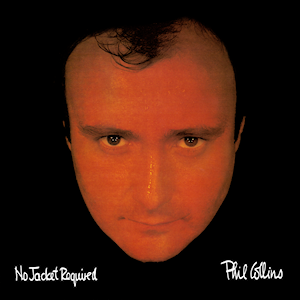
Phil Collins – No Jacket Required (1985) album cover

Phil Collins is the Genesis drummer who became one of the biggest solo stars of the 80s, with hits like “In the Air Tonight,” “Against All Odds,” and “Sussudio” — scoring more US top-40 singles in the decade than any other artist. He was, quite simply, unavoidable, in the best possible way.

From behind the kit to center stage

Collins launched his solo career in 1981 with Face Value, an album shaped by the pain of his first marriage breakup and a deep love of soul music. Its lead single, “In the Air Tonight,” became an instant classic, famous for its haunting slow build and that iconic gated-reverb drum sound — a sonic signature that would come to define 80s production. From there the hits simply poured out: “Against All Odds (Take a Look at Me Now),” the theme to a 1984 film, became his first US No. 1 (the first of seven he’d score as a solo artist). No Jacket Required (1985) brought “Sussudio” and “One More Night,” and the decade closed with the chart-topping “Another Day in Paradise” (1989).

The most 80s day imaginable

Here’s the fact that captures just how in-demand Phil Collins was. On July 13, 1985, for the globe-spanning Live Aid benefit, Collins performed at the concert in London — and then boarded a Concorde jet, flew across the Atlantic, and performed again at the concert in Philadelphia, all on the same day. Playing two continents in one afternoon is about the most 80s-superstar thing a person could possibly do, and it perfectly summed up his ubiquity in that decade. Nobody was working harder or turning up in more places.

Doing it all at once

What made Collins remarkable was the sheer volume and range of his output. He was simultaneously fronting the band Genesis to blockbuster success (their Invisible Touch was a smash in 1986), running a hugely successful solo career, drumming, songwriting, producing, and collaborating with other artists. That combined workload gave him more US top-40 singles than any other artist across the entire 1980s — a staggering stat that speaks to how completely he saturated the decade’s airwaves.

Remember when “In the Air Tonight” would come on and everyone in the room would go silent, waiting, bracing… and then absolutely lose it on that drum fill? Decades later it still gets the same reaction. Collins built a moment so perfect it became a shared cultural reflex.

Why Phil Collins endures

Phil Collins’ 80s dominance was built on craft, versatility, and an almost superhuman work rate — songs that ranged from moody and confessional to bright and irresistibly poppy, all delivered with a distinctive voice and an unmistakable drum sound. His biggest hits remain radio and playlist staples, and that “In the Air Tonight” fill is permanently lodged in the collective memory. For sheer, sustained presence, few artists ruled the decade quite like he did.

FAQ

What are Phil Collins’ biggest 80s hits?
“In the Air Tonight,” “Against All Odds,” “Sussudio,” “One More Night,” and “Another Day in Paradise.”

What band was Phil Collins in?
Genesis, where he was the drummer and later lead singer, while simultaneously running a hugely successful solo career.

What’s special about “In the Air Tonight”?
Its slow, brooding build erupts into one of the most famous drum fills in music history, and its gated-reverb drum sound became a defining 80s production signature.

Did Phil Collins really play Live Aid on two continents?
Yes — on July 13, 1985, he performed in London, then flew by Concorde to perform again in Philadelphia the same day.

How many No. 1 solo hits did Phil Collins have?
Seven US No. 1 singles as a solo artist, beginning with “Against All Odds” in 1984.

Why was Phil Collins so dominant in the 80s?
He scored more US top-40 singles than any other artist of the decade, thanks to his solo career, his work with Genesis, and constant collaborations.


Phil Collins was everywhere in the 80s — explore more of the decade in our 80s pop culture guide, or meet the thoughtful Tears for Fears next.

Plenty of filmmakers made movies about teenagers in the 80s. John Hughes made movies that took teenagers seriously — that treated a high schooler’s heartbreak, embarrassment, and rebellion as worthy of the same care a prestige drama gave to adults. That single act of respect made him the defining voice of a generation, and his films are still the gold standard for coming-of-age cinema.

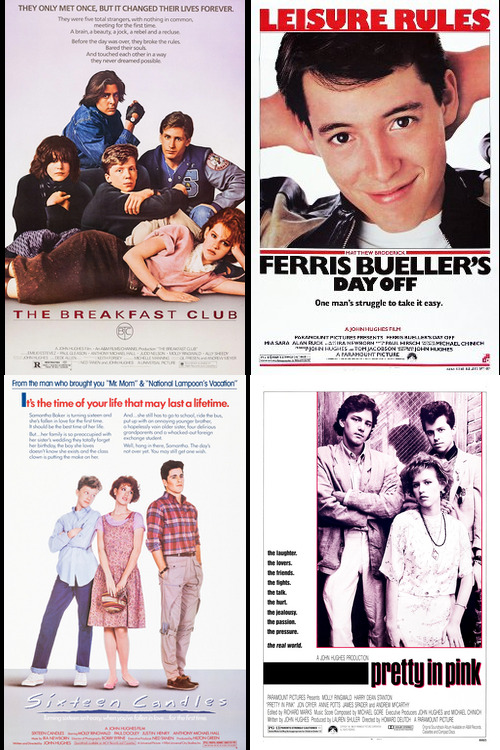
A selection of John Hughes 1980s movie posters

John Hughes was the writer-director behind the definitive 80s teen movies — Sixteen Candles, The Breakfast Club, Weird Science, and Ferris Bueller’s Day Off — and the writer of others like Pretty in Pink and National Lampoon’s Vacation, before pivoting to family comedies like Uncle Buck and Home Alone. In a five-year run, he essentially invented the modern teen film.

The films he wrote and directed

Hughes’s directorial run is a murderers’ row of 80s classics. He kicked off with Sixteen Candles (1984), a sweet, sharp comedy that made a star of Molly Ringwald. Then came The Breakfast Club (1985) — five students, one Saturday detention, and a script that turned teenage archetypes into fully human beings. You can meet those five in our Breakfast Club characters guide.

He followed with Weird Science (1985), a wild sci-fi comedy, and then Ferris Bueller’s Day Off (1986), the ultimate skip-school fantasy and arguably his most beloved film — get the full story in our Ferris Bueller profile. Later he stretched beyond teens with Planes, Trains and Automobiles (1987), She’s Having a Baby (1988), and Uncle Buck (1989), proving his gift for character worked at any age.

The films he wrote (but didn’t direct)

Hughes was just as influential from the writer’s chair. He wrote National Lampoon’s Vacation (1983), launching the Griswold family saga. And he wrote — while handing directing duties to his collaborator Howard Deutch — two more cornerstones of the teen canon: Pretty in Pink (1986) and Some Kind of Wonderful (1987). Both carry his unmistakable fingerprints: the class divides, the aching crushes, the outsider heroes.

The Brat Pack and the Hughes sound

Hughes built a loose repertory company of young actors — Molly Ringwald, Anthony Michael Hall, and others often grouped with the “Brat Pack” — and gave them dialogue that actually sounded like how kids talked. He also had an unerring ear for music, filling his soundtracks with new-wave and alternative tracks (Simple Minds’ “Don’t You (Forget About Me)” from The Breakfast Club is forever his). The look, the feel, the sound of the 80s teen movie is largely his invention.

Remember when a movie finally showed a version of high school that felt true — the cliques, the crushes, the sense that your small problems were enormous? That recognition is the Hughes magic.

Shermer, Illinois: one shared universe

Here’s a detail that rewards Hughes obsessives: many of his films are set in the same fictional Chicago suburb, Shermer, Illinois. It’s a loose shared universe — the world of The Breakfast Club, Ferris Bueller, Sixteen Candles, and Weird Science all overlap in the same idealized-yet-real Midwestern town. Hughes was fiercely loyal to the Chicago area, shooting on location there rather than faking it in Los Angeles, and that authenticity of place is a big part of why his movies feel so lived-in.

He was also astonishingly prolific. Beyond the teen canon, he kept the Griswold family going as a writer with National Lampoon’s European Vacation (1985) and the perennial National Lampoon’s Christmas Vacation (1989), wrote The Great Outdoors (1988), and then engineered the biggest hit of his career from the producer’s chair: Home Alone (1990), which became a global phenomenon. He worked so much that he sometimes wrote under the pen name Edmond Dantès.

The legacy of a quiet giant

Hughes largely stepped back from Hollywood in the 1990s, retreating from the spotlight even as his influence only grew. Nearly every teen comedy, coming-of-age drama, and “one crazy day” high-school movie made since is chasing something he did first and better. Filmmakers and actors cite him constantly; the term “a John Hughes movie” is itself shorthand for a whole tone — funny, warm, aching, and true. When he died suddenly in 2009, the tributes made clear how deeply his films had lodged in people’s hearts. He didn’t just make hits; he made the movies a generation grew up inside.

Why his movies endure

John Hughes, who passed away in 2009, left behind films that refuse to age because their subject never changes: the universal experience of being young, uncertain, and desperate to be understood. New generations discover The Breakfast Club and Ferris Bueller and find themselves in them, exactly as their parents did. He didn’t just capture the 80s teenager — he captured the teenager, period. That’s why his movies are still passed down like family heirlooms.

FAQ

What movies did John Hughes direct?
He directed Sixteen Candles (1984), The Breakfast Club (1985), Weird Science (1985), Ferris Bueller’s Day Off (1986), Planes, Trains and Automobiles (1987), She’s Having a Baby (1988), and Uncle Buck (1989).

What movies did John Hughes write but not direct?
Among others, he wrote National Lampoon’s Vacation (1983), Pretty in Pink (1986), and Some Kind of Wonderful (1987) — the latter two directed by Howard Deutch — plus the smash hit Home Alone (1990).

What is John Hughes best known for?
Defining the 80s teen movie with honest, funny, emotionally real coming-of-age stories, especially The Breakfast Club and Ferris Bueller’s Day Off.

Who were the actors in John Hughes movies?
He frequently worked with young stars like Molly Ringwald and Anthony Michael Hall, part of the group often called the Brat Pack, along with actors like Matthew Broderick and John Candy.

Did John Hughes make family movies too?
Yes. He later focused on family comedies, writing and producing Home Alone (1990) and directing Uncle Buck (1989), broadening his range beyond teen films.


Hughes wrote the rulebook for the whole genre — read our 80s teen movies roundup next, or step into detention with the Breakfast Club characters.

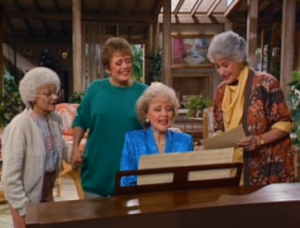
Four women of a certain age sharing a Miami ranch house, gathered around the kitchen table at 2 a.m. over yet another cheesecake, trading insults sharp enough to draw blood and stories filthy enough to make you gasp. The Golden Girls took a group television had always ignored — older women — and made them the funniest, warmest, most quotable people on the air.

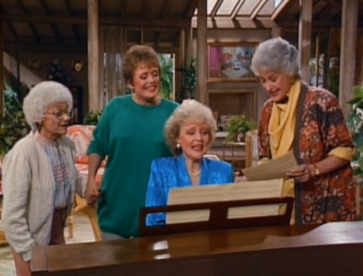
The Golden Girls (1985) cast photo

The Golden Girls premiered on NBC on September 14, 1985, and ran for seven seasons until 1992. It followed four mature single women living together in Miami: substitute teacher Dorothy, naive Rose, man-hungry Blanche, and Dorothy’s razor-tongued mother Sophia. Created by Susan Harris, it was a massive hit and a genuine landmark — a top-rated comedy built entirely around women over fifty.

The four-woman engine

The chemistry was the whole show. Bea Arthur’s Dorothy Zbornak was the tall, dry, long-suffering brains of the group. Betty White’s Rose Nylund was the sweet, dim naïf forever telling baffling stories about her hometown of St. Olaf. Rue McClanahan’s Blanche Devereaux was the Southern belle with an endless dating life and no shame about it. And Estelle Getty’s Sophia Petrillo — Dorothy’s tiny, ancient mother, fresh from a stroke that “broke the part of the brain that censors what you say” — fired off the cruelest and best lines in the house. Four archetypes, perfectly cast, bouncing off each other for seven years.

It made “old” funny and fearless

What was quietly radical about The Golden Girls is that it never treated its characters as past their prime. These women dated, argued about sex, chased careers, buried husbands, took in the world’s problems, and refused to be invisible. The show tackled subjects a lot of “younger” sitcoms wouldn’t touch, and it did it while being flat-out hilarious. A generation of viewers grew up wanting to age exactly like them.

Remember when the four of them would end up around the kitchen table in their robes in the middle of the night, working through a crisis over a cheesecake — and somebody would launch into a St. Olaf story while Sophia said “Picture it: Sicily, 1922…”? That table was the emotional center of the whole show.

Sophia’s “Picture it” and other permanent quotes

Few sitcoms have left behind as many catchphrases. Sophia’s stories always opened “Picture it: Sicily…” Blanche purred about her many gentleman callers. Rose derailed every conversation with St. Olaf nonsense. And Dorothy’s exasperated “Rose…” could carry an entire scene. The writing was fast, filthy, and generous — jokes that respected the audience’s intelligence and the characters’ dignity at the same time.

Why The Golden Girls still shines

Decades on, The Golden Girls has only gotten bigger — beloved by new generations who found it in reruns and streaming, quoted endlessly, its four leads treated as icons. It proved that the audience for smart, warm, dirty comedy about friendship has no age limit. Thank you for being a friend, indeed.

FAQ

When did The Golden Girls air?
It premiered September 14, 1985, on NBC and ran for seven seasons, ending in 1992.

Who were the four Golden Girls?
Dorothy (Bea Arthur), Rose (Betty White), Blanche (Rue McClanahan), and Sophia (Estelle Getty).

Where was the show set?
In a shared house in Miami, Florida.

Who created The Golden Girls?
Susan Harris, an acclaimed sitcom writer-producer also known for Soap.

Why was the show considered groundbreaking?
It was a top-rated network comedy centered entirely on women over fifty, treating them as vibrant, funny, and fully alive at a time TV usually sidelined them.

What was Sophia’s catchphrase?
She began her stories with “Picture it: Sicily…” followed by a year, before launching into a tall tale.


The Golden Girls was one jewel of the 80s TV golden age — see the rest of the crown in our 80s pop culture icons guide, or pull up a barstool at Cheers next.

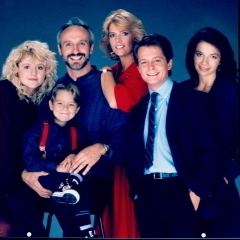
Two former flower children raising a teenage son who idolized Richard Nixon, carried a briefcase to high school, and read The Wall Street Journal for fun. Family Ties built its whole comedy on the funniest generational flip of the decade: the rebellious kid rebelling by becoming a Reagan Republican.

Family Ties (1982) cast photo

Family Ties premiered on NBC on September 22, 1982, and ran for seven seasons until 1989. It followed the Keaton family of suburban Ohio — ex-hippie parents Steven and Elyse and their money-loving, conservative eldest son Alex. Created by Gary David Goldberg, it captured the exact moment America pivoted from the 60s to the 80s, and it turned Michael J. Fox into a superstar.

The kid who stole the whole show

Alex P. Keaton wasn’t supposed to be the lead. The show was pitched around the parents — Steven (Michael Gross) and Elyse (Meredith Baxter), decent liberals bewildered by the Reagan era. But Michael J. Fox’s Alex, with his sweater vests, his worship of wealth, and his rapid-fire wit, was so magnetic that the writers followed the laughs. Within a season Family Ties was Alex’s show, and audiences loved him for it. It’s one of TV’s great examples of a supporting character quietly taking over.

Michael J. Fox becomes the biggest kid in America

Family Ties made Fox the definitive young star of the 80s. He was so beloved that he shot Back to the Future at night while filming the sitcom by day — sleeping a few hours in between — because producers wanted him badly enough to work around the schedule. The result: for a stretch in the mid-80s he had the number-one movie and one of the number-one shows in the country at the same time. Alex P. Keaton and Marty McFly, running in tandem.

Remember when an episode would suddenly turn serious — Alex losing a friend, or grieving, or facing something real — and the laugh track just stopped? Family Ties pioneered the “very special episode,” and Fox could pivot from punchline to heartbreak in the same scene without missing a beat.

A whole decade in one living room

What made Family Ties more than a gag machine was its premise: it was literally about America changing. The parents were the idealistic 60s; Alex was the ambitious, money-minded 80s; and the show let them argue it out around the dinner table every week with genuine affection on both sides. It didn’t pick a winner. It just made the collision funny — and, often, unexpectedly moving.

Why Family Ties still holds

The show’s a snapshot of a country mid-transformation, anchored by one of the most charming performances of the decade. It launched Michael J. Fox into the stratosphere, gave the Reagan years their sharpest sitcom mirror, and proved a comedy could break your heart when it wanted to. That theme song — “Sha la la la” — still cues up the whole warm, wood-paneled world in an instant.

FAQ

When did Family Ties air?
It premiered September 22, 1982, on NBC and ran for seven seasons, ending in 1989.

Who played Alex P. Keaton?
Michael J. Fox, in the breakout role that made him a star and won him multiple Emmy Awards.

What was the show’s central joke?
Ex-hippie liberal parents raising a proudly conservative, money-obsessed son — a comic reversal of the usual generation gap.

Who created Family Ties?
Gary David Goldberg, who based elements of the show on his own generational experience.

Did Michael J. Fox really film Back to the Future at the same time?
Yes — he shot the 1985 movie at night while filming Family Ties during the day, holding down both at the peak of his fame.

What is a “very special episode”?
A term popularized partly by Family Ties for an episode that drops the comedy to tackle a serious subject like grief, addiction, or loss.


Family Ties was one cornerstone of 80s TV — visit the rest of the neighborhood in our 80s pop culture icons guide, or pull up a barstool at Cheers next.

The red-and-green striped sweater. The battered fedora. And that glove — four blades where fingers should be, scraping down a pipe. Freddy Krueger figured out the one thing you couldn’t run from: sleep. Every kid who saw him spent at least one night fighting to keep their eyes open, and that’s exactly the power the character had.

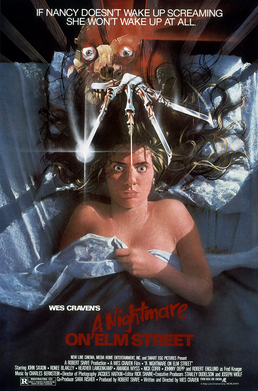
A Nightmare on Elm Street (1984) movie poster

Freddy Krueger is the burned, wisecracking dream-killer of Wes Craven’s A Nightmare on Elm Street (1984), played by Robert Englund — an undead murderer who hunts teenagers inside their own dreams. He became one of the defining horror icons of the 80s, and the movie that introduced him built an entire studio.

A monster you couldn’t wake up from

Craven’s masterstroke was the premise: Freddy attacks you when you’re asleep, and if he kills you in the dream, you die for real. There’s no hiding, no locking the door, no staying up forever. That turned an ordinary slasher into something genuinely primal — a villain who lives in the one place you have to go every single night.

He’s identified instantly by his uniform: the burned, disfigured face, the dirty striped sweater, the brown fedora, and the homemade clawed glove. It’s one of the most recognizable silhouettes in movie history.

The audition that made the monster

Craven has said he struggled to cast Freddy — he couldn’t find an actor with the right menace. Then Robert Englund walked in. Craven noted that Englund “wasn’t as tall as I’d hoped” and had a baby face, but impressed him with a willingness to go to the dark places in his mind. Englund understood Freddy — the cruelty, the sick sense of humor — and turned him into a character who was terrifying and weirdly charismatic at once.

Remember when A Nightmare on Elm Street gave a young unknown named Johnny Depp his very first film role — as one of Freddy’s teenage victims? The movie didn’t just launch a monster. It launched a movie star, in his debut.

The house that Freddy built

A Nightmare on Elm Street was made for around $1.1 million and became one of the first hits for a scrappy young company called New Line Cinema — which grew so successful off the franchise that it earned the nickname “The House That Freddy Built.” Sequel after sequel followed, and Freddy, with his one-liners and that scraping glove, became the wise-cracking face of 80s horror.

The empire the glove built

One movie became a machine. A Nightmare on Elm Street spawned a long run of sequels through the 80s and beyond, plus a TV anthology series (Freddy’s Nightmares) that Englund hosted in character. Freddy got so big he crossed over to battle the other titan of 80s horror in Freddy vs. Jason (2003) — the slasher-movie equivalent of a heavyweight title fight fans had argued about for years.

What kept the franchise alive where so many slashers fizzled was Freddy’s personality. Unlike the silent killers, Freddy talked — cracking sick jokes as he stalked his victims, turning each kill into a twisted piece of theater. Robert Englund leaned into it, making the monster weirdly magnetic even as he terrified you. That glove, that sweater, that fedora became one of the most merchandised, costumed, and instantly readable villains in movie history. Freddy Krueger didn’t just scare the 80s. He built a house on the fear — and never let anyone get a good night’s sleep again.

Why he endures

Plenty of 80s slashers came and went. Freddy stuck because he weaponized something universal — the fear of falling asleep — and because Robert Englund gave the monster a personality. Scary, funny, and impossible to outrun, Freddy Krueger turned bedtime into the most dangerous part of the day for a whole generation.

FAQ

Who plays Freddy Krueger?
Robert Englund, beginning with A Nightmare on Elm Street (1984) and across the franchise.

Who created Freddy Krueger?
Writer-director Wes Craven created the character for the 1984 film.

How does Freddy attack his victims?
He hunts teenagers inside their dreams — and if he kills you while you’re asleep, you die in real life.

Which future star had his debut in the film?
Johnny Depp made his film debut in A Nightmare on Elm Street as one of the teenage characters.


Freddy is the face of 80s horror — meet his rival in our Jason Voorhees profile, or browse the full 80s movie characters roundup next.

Exotic locations, glamorous yachts, sharp suits, and a frontman rising in slow motion out of a jungle river as the rain poured down. Other bands made music videos. Duran Duran made mini-movies — and in doing so, they turned MTV into their personal playground and became the biggest teen idols of the decade. If the 80s had a house band for pure style, this was it.

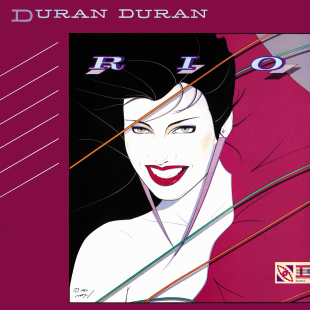
Duran Duran – Rio (1982) album cover

Duran Duran is the English New Romantic band whose sleek sound and cinematic music videos made them 80s superstars, behind hits like “Hungry Like the Wolf,” “Rio,” and “The Reflex.” They were pioneers of the video age and the ultimate stylish pop group.

Rio and the birth of a sensation

Duran Duran broke through globally with their 1982 album Rio and its unstoppable singles. “Hungry Like the Wolf” climbed to No. 3 on the Billboard Hot 100 and made them an international sensation, while the title track “Rio” and “Save a Prayer” cemented their sound — a slick, danceable blend of new wave, funk, and glossy pop. Fronted by Simon Le Bon with Nick Rhodes on keyboards and the three unrelated Taylors (John, Roger, and Andy), they had the looks, the hooks, and the timing to ride the new MTV era straight to the top.

The videos that changed the game

Here’s what set Duran Duran apart: they understood before almost anyone that in the MTV age, the video was the message. The band and their label poured real money and ambition into their clips — famously spending a fortune to fly to Sri Lanka to shoot lavish, exotic videos for “Hungry Like the Wolf” and “Save a Prayer.” The imagery was cinematic, glamorous, and unlike anything on TV. Those videos didn’t just promote the songs; they made Duran Duran look like international jet-setters and turned them into the most-watched band on the channel. They basically wrote the playbook for how to become a star through music video.

Riding the Second British Invasion

Duran Duran were at the very front of the “Second British Invasion” — the wave of stylish UK acts that conquered American MTV in the early-to-mid 80s. They kept the hits coming with “The Reflex” (a 1984 No. 1), “The Wild Boys,” and even a James Bond theme, “A View to a Kill” (1985), which also topped the chart. For a stretch, they were as big as pop got, complete with screaming fans and full-blown teen-idol mania.

Remember when your bedroom wall was papered with Duran Duran posters torn from magazines, and everyone had a favorite member? The band turned pop stardom into a full sensory experience — the sound, the style, the videos, the fashion — and a generation of fans was completely swept up in it.

Why Duran Duran endures

Duran Duran’s 80s peak made them one of the defining acts of the decade, not just for their catchy, sophisticated pop but for how completely they mastered the new visual language of music. They proved that image and substance could go hand in hand, and their best songs still sound effortlessly cool. The band that treated the music video as an art form remains one of the most stylish and influential acts the 80s ever produced.

FAQ

What are Duran Duran’s biggest 80s hits?
“Hungry Like the Wolf,” “Rio,” “The Reflex,” “Save a Prayer,” “The Wild Boys,” and the Bond theme “A View to a Kill.”

Why were Duran Duran’s music videos so important?
They were among the first to treat videos as cinematic mini-movies, shooting lavish, exotic clips that made them MTV superstars and defined the visual style of the era.

What is the “New Romantic” movement?
A stylish early-80s British scene, blending new wave music with glamorous fashion, of which Duran Duran were the biggest stars.

Who is the lead singer of Duran Duran?
Simon Le Bon, alongside keyboardist Nick Rhodes and the three unrelated Taylors — John, Roger, and Andy.

Did Duran Duran record a James Bond theme?
Yes — “A View to a Kill” (1985), which became a No. 1 hit and remains one of the most successful Bond themes.

What was the “Second British Invasion”?
The wave of British acts, led by bands like Duran Duran, that dominated American MTV and charts in the early-to-mid 1980s.


Duran Duran ruled the video age — explore more of the decade in our 80s pop culture guide, or meet the sneering Billy Idol next.

Scroll to top