Month: May 2026

By 1989 the hair-metal party had been raging for years, and plenty of people figured the scene was running out of gas. Then a band of young unknowns from New Jersey kicked the door in with a snarling six-foot-plus blond frontman and a debut so ferocious it made the whole genre feel dangerous again. Skid Row didn’t just join the party — they gave it one last, glorious roar.

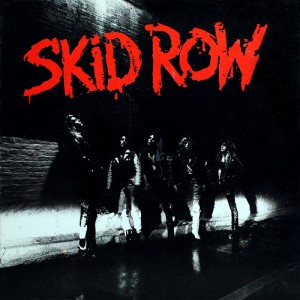
Skid Row – Skid Row (1989) album cover

Skid Row is the New Jersey hard-rock band whose 1989 self-titled debut, fronted by Sebastian Bach, closed out the decade with hits like “Youth Gone Wild,” “18 and Life,” and “I Remember You.” Heavier and hungrier than most of their peers, they were the last great band of the 80s glam-metal wave.

A debut that hit like a fist

Skid Row was released in January 1989 on Atlantic Records and went multi-platinum fast. It had everything: the rebel anthem (“Youth Gone Wild”), the tender ballad (“I Remember You”), and the dark, dramatic story-song that became their signature — “18 and Life.” That song, released in mid-1989, climbed to No. 4 on the Billboard Hot 100 and told the grim tale of an 18-year-old named Ricky, sentenced to life for killing another teen. It was heavier subject matter than the party anthems ruling the charts, and Bach sold every ounce of its drama.

The frontman who became a lightning rod

Sebastian Bach — born Sebastian Bierk in Canada — fronted Skid Row from 1987 to 1996 and became one of the most electric performers of the era. Tall, blond, wild, and blessed with a huge, screaming range, he was made for the MTV spotlight. He gave the band a charisma and a menace that set them apart from the sweeter glam acts, and he became the face of a group that felt like it had more edge than the hair-metal label suggested. Bach’s presence is a big reason the debut still sounds urgent decades later.

Remember when “I Remember You” came on and even the toughest kids in the room went quiet? Skid Row could snarl through “Youth Gone Wild” and then break your heart with a ballad in the same set — the range that made their debut such a knockout.

Why Skid Row endures

Skid Row arrived right at the edge of the cliff — within a couple of years, grunge would sweep the whole hair-metal scene away — which gives their debut a special place in the story. It’s the sound of the 80s going out swinging, harder and hungrier than it started. Their first two albums remain fan favorites, Bach went on to a busy solo and acting career, and “18 and Life” and “I Remember You” are permanent fixtures on any 80s rock playlist. The last great gasp turned out to be one of the best.

What came next

Skid Row’s story has a remarkable second chapter that proves they were more than a glam act. Their 1991 follow-up, Slave to the Grind, was heavier, angrier, and more aggressive than the debut — and it became one of the first genuinely heavy albums to debut at No. 1 on the Billboard chart. That was a statement: as grunge was gathering to sweep away the hair-metal scene, Skid Row was already pushing toward something tougher and more serious. Sebastian Bach’s ferocious vocals and the band’s harder edge gave them credibility that a lot of their sweeter peers lacked. It didn’t save the genre from the coming shift, but it did mark Skid Row as the band that saw the wall coming and tried to punch through it rather than get buried.

FAQ

Who was the lead singer of Skid Row?
Sebastian Bach fronted the band from 1987 to 1996, becoming one of the era’s most charismatic performers.

What is Skid Row’s biggest hit?
“18 and Life,” which reached No. 4 on the Billboard Hot 100 in 1989, alongside “I Remember You” and “Youth Gone Wild.”

When did Skid Row’s debut album come out?
January 1989 — one of the last major glam-metal breakthroughs before grunge changed the landscape.

What is “18 and Life” about?
It tells the story of an 18-year-old named Ricky sentenced to life in prison for killing another teenager.


Skid Row closed the decade strong — see the whole scene in our best 80s hair bands guide, or grab a slice with Warrant next.
Some kids in the 80s dreamed about being on TV. Bobby Catalano actually was — five days a week, dancing in front of a cable audience that stretched across the entire tri-state area. If you grew up watching Dance Party USA, you didn’t need a last name. He was just Bobby.

Bobby Catalano, co-host of the Awesome 80s Podcast and Dance Party USA alumnus

Bobby Catalano was a regular on Dance Party USA — first on the air in 1985 — who went on to host the show from 1989 to 1991, and today he co-hosts Bobby and Jason’s Awesome 80s Podcast — the same 80s-obsessed energy, now pointed at the whole decade instead of one dance floor. He came up through the studio the way the best regulars did: as one of the kids on the floor first, and behind the microphone second.

From the dance floor to the host chair

Dance Party USA ran on the USA Network from 1986 to 1992, filmed in Philadelphia with production offices in Camden, New Jersey — squarely in Bobby’s tri-state backyard. Bobby was first on the air in 1985, coming up through Philadelphia’s Dancin’ On Air before Dance Party USA went national — a regular, one of the core on-camera kids fans tuned in specifically to watch. Then, from 1989 to 1991, he moved up to hosting duties alongside co-host Heather “Princess” Day.

That’s a real arc: kid on the floor to host of the show. It’s the kind of thing that only happened to the regulars who had genuine on-camera presence, and it made Bobby one of the faces of the show during its peak years.

The lip-sync legend

The show’s format leaned hard on lip-sync performances, and Bobby’s are the ones fans still bring up decades later — the spotlight numbers where a regular got the floor to themselves and sold a hit song to the camera. Ask longtime viewers and you’ll hear about specific performances, sunglasses-and-all, that stuck in their memory the way only 80s TV can. That’s the mark of a real regular: people didn’t just watch the show, they watched him.

The phenomenon he was part of

It’s worth remembering just how big Dance Party USA was in its corner of the world. It aired daily on the USA Network for six years, built on freestyle music and a floor of real teenagers rather than professional performers — and in the Philadelphia and tri-state area, its regulars were genuine local celebrities, recognized in public and followed by fans. Being one of the show’s hosts during its peak meant Bobby was one of the faces a whole region tuned in to see, five days a week. That’s the foundation everything he does now is built on: not a fan looking back at the 80s, but someone who was actually on camera in the middle of them.

Bobby Catalano now

These days Bobby channels all of that 80s energy into Bobby and Jason’s Awesome 80s Podcast and this site, bobbyandjason.com, alongside his longtime friend and co-conspirator Jason Pascoe — who was right there on Dance Party USA with him. He’s the resident superfan who’s proudly, permanently stuck in the best parts of the decade.

The through-line is simple: the kid who danced his way onto tri-state TV never actually left the 80s. He just found a bigger stage to celebrate it from. (For a pure show-era angle on the shades and the lightning lip-syncs, WatchParty USA keeps a Bobby profile in its Dance Party USA archive.)

FAQ

Who is Bobby Catalano?
Bobby Catalano is a former Dance Party USA regular and host who now co-hosts Bobby and Jason’s Awesome 80s Podcast and runs bobbyandjason.com.

When was Bobby Catalano on Dance Party USA?
He was first on the air in 1985, became one of the show’s regulars, and served as one of its hosts from 1989 to 1991.

What is Bobby Catalano doing now?
He co-hosts an 80s nostalgia podcast with Jason Pascoe, celebrating the music, movies, TV, and pop culture of the decade.

Did Bobby Catalano host Dance Party USA?
Yes — after coming up as a dancer, he hosted from 1989 to 1991, alongside co-host Heather “Princess” Day.

Where is Bobby Catalano from?
He’s a tri-state-area guy — Dance Party USA was a Philadelphia–South Jersey production, and its biggest audience was right there in the region he called home.


Bobby’s story is one half of the act — meet his co-conspirator in our Jason Pascoe on Dance Party USA profile, or go back to the beginning with what Dance Party USA was.

Scroll to top