Month: May 2026

A dance show lives and dies by its music, and Dance Party USA had a sound as specific as a zip code. Turn it on any afternoon in the late 80s and you’d hear the thumping, heartbroken, impossibly catchy records that ruled the tri-state dance floors — the ones that made a studio full of teenagers move like the world was ending after school.

Biz Markie performs for the studio crowd, from a Dance Party USA promo reel

The music of Dance Party USA was built on freestyle and late-80s dance-pop — the club-born, drum-machine-driven sound that dominated the Philadelphia and New York area — mixed with chart hits that the show’s teen regulars danced and lip-synced to. It wasn’t just background. The songs were the show.

Freestyle was the heartbeat

If one genre owns Dance Party USA, it’s freestyle — the electronic, Latin-and-urban-flavored dance music that exploded out of New York and Philadelphia in the mid-80s. The show was one of freestyle’s great TV homes, giving the genre’s artists a floor full of kids who knew every beat. Acts associated with that scene — names like Safire, Trinere, Lisette Melendez, Angel, and Betty Dee — were the exact sound the show was built around.

Freestyle mattered here for a reason: it was regional. This was tri-state music, born in the same Philadelphia–New York corridor the show broadcast from, danced by kids who heard it on local radio and in local clubs. Dance Party USA didn’t import a national sound — it broadcast its own backyard.

The lip-sync spotlights

Beyond the group dancing, the show leaned on lip-sync performances — a regular grabbing the spotlight to “perform” a current hit straight to camera. That’s where the pop side came in. Fans still write in about specific numbers: the George Michael and Wham! ballads like “Careless Whisper” and “Last Christmas” that a confident regular could sell to the lens, sunglasses and all. Some guest recording artists appeared too, often lip-syncing to their records the way music-TV of the era commonly did.

Remember when you learned every word to a freestyle jam just from watching the dancers mouth it on TV? The show turned casual radio hits into floor anthems for a whole region.

The sound of a specific place and time

What makes the Dance Party USA soundtrack hit so hard in memory is how tightly it’s bolted to a moment. This is late-80s, early-90s tri-state dance music — freestyle’s golden age crossed with the biggest pop of the era, all filtered through a Philadelphia studio and a floor of real teenagers. Put any of those records on today and, for a certain generation, the studio lights come right back up.

FAQ

What kind of music did Dance Party USA play?
Mostly freestyle and late-80s dance-pop — the club-driven, drum-machine sound popular across the Philadelphia and New York area — along with current chart hits the regulars danced and lip-synced to.

What is freestyle music?
Freestyle is an electronic dance genre with Latin and urban roots that emerged from New York and Philadelphia in the mid-1980s, known for synths, drum machines, and emotional vocals. It was the signature sound of Dance Party USA.

Did artists perform live on Dance Party USA?
Guest recording artists appeared on the show, though performances were often lip-synced to recorded tracks, as was common for music television of the era.

What songs are associated with Dance Party USA?
The show is tied to freestyle records and late-80s dance-pop, plus the pop hits regulars used for lip-sync spotlights, such as George Michael and Wham! ballads.

Why was freestyle so big on the show?
Because freestyle was tri-state music. It was born in the same Philadelphia–New York region the show broadcast from, so it was the natural soundtrack for its audience of local teens.


The songs were only half of it — meet the Dance Party USA dancers who brought them to life, or go back to what Dance Party USA was.
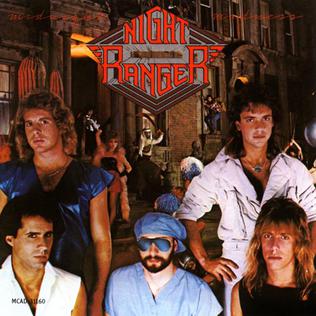
Motorin’… what’s your price for flight? You know the song even if you never knew the band’s name. “Sister Christian” is one of the definitive power ballads of the decade — the swelling piano, the soaring chorus, the ache of a parent watching a kid grow up too fast. And nearly everything about how it came to be is a happy accident.

Night Ranger – Midnight Madness (1983) album cover

Night Ranger is the San Francisco hard-rock band, formed in 1982, best known for the 1984 power-ballad smash “Sister Christian” and the anthem “You Can Still Rock in America.” They mixed arena-rock muscle with real melodic craft, and their signature song has quietly become immortal.

The band and the breakthrough

Night Ranger formed in San Francisco in 1982 and rode the early-80s rock wave with a run of successful albums and hit singles. Their sound sat right in the sweet spot between hard rock and radio-friendly melody — twin lead guitars, big harmonies, and hooks built for stadiums. But the song that made them a household name was “Sister Christian,” from their 1983 album Midnight Madness, which climbed to No. 5 on the Billboard Hot 100 in 1984 and stayed on the charts for months.

The ballad written by the drummer — and misheard into history

Two great facts make “Sister Christian” special. First: it wasn’t written or sung by the frontman. It was written and sung by the band’s drummer, Kelly Keagy — a rarity in rock — as a heartfelt song about watching his younger sister grow up.

Second, and even better: the title itself is a mistake. Keagy’s sister’s real name was Christy, and the song was about her. But when bassist Jack Blades first heard Keagy singing it, he misheard “Christy” as “Christian” — and the misheard word stuck. One of the most famous ballad titles of the 80s exists because a bandmate didn’t quite catch the lyric. It’s the kind of lucky accident that great pop history is full of.

Remember when “Sister Christian” found a whole new life in the movies — its slow-burn build used to unforgettable, tension-soaked effect in a now-classic 90s film scene? A tender 80s ballad became a go-to for filmmakers, proof the song had a power that outlasted its era.

Why Night Ranger endures

Night Ranger might be filed by casual fans under their biggest hit, but “Sister Christian” is the kind of song that guarantees a band never gets forgotten — it plays at weddings, in movies, and on every 80s station, decade after decade. Add the charm of its backstory — the drummer who wrote it, the misheard title — and you’ve got one of the era’s most quietly enduring acts. The band still tours, and that piano intro still stops a room cold. Motorin’.

The players behind the hits

Night Ranger was stacked with serious talent, which is why they were more than a ballad band. Their twin-guitar attack featured Brad Gillis — a player good enough that he briefly toured with Ozzy Osbourne’s band in the early 80s, stepping in during one of metal’s most difficult moments — alongside Jeff Watson, giving the group real hard-rock firepower on anthems like “(You Can Still) Rock in America” and “Don’t Tell Me You Love Me.” Bassist Jack Blades went on to co-found the supergroup Damn Yankees in the 90s, scoring another big hit with “High Enough.” So the band behind that tender piano ballad was, under the hood, a group of accomplished rock musicians with connections running throughout the era. It’s a reminder that the acts casual fans file under a single song were often deeper and more skilled than their one hit suggests.

FAQ

What is Night Ranger’s biggest hit?
“Sister Christian,” which reached No. 5 on the Billboard Hot 100 in 1984.

Who wrote and sang “Sister Christian”?
Drummer Kelly Keagy wrote and sang it, about his younger sister — unusual for a band’s frontman not to take lead.

Why is the song called “Sister Christian”?
Keagy’s sister was actually named Christy; bassist Jack Blades misheard the word as “Christian,” and it stuck.

Where is Night Ranger from?
San Francisco, California, where the band formed in 1982.

What are Night Ranger’s other hits?
“(You Can Still) Rock in America” and “Sentimental Street” were among their other successful singles during their 1980s run.


Night Ranger gave us a timeless ballad — see the whole scene in our best 80s hair bands guide, or count down with Europe next.

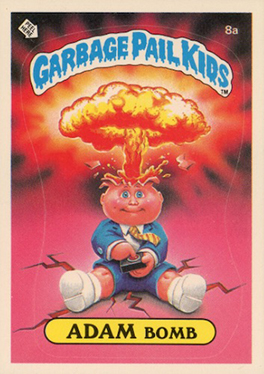
If the Cabbage Patch Kids were the sweet, huggable face of the 80s toy craze, the Garbage Pail Kids were its evil twin — literally. Where one had dimpled cheeks and adoption papers, the other had a kid named Adam Bomb whose head was exploding into a mushroom cloud. And every 80s kid knew exactly which one was cooler.

Garbage Pail Kids Adam Bomb trading card (1985)

Garbage Pail Kids were a series of Topps sticker trading cards launched in 1985 as a deliberate parody of the wildly popular Cabbage Patch Kids dolls, featuring grotesque, darkly funny characters with punny names — a phenomenon that got the cards banned from schools and Topps sued by the doll’s rights holders. They were gross, they were brilliant, and they were exactly what kids wanted.

Born from a Cabbage Patch joke

The origin is perfect. When Topps was considering licensing the actual Cabbage Patch Kids for a card set, art director and future Pulitzer Prize winner Art Spiegelman — working with Mark Newgarden and Len Brown — hatched the idea of parodying them instead. Artist John Pound painted the first series of characters, each one a cartoonishly revolting send-up of the wholesome dolls.

The gimmick sealed it: every card had a character with two punny name variations — Adam Bomb and Blasted Billy, Nasty Nick and Evil Eddie — showing kids vomiting, oozing, smoking, and generally reveling in everything the Cabbage Patch Kids weren’t. They were stickers, so you could stick them everywhere, and the first series alone gave kids a whole cast of little monsters to collect and trade.

Banned, sued, and more popular for it

Naturally, the adults hated them — which naturally made kids love them more. Teachers banned the cards from many schools, citing them as classroom distractions and objecting to the grotesque art and the mischievous card backs that “encouraged” kids to skip school, stay up late, and misbehave.

Then came the lawsuit. In 1986, Original Appalachian Artworks — the company behind the Cabbage Patch Kids — sued Topps for infringement. Topps argued parody and fair use, but the court didn’t buy it, and the case settled out of court, with Topps agreeing to alter the characters’ appearance and change the logo so they less closely resembled the dolls. The controversy only made the cards more notorious.

Remember when trading a doubles for the one card you were missing felt like a high-stakes deal — and getting caught with them in class meant a one-way trip to the teacher’s desk drawer?

Why they became icons

Garbage Pail Kids tapped something real: kids’ delight in the gross, the forbidden, and the subversive. In a decade full of sanitized, marketing-driven toys, here was something that felt like it was made by the naughtiest kid in class. The craze cooled after the late-80s peak (a critically panned 1987 movie didn’t help), but the cards never truly died — Topps has revived the series again and again, and vintage cards are genuinely collectible today. Not bad for a bunch of stickers your teacher confiscated.

FAQ

What are Garbage Pail Kids?
Garbage Pail Kids are Topps sticker trading cards, first released in 1985, that parody the Cabbage Patch Kids with grotesque, darkly humorous characters and punny names.

Who created Garbage Pail Kids?
The concept came from Topps’ Art Spiegelman, working with Mark Newgarden and Len Brown, with artist John Pound painting the first series of characters.

Why were Garbage Pail Kids banned from schools?
Many schools banned them as classroom distractions and objected to their grotesque imagery and the mischievous messages printed on the card backs.

Did Cabbage Patch Kids sue Garbage Pail Kids?
Yes. In 1986, Cabbage Patch rights holder Original Appalachian Artworks sued Topps; the case settled out of court, with Topps agreeing to change the characters’ look and the logo.

Was there a Garbage Pail Kids movie?
Yes — a 1987 live-action film was released, but it was widely panned and is often cited as one of the worst movies of the era.


They existed only to mock their sweeter cousins — read about the Cabbage Patch Kids they parodied, or dig into more in our 80s pop culture icons guide.

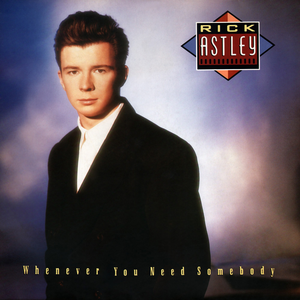
A fresh-faced young redhead in a trench coat starts to dance, opens his mouth, and out comes this rich, deep, soulful baritone that sounds like it belongs to someone twice his age and size. That gap — between how Rick Astley looked and how he sounded — was the delightful surprise at the heart of one of the biggest songs of the entire decade. And little did anyone know the tune would get a wild second life decades later.

Rick Astley – Whenever You Need Somebody (1987) album cover

Rick Astley is the English singer whose 1987 debut single “Never Gonna Give You Up” became a worldwide No. 1, powered by his surprisingly deep, soulful voice and the hitmaking machine of producers Stock Aitken Waterman. It’s one of the most recognizable pop songs ever made.

A debut single that conquered the world

“Never Gonna Give You Up” was released in the summer of 1987 as the lead single from Astley’s debut album, Whenever You Need Somebody. Written and produced by the era’s dominant hit factory, Stock Aitken Waterman, it was a phenomenon: it spent five weeks at No. 1 in the UK, became the best-selling British single of the year, and hit No. 1 in more than 25 countries. It even won the 1988 Brit Award for Best British Single. For a debut, that’s about as big a splash as pop music allows.

The voice nobody expected

The magic of Rick Astley was the surprise. Here was this clean-cut, boyish 21-year-old, and yet his voice was this warm, full, soulful baritone that seemed to come from another era entirely. Audiences did a double-take — the sound simply didn’t match the face, in the most charming way. Combined with the irresistibly bouncy, danceable Stock Aitken Waterman production and a straightforward, heartfelt lyric about total devotion, it made for a song that was impossible to dislike. The concept itself reportedly came from producer Pete Waterman, after Astley spoke about his devotion to his girlfriend.

The song’s astonishing second life

Here’s the twist that makes Rick Astley’s story unique among 80s stars: decades after its release, “Never Gonna Give You Up” became one of the most famous internet phenomena of all time. “Rickrolling” — the prank of tricking someone into clicking a link that secretly leads to the song’s music video — turned a 1987 pop hit into a global running joke shared by millions who weren’t even born when it came out. Few 80s songs have found a bigger, weirder, more affectionate second act.

Remember when that video was just an earnest young guy in a trench coat doing his slightly awkward little dance — long before it became the internet’s favorite bait? The charm was always real, which is part of why the joke works: you genuinely don’t mind getting Rickrolled.

Why Rick Astley endures

Rick Astley’s 80s breakthrough gave the decade a genuinely great pop song and a voice that still stops people in their tracks. And thanks to its unexpected internet immortality, “Never Gonna Give You Up” is arguably more famous now than it was at its peak — a rare case of an 80s hit that keeps finding brand-new audiences. Astley has toured and recorded happily on the strength of it, fully in on the joke. Not bad for a song built on a simple, sincere promise.

FAQ

What is Rick Astley’s most famous song?
“Never Gonna Give You Up,” a 1987 worldwide No. 1 and his debut single.

Who produced “Never Gonna Give You Up”?
The hit-making British production trio Stock Aitken Waterman, the dominant pop factory of the era.

Why was Rick Astley’s voice surprising?
His deep, soulful baritone didn’t match his young, boyish appearance, creating a charming contrast that helped make the song a sensation.

What is “Rickrolling”?
An internet prank in which people are tricked into clicking a link that leads to the “Never Gonna Give You Up” music video, giving the song a huge second life.

How successful was “Never Gonna Give You Up” in 1987?
It hit No. 1 in more than 25 countries, was the UK’s best-selling single of the year, and won a Brit Award for Best British Single.

What are Rick Astley’s other 80s hits?
“Together Forever,” “Whenever You Need Somebody,” and “It Would Take a Strong Strong Man,” among others.


Rick Astley gave the 80s an immortal hit — explore more of the decade in our 80s pop culture guide, or read the story behind a-ha’s “Take On Me” next.

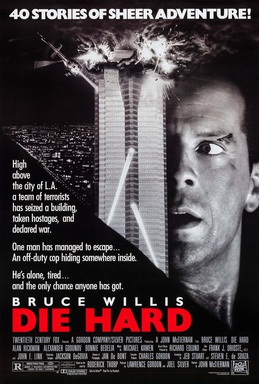
No muscles like Rambo. No headband, no bandolier. Just a New York cop in a filthy undershirt, barefoot on broken glass, in way over his head and bleeding for it. When John McClane crawled through an air vent muttering to himself in 1988, he quietly rewrote the rules for what an action hero could be.

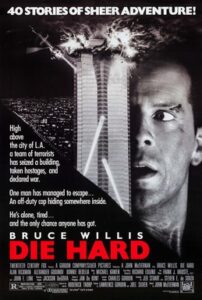
Die Hard (1988) movie poster

John McClane is the wisecracking, off-duty NYPD detective played by Bruce Willis in Die Hard (1988), who single-handedly takes on a team of thieves holding a Los Angeles skyscraper hostage on Christmas Eve. He’s the everyman action hero — and the whole genre bent around him afterward.

The casting nobody believed in

Here’s the fact that seems impossible now: casting Bruce Willis as an action lead was considered a bad idea. He was known as the smirking star of the TV comedy Moonlighting — a “goofy sitcom regular,” not a tough guy. Director John McTiernan picked him precisely because of that. He didn’t want an invincible slab of muscle. He wanted an everyman: a normal, hard-working cop thrown into an impossible situation, scared and improvising.

That choice is the entire reason Die Hard works. McClane bleeds. He panics. He talks to himself to keep from losing it. And audiences connected instantly, because for the first time the action hero was somebody who felt like us.

Vulnerable, funny, and human

McClane’s weapons are grit and a sense of humor, not a physique. He’s separated from his wife Holly, in town to try to patch things up, when everything goes wrong. He spends the movie barefoot (his shoes are gone early), cut up, exhausted, and sarcastic — trading one-liners with the villain over a stolen radio. The famous “Yippee-ki-yay” catchphrase is pure McClane: defiance from a guy who knows he’s outgunned and refuses to quit anyway.

Remember when he had to run across a floor of shattered glass in bare feet, leaving bloody footprints while the bad guys closed in? It’s the moment Die Hard declared its whole philosophy: this hero has no armor, and every wound is real.

Nakatomi Plaza and a villain for the ages

A hero is only as good as his villain, and McClane got one of the greatest. Die Hard marked the film debut of Alan Rickman as Hans Gruber — the silky, impeccably dressed mastermind whose intelligence and menace made McClane’s grimy, improvised heroics look even more human by contrast. The cat-and-mouse between the barefoot cop and the elegant thief, mostly conducted over a stolen radio, is the engine the whole movie runs on. Rickman was so good that he essentially wrote the template for the modern action villain in a single role.

The setting became iconic too: Nakatomi Plaza, a gleaming L.A. skyscraper turned into a vertical battleground. That “one man trapped in one building” structure was so clean and so effective that Hollywood spent the next decade pitching movies as “Die Hard on a bus,” “Die Hard on a plane,” “Die Hard on a boat.” John McClane didn’t just star in a great action movie — he became the blueprint an entire genre copied.

Why McClane endures

Die Hard opened July 15, 1988, and turned Bruce Willis from sitcom punchline into an action icon practically overnight. More than that, it created a template — “one regular guy, one contained location, impossible odds” — that Hollywood is still copying. John McClane proved the most relatable action hero is the one who’s just barely hanging on, cracking jokes the whole way down.

FAQ

Who plays John McClane?
Bruce Willis, across the Die Hard franchise, starting with the 1988 original.

Why was casting Bruce Willis controversial?
He was known as a TV-comedy star from Moonlighting, not an action lead — but director John McTiernan wanted his everyman quality, not a muscleman.

What’s John McClane’s catchphrase?
“Yippee-ki-yay” — his signature line of defiance in every film.

Is Die Hard a Christmas movie?
It’s set on Christmas Eve at a holiday office party, which fuels the long-running debate that it counts as one.

Who plays the villain in Die Hard?
Alan Rickman, in his film debut, as the silky criminal mastermind Hans Gruber. Rickman’s cool, intelligent menace was so effective that he essentially defined the template for the modern action-movie villain — the perfect foil to McClane’s grimy, improvised heroism.


John McClane changed the action hero forever — meet more in our 80s movie characters roundup, or grab a laugh with Axel Foley next.

“Dead or alive, you’re coming with me.” Delivered in that flat, metallic monotone, it’s one of the great 80s action lines. But RoboCop pulled a fast one on everybody who bought a ticket for the shootouts: underneath the chrome and the firepower is one of the saddest, smartest movies the decade made.

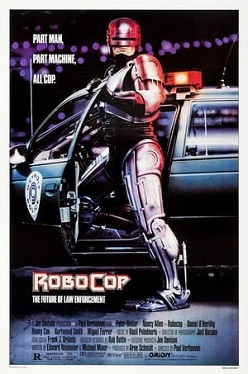
RoboCop (1987) movie poster

RoboCop is Alex Murphy, a Detroit police officer who is brutally murdered and then rebuilt as a cyborg law-enforcer by the megacorporation Omni Consumer Products, in Paul Verhoeven’s 1987 film — played by Peter Weller. He’s part action figure, part tragedy: a machine slowly remembering it used to be a man.

The man inside the metal

The genius of RoboCop is the ghost in the machine. OCP wipes Murphy’s identity and rebuilds him as a product — a walking, gun-toting brand designed to clean up a crime-ridden near-future Detroit. But fragments of Murphy’s humanity keep surfacing: flashes of his family, his old reflexes, the man he used to be. The whole movie is his fight to reclaim an identity a corporation tried to erase. That’s a lot heavier than the poster lets on.

Satire hiding in a shoot-’em-up

Verhoeven loaded RoboCop with sly satire that a lot of kids missed the first time. The fake TV commercials, the gleefully evil corporation, the “I’d buy that for a dollar!” gags — it’s a sharp send-up of 80s greed, privatization, and media culture, smuggled inside a hyper-violent action movie. That double life is exactly why the film got critically re-evaluated over the years and is now hailed as one of the best of the decade, not just a fun bit of ultraviolence.

Remember when OCP demoed its other law-enforcement robot, the ED-209 — and it malfunctioned, gunning down an executive in the boardroom while everyone stood frozen in horror? It’s brutal, it’s darkly hilarious, and it tells you exactly what kind of movie you’re really watching.

“I’d buy that for a dollar” — the satire that aged perfectly

The deeper you look at RoboCop, the sharper it gets. Those fake commercials and news breaks scattered through the film — the game shows, the car ads, the gleeful “I’d buy that for a dollar!” catchphrase — are Verhoeven skewering a media-saturated, buy-everything culture that only looks more accurate with time. The villains aren’t just street thugs; they’re the executives of a corporation that treats a murdered cop as a product line. In 1987 that read as dark comedy. Today it reads as prophecy.

That double-layered design is why the character kept going — sequels, a TV series, cartoons, a 2014 remake — and why film critics who once flinched at the violence now rank it among the best movies of the decade. RoboCop endures because he’s two things at once, held in perfect tension: a badass action figure kids wanted on their shelf, and a tragic figure asking what’s left of a man when a company owns his body. Peter Weller’s mournful, mechanical performance sells both. Few 80s heroes were ever this smart while looking this cool.

Why RoboCop endures

RoboCop was a financial hit in 1987, earning over $53 million, but its real staying power is the mix nobody expected: a crowd-pleasing action icon that’s secretly about grief, identity, and what makes us human. Peter Weller’s precise, mournful performance sells both halves. RoboCop is the rare 80s hero who could headline the action aisle and the film-studies syllabus at the same time.

FAQ

Who is RoboCop, really?
Alex Murphy, a Detroit police officer who is murdered and rebuilt as a cyborg by the corporation OCP. He’s played by Peter Weller.

Who directed RoboCop?
Paul Verhoeven, from a screenplay by Edward Neumeier and Michael Miner, released in 1987.

Is RoboCop just an action movie?
No — beneath the action it’s a satire of 80s corporate greed and media culture, plus a tragedy about a man reclaiming his lost humanity.

What is ED-209?
OCP’s rival law-enforcement robot, whose violent boardroom malfunction is one of the film’s most memorable scenes.

Were there RoboCop sequels?
Yes — RoboCop 2 (1990) and RoboCop 3 (1993), plus TV series, cartoons, and a 2014 remake. But the 1987 original remains the definitive version, prized for balancing brutal action with sharp satire of corporate greed and media culture.


RoboCop is 80s action with a brain — meet more heavy hitters in our 80s movie characters roundup, or go back to John Rambo next.

Before the Sunset Strip was crawling with glam-metal bands, before MTV was wall-to-wall spandex, somebody had to prove that a metal band could actually top the charts. That somebody was Quiet Riot — and when they did it, they didn’t just score a hit. They kicked down a door the whole decade came pouring through.

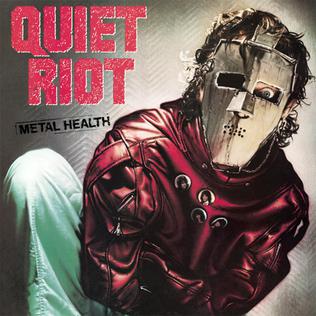
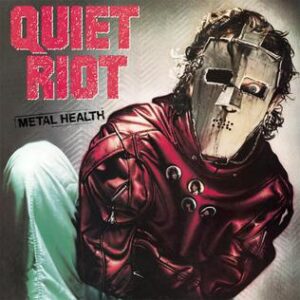
Quiet Riot – Metal Health (1983) album cover

Quiet Riot is the Los Angeles heavy-metal band whose 1983 album Metal Health became the first heavy-metal album ever to hit No. 1 on the Billboard album chart, led by singer Kevin DuBrow and the smash “Cum on Feel the Noize.” They were the icebreaker for the entire 80s metal explosion.

The album that made history

Metal Health was released in March 1983, and it did something no metal record had done before: it reached No. 1 on the Billboard 200. That was a genuine watershed. Until then, heavy metal was a concert-hall and album-cut phenomenon; suddenly it was the biggest album in the country. The lineup — Kevin DuBrow on vocals, Carlos Cavazo on guitar, Rudy Sarzo on bass, and Frankie Banali on drums — had cracked the mainstream wide open.

The record’s two anthems still ring out at any 80s party: the title track “Bang Your Head (Metal Health)” and, above all, “Cum on Feel the Noize.”

The cover that broke the ceiling

Here’s a detail fans love: “Cum on Feel the Noize,” the song that carried Metal Health to No. 1, wasn’t even a Quiet Riot original — it’s a cover of the British glam-rock band Slade. And the band didn’t especially want to record it. According to drummer Frankie Banali, the cover was the producer’s idea — a “safety” commercial track — while DuBrow had actually lobbied to cover a different Slade song. The one they were reluctant about became the hit that made history. It’s a perfect reminder that in the studio, the reluctant choice sometimes turns out to be the door-opener.

Remember when a metal band hitting No. 1 actually felt impossible — and then Quiet Riot did it, and within a couple of years the whole scene followed? Being first is easy to forget once the party’s crowded, but Quiet Riot got there before almost anyone.

Why Quiet Riot endures

Quiet Riot’s chart-topping breakthrough is a cornerstone of the 80s metal story — the proof of concept that convinced labels the genre could sell to the masses. Every glam-metal band that flooded the charts in the years after owes a little something to Metal Health clearing the path. Kevin DuBrow’s booming voice and those two unkillable anthems keep the band on every serious 80s playlist. First through the door, and the door never closed again.

The Randy Rhoads connection

Here’s a piece of history that gives Quiet Riot even deeper roots in the story of metal: the band was originally co-founded in the mid-1970s by a young guitar prodigy named Randy Rhoads — the same Randy Rhoads who would go on to become Ozzy Osbourne’s legendary guitarist and one of the most revered players in all of heavy metal. Rhoads was in Quiet Riot’s earliest incarnation before leaving to join Ozzy’s band, where he helped define the sound of metal guitar before his tragic early death. So the band that broke the mainstream ceiling for metal in 1983 also happened to be the launching pad for one of the genre’s greatest guitarists years earlier. That’s a remarkable amount of metal history running through one L.A. band — another reason Quiet Riot’s place in the story is bigger than a single chart-topping album.

FAQ

What made Quiet Riot’s Metal Health historic?
It was the first heavy-metal album to reach No. 1 on the Billboard album chart, in 1983.

What are Quiet Riot’s biggest songs?
“Cum on Feel the Noize” and “Bang Your Head (Metal Health).”

Is “Cum on Feel the Noize” a cover?
Yes — it’s a cover of the British glam-rock band Slade, and it was reportedly the producer’s idea to record it.

Who was the lead singer of Quiet Riot?
Kevin DuBrow, the band’s frontman and one of the most recognizable voices of early 80s metal.

Who was Quiet Riot’s famous early guitarist?
Randy Rhoads, who co-founded the band in the 1970s before leaving to become Ozzy Osbourne’s legendary guitarist — one of the most revered players in metal history.


Quiet Riot opened the door — see who walked through in our best 80s hair bands guide, or raise a fist with Twisted Sister next.

Saturday detention. A library. Five kids who’d never say a word to each other in the hall. If you were a teenager in 1985, you didn’t watch The Breakfast Club — you recognized it. Those five were everybody you knew, and probably a little bit of you.

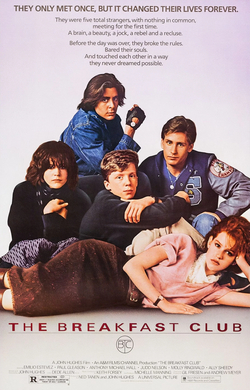
The Breakfast Club (1985) movie poster

The Breakfast Club characters are five students from different high-school cliques — the Criminal, the Princess, the Brain, the Athlete, and the Basket Case — stuck together for Saturday detention in John Hughes’ 1985 classic. Over one day they trade insults, secrets, and eventually the truth, walking out as something none of them expected: friends.

The five, and the actors who became them

  • John Bender — “The Criminal” (Judd Nelson): the sneering troublemaker with a home life that explains the armor. The fist-pump freeze-frame that ends the movie? That’s him.
  • Claire Standish — “The Princess” (Molly Ringwald): the popular girl who’s more trapped by expectations than any of them.
  • Brian Johnson — “The Brain” (Anthony Michael Hall): the straight-A kid buckling under the weight of a failing grade.
  • Andrew Clark — “The Athlete” (Emilio Estevez): the wrestler crushed under his father’s ambition.
  • Allison Reynolds — “The Basket Case” (Ally Sheedy): the silent outsider who turns out to be the most honest one in the room.

They report to fictional Shermer High in Shermer, Illinois — Hughes’ recurring make-believe hometown — for a detention that officially takes place on March 24, 1984, under the thumb of principal Richard Vernon (Paul Gleason).

The genius was the label — then the peel

Hughes hands you the labels on purpose: Criminal, Princess, Brain, Athlete, Basket Case. Then he spends the whole movie proving how little those labels actually hold. The assignment — write an essay about “who you think you are” — becomes the film’s whole thesis. By the last bell, the point is that no one is only one thing.

Remember when they all sat in a circle on the library floor and finally just told the truth — about their parents, their fears, the pressure? No car chase, no explosion. Five teenagers talking. And it was the most gripping thing in theaters that year.

Why five strangers still matter

The Breakfast Club took the teen movie and made it about interior lives instead of gags. Every kid who ever felt reduced to a single word — jock, nerd, weirdo — saw themselves get a fair hearing. That’s why the freeze-frame fist in the air still lands. It’s not just Bender crossing a football field. It’s the whole idea that you’re more than the box they put you in.

The Brat Pack and a song you can’t shake

The Breakfast Club didn’t just give us five characters — it helped christen a movement. Its young cast, alongside the stars of St. Elmo’s Fire and other mid-80s hits, got tagged “the Brat Pack,” the loose crew of hot young actors who defined the decade’s coming-of-age movies. Molly Ringwald and Anthony Michael Hall in particular became the faces of the whole John Hughes universe.

And then there’s the sound. The film opens and closes on Simple Minds’ “Don’t You (Forget About Me)” — a song the band almost turned down, which went on to become one of the definitive anthems of the 1980s. Now you literally cannot hear those opening “hey, hey, hey, hey” notes without picturing Bender’s fist punching the sky. That’s the mark of a movie that fused image and music so tightly they became one memory. Decades on, it earned a spot in the Criterion Collection — not bad for five kids in a library.

FAQ

Who are the five Breakfast Club characters?
John Bender (the Criminal), Claire Standish (the Princess), Brian Johnson (the Brain), Andrew Clark (the Athlete), and Allison Reynolds (the Basket Case).

Who directed The Breakfast Club?
John Hughes wrote and directed the film, released in 1985.

Where is The Breakfast Club set?
At fictional Shermer High School in Shermer, Illinois — a town Hughes used across several of his movies.

What’s the assignment in the movie?
Principal Vernon makes them write an essay about “who you think you are,” which becomes the film’s central theme.

Who does the famous fist-pump at the end?
Judd Nelson’s John Bender, walking across the football field as the movie freezes on his raised fist.


The Breakfast Club is a cornerstone of the John Hughes era — explore the rest in our 80s movie characters guide, or spend a day off with Ferris Bueller next.

Some singers have a great voice. Whitney Houston had the voice — a soaring, crystal-clear, gospel-trained instrument that could fill a stadium and break your heart in the same phrase. When she arrived in the mid-80s, she didn’t just join the pop landscape. She rose above it, and set records that still stand.

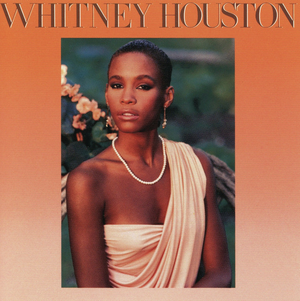
Whitney Houston – Whitney Houston (1985) debut album cover

Whitney Houston is the singer whose 1985 debut album made her one of the biggest stars of the decade, delivering a record-setting run of No. 1 hits with her once-in-a-generation voice. She turned pure vocal talent into chart history.

A debut for the record books

Whitney Houston’s self-titled debut arrived on Valentine’s Day 1985. It started slowly, but once it caught fire it became unstoppable, eventually topping the Billboard 200 for fourteen weeks and generating three No. 1 singles: “Saving All My Love for You,” “How Will I Know,” and “Greatest Love of All.” Her second album, Whitney (1987), kept the streak alive with “I Wanna Dance with Somebody (Who Loves Me).” Across those two records she racked up an astonishing run of consecutive chart-toppers, a feat that set a new standard for pop dominance.

“I Wanna Dance with Somebody” and the joy of the era

“I Wanna Dance with Somebody,” the lead single from Whitney, was designed to bring Houston a brighter, more accessible pop sound — and it worked spectacularly. Written by the duo Boy Meets Girl (who’d also penned “How Will I Know”) and produced by Narada Michael Walden, it went on to sell over 18 million copies worldwide, making it the best-selling single by a female artist of the entire 1980s. It’s a pure shot of 80s joy, still guaranteed to fill any dance floor decades later.

The voice above everything

What set Houston apart wasn’t image or gimmick — it was raw, staggering vocal ability. Trained in gospel and blessed with extraordinary power and control, she could belt with force and then float into delicate, note-perfect runs. On a ballad like “Greatest Love of All,” she made the technical difficulty sound effortless, delivering a message of self-worth that became an anthem. In an era of big style and bigger production, Whitney’s superpower was the simplest and rarest of all: she could flat-out sing like almost no one before or since.

Remember when “Greatest Love of All” would come on and the whole room went still, everyone quietly hoping they could hit even one of those notes? Whitney made vocal perfection sound easy, which only made it more jaw-dropping when you tried to sing along and realized how impossibly good she really was.

Why Whitney Houston endures

Houston’s 80s breakthrough established her as one of the most gifted vocalists in the history of popular music, and set commercial records that spoke to just how completely audiences fell for that voice. She’d go on to even greater fame with The Bodyguard in the 90s, but the foundation was laid in the 80s — two albums, a string of No. 1s, and a voice that defined what pop singing could be. She remains the benchmark, the artist other singers are still measured against.

FAQ

What were Whitney Houston’s biggest 80s hits?
“Saving All My Love for You,” “How Will I Know,” “Greatest Love of All,” and “I Wanna Dance with Somebody (Who Loves Me).”

When did Whitney Houston’s debut album come out?
February 14, 1985 — it eventually topped the Billboard 200 for fourteen weeks and produced three No. 1 singles.

What is the best-selling single by a female artist of the 80s?
Whitney Houston’s “I Wanna Dance with Somebody (Who Loves Me),” which sold over 18 million copies worldwide.

Why was Whitney Houston’s voice so celebrated?
Her gospel-trained power, control, and clarity let her deliver both huge belted notes and delicate runs with seemingly effortless perfection.

What made her debut album historic?
It set a record with its run of consecutive No. 1 singles, an achievement that established her as one of pop’s dominant new stars.

What came after Whitney Houston’s 80s success?
She reached even greater heights in the 1990s with the film The Bodyguard and its record-breaking soundtrack — but her two 80s albums built the foundation for it all.


Whitney Houston set the vocal standard — explore more of the decade in our 80s pop culture guide, or revisit the King of Pop, Michael Jackson, next.

Every 80s kid has the same memory: the satisfying clack of a fresh cube, the pride of solving one side, and the slow horror of realizing that solving one side had wrecked the other five. Then — the peeling. Come on. You peeled the stickers. Everybody peeled the stickers.

A solved Rubik's Cube, the iconic 1980s puzzle toy

The Rubik’s Cube was invented in 1974 by Hungarian professor Ernő Rubik, hit the Western market in 1980, and by 1981 had sold in the hundreds of millions — making it the best-selling toy in history. It wasn’t just a toy. For a few blinding years, a six-sided plastic puzzle was a genuine cultural obsession, and it belonged to the 80s the way big hair and synthesizers did.

From “Magic Cube” to worldwide fever

Rubik built the thing as a teaching tool — a way to explain three-dimensional geometry to his students. He originally called it the Magic Cube (Bűvös kocka in Hungarian), and it took years to escape Hungary. When Ideal Toy Corp licensed it and renamed it the Rubik’s Cube for a 1980 Western launch, it detonated.

By 1981 it was everywhere. It won Germany’s prestigious Game of the Year award. Sales hit the hundreds of millions. And the number that made it legendary: a standard cube has 43 quintillion possible arrangements — 43,000,000,000,000,000,000 — and exactly one of them is solved. That’s not a toy. That’s a tiny mechanical villain that fit in your backpack.

The craze that turned into a subculture

Here’s what separates the Rubik’s Cube from a passing fad: it grew its own world. The first World Championship was held in Rubik’s home city of Budapest in 1982, where the fastest solvers on Earth raced the clock. “Speedcubing” was born right there, and it never actually died.

The cube leaked into everything. It showed up in movies and commercials. There were how-to-solve books that sat on bestseller lists. There were spin-off puzzles. And — the deepest 80s flex of all — there was a Saturday morning cartoon, Rubik, the Amazing Cube, in which a sentient, flying Rubik’s Cube had adventures with a group of kids. If your toy got its own cartoon, you had truly arrived in the 1980s.

Remember when the cool kid in class could solve it in under a minute and the rest of us quietly bought the little instruction booklet — or, let’s be honest, twisted it apart and popped the pieces back in the “right” order? Both are valid. Both are 80s.

Why it never really left

Most 80s crazes burned white-hot and vanished. The Rubik’s Cube did something rarer — it faded from fad and settled into permanent. It’s still sold, still solved, still raced. Speedcubers now finish in a handful of seconds. But for anyone who was there, the cube isn’t a competition — it’s a color-block time machine back to a bedroom floor, a tangle of frustration, and a suspicious little pile of peeled stickers.

From fad to permanent fixture

What separates the Rubik’s Cube from the countless toys that flared up and vanished in the 80s is that it never actually went away. The speedcubing subculture born at that first 1982 Budapest championship only grew, with dedicated competitors chipping the solve time down from minutes to a handful of seconds using advanced algorithms and specialized, lightning-fast cubes. Today there’s a global competitive circuit, world records that fall regularly, and an endless supply of tutorials teaching anyone willing to learn. The cube also became a design icon — its six-color grid instantly recognizable, endlessly referenced in art, advertising, and pop culture as visual shorthand for cleverness and puzzles. Most 80s crazes are memories. The Rubik’s Cube is still sitting on shelves, still frustrating new generations, still being solved.

FAQ

Who invented the Rubik’s Cube?
Hungarian professor Ernő Rubik invented it in 1974 as a tool for teaching three-dimensional geometry. He first called it the “Magic Cube.”

When did the Rubik’s Cube become popular?
It launched in the Western market in 1980 and became a massive craze through 1981–82, selling in the hundreds of millions and becoming the best-selling toy in history.

How many combinations does a Rubik’s Cube have?
About 43 quintillion (43,000,000,000,000,000,000) possible arrangements — only one of which is the solved state.

Was there really a Rubik’s Cube cartoon?
Yes — Rubik, the Amazing Cube was a 1980s Saturday morning cartoon featuring a flying, talking Rubik’s Cube.

Is the Rubik’s Cube still around?
Very much so. It never disappeared like most 80s fads — it’s still sold worldwide, and competitive “speedcubing” has solvers finishing in seconds.


The cube was one obsession in a decade full of them — dig into more in our 80s pop culture icons guide, or revisit the toy aisle with the Cabbage Patch Kids craze next.

Scroll to top