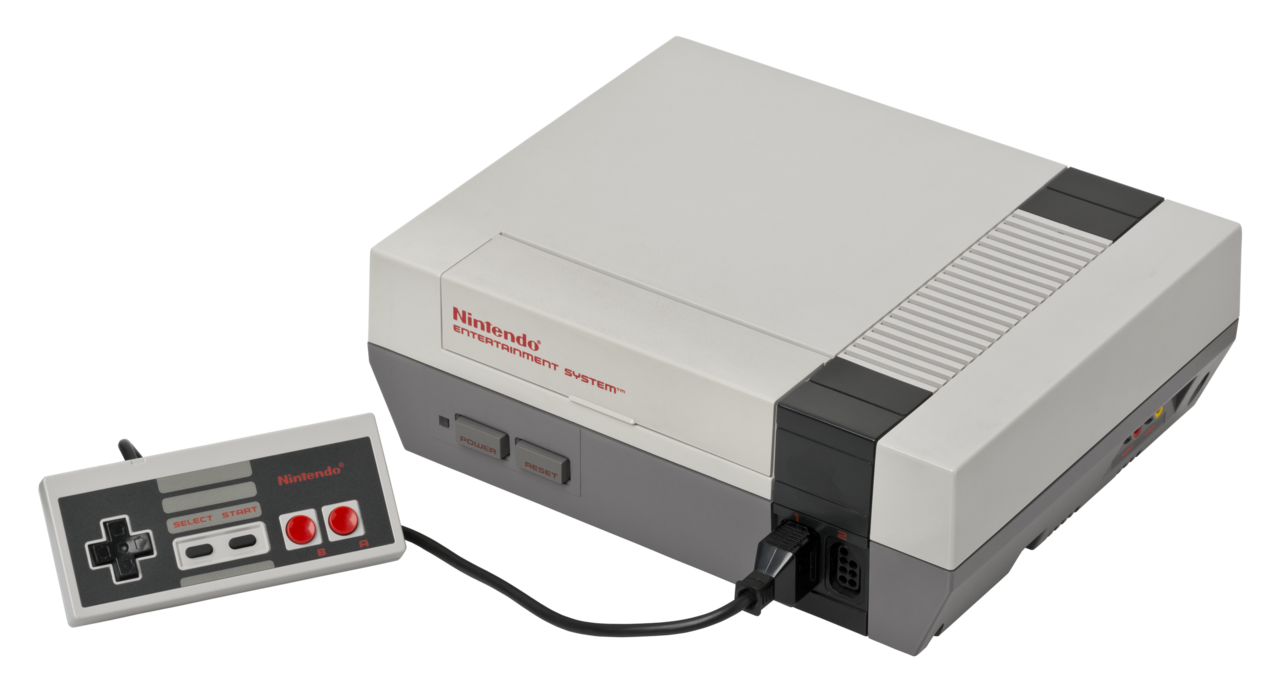
Blow into the cartridge. Everybody knows the ritual. That gray plastic slab and its little rectangular game paks didn’t just entertain a generation — they resurrected an entire industry that the experts had already pronounced dead. The Nintendo Entertainment System is arguably the single most important toy of the decade, because without it, home video games as we know them might not exist.
The Nintendo Entertainment System (NES) launched in a limited New York test market on October 18, 1985, went nationwide in North America on September 27, 1986, and single-handedly revived the home video game industry after the catastrophic crash of 1983. It turned an 8-bit box and a plumber named Mario into the center of childhood.
Rebuilding from the rubble of 1983
To understand why the NES mattered, you have to understand how bad things were. The North American video game industry had utterly collapsed — the infamous video game crash of 1983 saw revenues fall from around $3.2 billion to roughly $100 million by 1985, a near-total wipeout caused by a flood of low-quality games. Retailers were so burned they didn’t even want to stock video games anymore.
Nintendo’s answer was clever marketing. The Famicom, already a hit in Japan since 1983, was redesigned for America to look less like a game console and more like a toy or home electronics device — hence the front-loading cartridge slot and the boxy “Control Deck” styling. Nintendo tested it in New York in late 1985 before the full national rollout in 1986, and to prove games could still sell, it bundled in R.O.B. (the Robotic Operating Buddy) and the NES Zapper light gun, positioning the system as more than just another failed game machine.
Super Mario Bros. changes everything
The system’s secret weapon was the software. Super Mario Bros., released for the NES, became the killer app — a bright, tight, endlessly playable platformer that defined what the console could do and became one of the best-selling and most influential video games ever made. Alongside it came a library that reads like a hall of fame: The Legend of Zelda, Metroid, Mega Man, Punch-Out!!, Duck Hunt, and Contra.
The strategy worked beyond anyone’s expectations. By 1988, Nintendo had captured roughly 70% of the North American home video game market — an industry it had, for all practical purposes, brought back from the dead.
Remember when the whole family gathered around to watch someone attempt the last level, and the phrase “let me try, let me try” started actual arguments? The NES made video games a living-room event.
The blueprint for everything after
The NES didn’t just sell consoles — it wrote the rulebook. The cartridge model, the killer first-party mascot, the third-party licensing system, the pack-in game: modern gaming still runs on ideas Nintendo established with this machine in the 80s. Mario became the most recognizable character in games and one of the most recognizable in the world. For millions of kids, the NES was their first computer, their first obsession, and the reason they still get a little emotional at the sound of that Super Mario Bros. opening theme. It’s the toy that turned a dead industry into a dominant one.
FAQ
When did the NES come out?
The NES debuted in a limited New York test market on October 18, 1985, and had its full North American release on September 27, 1986.
How did the NES save the video game industry?
After the 1983 crash wiped out most of the North American market, the NES rebuilt consumer and retailer confidence with quality games, clever toy-like marketing, and hits like Super Mario Bros., capturing about 70% of the market by 1988.
What was the video game crash of 1983?
It was a market collapse that saw North American video game revenues plunge from around $3.2 billion to roughly $100 million by 1985, largely due to an oversupply of low-quality games.
What was R.O.B.?
R.O.B., the Robotic Operating Buddy, was a robot accessory bundled with the NES at launch to help market the console as a novel toy rather than just another game machine.
What games made the NES famous?
Super Mario Bros. was the defining title, joined by classics like The Legend of Zelda, Metroid, Mega Man, Punch-Out!!, and Duck Hunt.
The NES was the decade’s tech marvel for the living room — the Sony Walkman was the one for your pocket. See both, plus more, in our 80s pop culture icons guide.