Year: 2026

The 80s were science fiction’s golden hour. Special effects had grown up, ambitions had gone cosmic, and filmmakers used the genre to dream about everything from time travel to killer robots to a lonely alien who just wanted to phone home. These weren’t just spectacles — they were some of the most influential movies ever made, and their DNA is all over the films of today.
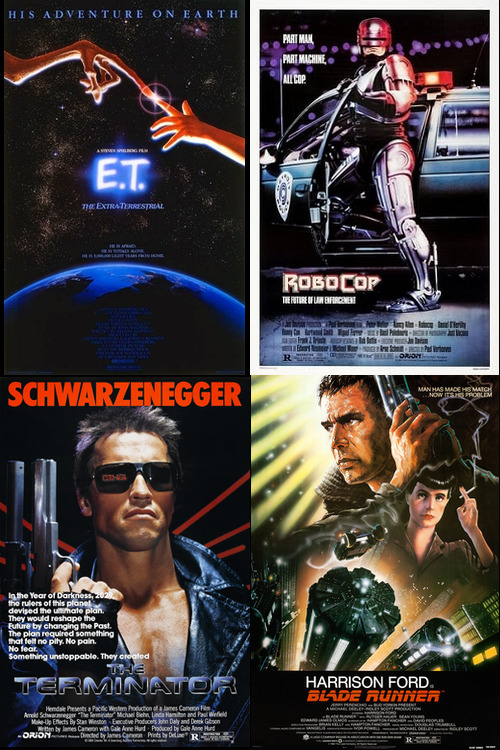
A selection of 1980s science fiction movie posters

The best 80s sci-fi movies include The Empire Strikes Back, Blade Runner, E.T. the Extra-Terrestrial, The Terminator, Back to the Future, Aliens, and RoboCop — a run of films that stretched from heartfelt wonder to bleak dystopia and permanently shaped the genre. The decade imagined the future, and much of it stuck.

Wonder and heart

At one end of the 80s sci-fi spectrum was pure awe. Steven Spielberg’s E.T. the Extra-Terrestrial (1982) became the highest-grossing film of its time by making an alien the most lovable character of the decade — the story of a boy and his otherworldly friend that still reduces audiences to tears. Meet the little guy himself in our E.T. profile.

Right alongside it came the ultimate feel-good sci-fi adventure: Back to the Future (1985), a time-travel comedy so perfectly constructed it plays flawlessly today. Its hero remains one of the decade’s most beloved — read all about him in our Marty McFly deep-dive. And the Star Wars saga hit its peak with The Empire Strikes Back (1980) and Return of the Jedi (1983), cementing the galaxy far, far away as the era’s mythology.

Dystopia and dread

At the other end, 80s sci-fi got dark and prophetic. Ridley Scott’s Blade Runner (1982) built a rain-soaked, neon future so influential that virtually every cyberpunk vision since is chasing its shadow. James Cameron’s The Terminator (1984) turned a relentless killing machine into an icon and launched Arnold Schwarzenegger into the stratosphere. And Paul Verhoeven’s RoboCop (1987) delivered ultra-violent satire wrapped around a genuinely moving story of a murdered cop reborn as a machine — get the details in our RoboCop profile.

Cameron returned to expand Alien into the war-movie masterpiece Aliens (1986), proving the genre could blend terror, action, and emotion into one unforgettable package.

Remember when a single movie could rewire how you imagined the future — after Blade Runner, every city looked like it might one day glow in the rain?

Why 80s sci-fi still rules

The decade’s science fiction endures because it married big ideas to real craft and real feeling. Whether it was Spielberg’s warmth, Cameron’s intensity, or Scott’s visionary design, these films used the future to tell human stories. They also set technical and storytelling benchmarks that Hollywood still measures itself against — endlessly sequelized, rebooted, and homaged. For imagination per frame, the 80s remain hard to beat.

FAQ

What is the best 80s sci-fi movie?
It’s hotly debated — Blade Runner (1982) tops many critics’ lists for its influence, while E.T., The Terminator, Back to the Future, and The Empire Strikes Back are all frequent picks for greatest of the decade.

What made 80s sci-fi special?
A leap in special-effects capability combined with bold ideas and strong storytelling, producing films that ranged from warm-hearted wonder to dark dystopian warning — many of them still enormously influential.

Which 80s sci-fi movies became franchises?
The Terminator, Back to the Future, Aliens (part of the Alien series), RoboCop, and Star Wars all grew into major franchises that continue today.

Was RoboCop science fiction or action?
Both — RoboCop (1987) is a sci-fi action film with sharp social satire, centered on a slain police officer rebuilt as a cyborg law enforcer.

Why is Blade Runner so influential?
Its dense, neon-lit, rain-soaked vision of the future essentially defined the cyberpunk aesthetic, influencing decades of films, games, and design that followed.


The line between sci-fi and action blurred all decade — see our 80s action movies roundup next, or phone home with the E.T. character profile.
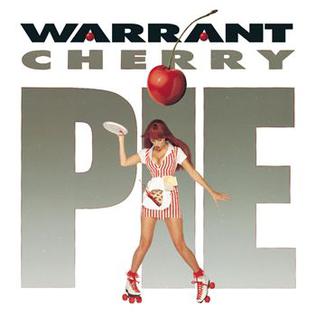
That guitar lick. That whistle. That absurdly catchy, tongue-in-cheek chorus about pie that absolutely nobody thought was really about pie. “Cherry Pie” is one of the most instantly recognizable songs of the entire hair-metal era — a pure sugar rush of a single. And here’s the twist that makes it fascinating: the man who wrote it came to wish he never had.

Warrant – Cherry Pie (1990) album cover

Warrant is the Los Angeles glam-metal band, fronted by singer-songwriter Jani Lane, who broke through in the late 80s with the ballad “Heaven” and became famous for the 1990 anthem “Cherry Pie.” They were among the last bands to ride the hair-metal wave to the top.

From “Heaven” to “Cherry Pie”

Warrant’s 1989 debut, Dirty Rotten Filthy Stinking Rich, made them stars, powered by the soaring power ballad “Heaven,” which climbed to No. 2 on the Billboard Hot 100. They had the look, the harmonies, and in Jani Lane a genuinely gifted songwriter. By 1990 they were poised to be one of the biggest bands in America.

Then came “Cherry Pie.” Released as the lead single from the album of the same name, it hit the Top 10 and became Warrant’s defining song — the fun, cheeky, impossible-to-forget anthem that still shows up on every 80s-and-90s rock playlist (even though it technically arrived in 1990, it’s pure hair-metal-era spirit).

The 15-minute hit he grew to resent

Here’s the story that makes “Cherry Pie” more than just a party song. Columbia Records president Don Ienner wanted a rock anthem for the album, so he called Jani Lane — who reportedly dashed off “Cherry Pie” in about fifteen minutes. The label loved it so much they renamed the whole album after it. The song made Warrant huge.

But Lane, a serious songwriter, spent years frustrated that a tune he’d tossed off in a quarter of an hour came to define his entire career, overshadowing the ballads and deeper cuts he was prouder of. It’s a poignant, very real story about the double edge of a novelty smash: the song that makes you famous isn’t always the one you want to be remembered for.

Remember when the “Cherry Pie” video — all wink and swagger, with model Bobbie Brown front and center — seemed to be on MTV every fifteen minutes? Lane met Brown on that shoot and the two married in 1991. The song was everywhere, for better and, as Lane sometimes felt, for worse.

Why Warrant endures

Warrant’s story captures the bittersweet end of the hair-metal era: enormous fun, a couple of genuinely great songs, and a frontman with more talent than the “party band” label ever gave him credit for. “Heaven” endures as one of the decade’s finest ballads, and “Cherry Pie” endures as one of its most irresistible earworms. Jani Lane’s mixed feelings only make the story more human — proof there was a real artist behind the anthem.

The songwriter behind the party

The real tragedy of the “Cherry Pie” story is how much it obscured Jani Lane’s genuine gifts. Beyond the novelty smash, Warrant’s catalog is full of well-crafted songs — “Heaven,” “Sometimes She Cries,” “I Saw Red,” and the surprisingly ambitious title track of their album Cherry Pie — that reveal a songwriter with real melodic instincts and emotional range. Lane wrote the bulk of the band’s material and had a knack for hooks that most of his peers would have envied. That’s what makes his frustration so poignant: he wasn’t a lightweight complaining about success, but a serious craftsman watching a fifteen-minute lark define a career he’d poured himself into. It’s a reminder that behind even the goofiest hair-metal anthem, there was often a real artist at work.

FAQ

Who was the lead singer of Warrant?
Jani Lane, the band’s frontman and primary songwriter, known for both “Heaven” and “Cherry Pie.”

What is Warrant’s biggest ballad?
“Heaven,” from their 1989 debut, which reached No. 2 on the Billboard Hot 100.

Why did Jani Lane resent “Cherry Pie”?
He reportedly wrote it in about 15 minutes at the label’s request, and grew frustrated that a quickly written novelty hit came to overshadow his more serious songwriting.

Who starred in the “Cherry Pie” video?
Model Bobbie Brown, whom Jani Lane met during the shoot and married in 1991.


Warrant closed out an era — see the whole scene in our best 80s hair bands guide, or roar on with Skid Row next.

There’s a reason “80s teen movie” is its own instantly understood genre. In one decade, a wave of films figured out how to make being sixteen feel epic — the crushes, the parties, the humiliations, the dawning sense that your life was finally about to start. These movies didn’t talk down to young audiences. They handed them classics.

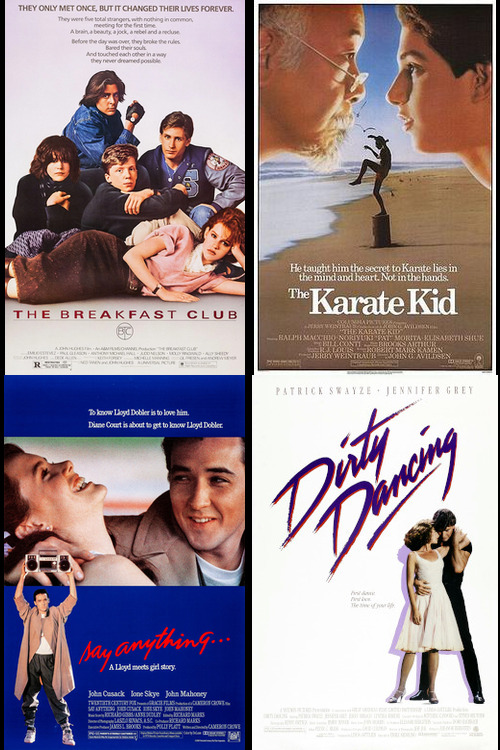
A selection of 1980s teen movie posters

The best 80s teen movies include The Breakfast Club, Fast Times at Ridgemont High, Say Anything…, Dirty Dancing, Pretty in Pink, Footloose, and The Karate Kid — coming-of-age films that captured first love, rebellion, and growing up with a sincerity the genre had never quite managed before. They defined how a generation saw itself.

The John Hughes core

You can’t discuss 80s teen movies without starting at the source: John Hughes. Sixteen Candles (1984), The Breakfast Club (1985), Ferris Bueller’s Day Off (1986), and the films he wrote like Pretty in Pink (1986) form the beating heart of the genre. The Breakfast Club especially — five archetypes stuck in detention — became the movie every teenager saw themselves in. Meet its unforgettable cast in our Breakfast Club characters guide, and get the full filmmaker story in our John Hughes movies roundup.

Beyond Hughes: the wider canon

The genre stretched far past one filmmaker. Fast Times at Ridgemont High (1982), written by Cameron Crowe, delivered a funnier, franker portrait of high school and turned Sean Penn’s Jeff Spicoli into a stoner-surfer legend. Crowe returned with Say Anything… (1989), whose image of John Cusack hoisting a boombox over his head is one of the most romantic moments the decade ever filmed.

Then there were the dance and music movies that doubled as teen dramas: Footloose (1984), with Kevin Bacon dancing against a small town’s ban, and Dirty Dancing (1987), which made “nobody puts Baby in a corner” immortal. The Karate Kid (1984) blended coming-of-age with an underdog sports story so well it launched a franchise — meet its heroes in our Karate Kid characters profile.

Remember when the big emotional climax of a movie was a dance, a kiss, or a crane kick at a tournament — and it felt like the most important thing in the world? The 80s teen movie made the small stakes feel enormous, because at sixteen, they are.

Why these movies still matter

The 80s teen movie endures because it treated adolescence as genuinely dramatic, not as a punchline. The clothes and the soundtracks date the films charmingly, but the feelings underneath — wanting to belong, wanting to be seen, wanting someone to notice you — never expire. That’s why teenagers still discover The Breakfast Club and Say Anything… and feel like the movies were made for them. Every coming-of-age film since owes this decade a debt.

FAQ

What is the best 80s teen movie?
The Breakfast Club (1985) is the most common pick for its honest, character-driven look at high school, though Fast Times at Ridgemont High and Ferris Bueller’s Day Off are frequent contenders.

What defines an 80s teen movie?
Coming-of-age stories centered on high schoolers — first love, cliques, rebellion, and growing pains — often with iconic soundtracks and a sincerity that treated teenage life as genuinely important.

Who was the king of 80s teen movies?
John Hughes, who wrote and/or directed many of the genre’s cornerstones, including The Breakfast Club, Sixteen Candles, Ferris Bueller’s Day Off, and Pretty in Pink.

What was the Brat Pack?
A nickname for a group of young actors who frequently appeared in 80s teen and young-adult films, including stars like Molly Ringwald, Emilio Estevez, Judd Nelson, and Ally Sheedy.

Are 80s teen movies still popular?
Very. Films like The Breakfast Club, Dirty Dancing, and Say Anything… remain beloved and are continually rediscovered by new generations of viewers.


The genre’s architect gets his own tour in our John Hughes movies guide, or laugh along with the best 80s comedies next.

“It’s all in the reflexes.” Kurt Russell squints, drawls it out, and swaggers off like he’s the toughest man in San Francisco. He is not. And that gap — between how heroic Jack Burton thinks he is and how much of a walking disaster he actually is — is the greatest inside joke of any 80s action movie.

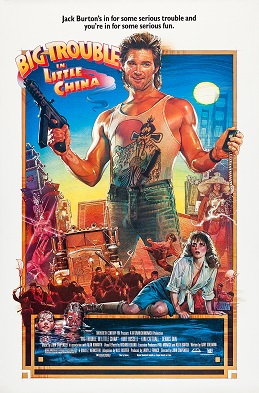
Big Trouble in Little China (1986) movie poster

Jack Burton is the cocky, wisecracking truck driver played by Kurt Russell in John Carpenter’s 1986 cult classic Big Trouble in Little China, who gets swept into an ancient supernatural battle beneath San Francisco’s Chinatown. He talks like the hero. He’s secretly the sidekick.

The 80s movie’s best-kept secret

Every convention of the film says Jack Burton is the star: he’s got the swagger, the one-liners, the tank top, the big rig, the leading-man jaw. But watch closely and the truth peeks through — Jack is the comic-relief sidekick to his friend Wang Chi, who’s the one doing the actual heroics. Jack fumbles, misfires, gets knocked out, and at the climax accidentally takes himself out of the fight by hitting himself with falling debris. John Carpenter built a movie where the “hero” is riding shotgun on someone else’s adventure and hasn’t noticed.

It’s a genuinely subversive gag, and Russell plays it perfectly straight, which is why it’s so funny.

Why Jack Burton became a legend anyway

Here’s the irony: Big Trouble in Little China flopped in theaters in 1986, grossing just over $11 million against a much bigger budget. And yet Jack Burton became one of the most beloved cult characters of the decade — quoted, cosplayed, and celebrated for exactly the swaggering, in-over-his-head charm that the studio didn’t know how to sell. Russell’s “rowdy swagger” and Carpenter’s kinetic mayhem found their audience on video, and never let go.

Remember when Jack fires his gun into the ceiling to psych himself up for the big fight — and a chunk of falling rubble immediately knocks him out cold? The hero benching himself before the battle even starts is the whole movie’s sense of humor in one beat.

Why he endures

Jack Burton is proof that a “failure” can outlive a hit. He’s a loving parody of the 80s action hero — all confidence, mixed results, and unkillable charm — wrapped in a fantasy-kung-fu-trucker adventure unlike anything else from the decade. Reflexes optional.

How a flop became a cult king

Jack Burton was born from one of the great pairings in 80s genre film: director John Carpenter and star Kurt Russell, who had already teamed up on Escape from New York and The Thing. By the time they made Big Trouble in Little China, they had a shorthand — and Russell reportedly modeled Jack’s blustery, self-assured drawl in part on a certain screen legend’s swagger, played for laughs.

The studio had no idea how to sell a fantasy-kung-fu-trucker-comedy in 1986, and it bombed. But then home video did what theaters couldn’t: fans discovered it, quoted it, and passed it around until Jack Burton became a beloved cult hero. Carpenter’s pulsing synth score, the “Pork Chop Express” trucker patter, the wall-to-wall one-liners — it all aged into exactly the kind of weird, wonderful movie people evangelize to their friends. Jack is proof that box-office numbers don’t decide what lasts. Sometimes the hero who bombed becomes the one fans never shut up about, reflexes and all.

FAQ

Who plays Jack Burton?
Kurt Russell, in John Carpenter’s Big Trouble in Little China (1986).

Is Jack Burton the real hero of the movie?
Not exactly — the film’s running joke is that he acts like the hero but is really the comedic sidekick to his friend Wang Chi.

Was Big Trouble in Little China a hit?
No — it was a box-office bomb in 1986, but became a major cult classic on home video.

What’s Jack Burton’s catchphrase?
“It’s all in the reflexes.”

Who directed Big Trouble in Little China?
John Carpenter, reuniting with star Kurt Russell after Escape from New York and The Thing. Carpenter also composed the film’s pulsing synth score. The movie flopped in theaters but became a beloved cult classic on home video, where Jack Burton finally found the devoted audience the studio never knew how to reach.


Jack Burton is an 80s cult treasure — meet more in our 80s movie characters roundup, or crack a whip with Indiana Jones next.

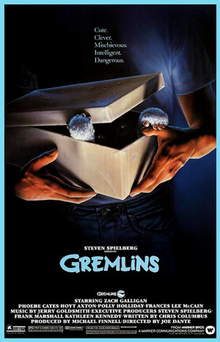
Big eyes, giant ears, a voice like a music box — Gizmo was the cutest thing the 80s ever put on screen. And then the movie taught you that cute comes with a rulebook, and breaking it unleashes hell on your town at Christmas. That’s the Gremlins deal: the most adorable creature of the decade, one wrong move from disaster.

Gremlins (1984) movie poster

Gizmo is the gentle, wide-eyed Mogwai at the center of Gremlins (1984); when his care rules are broken, he spawns the scaly, cackling monsters that tear apart a small town on Christmas Eve. Voiced by Howie Mandel, Gizmo became an instant icon — and the three rules became 80s scripture.

The three rules every kid memorized

Anybody caring for a Mogwai has to obey three simple rules:

  1. Keep him out of bright light — sunlight will kill him.
  2. Never get him wet — water makes him multiply.
  3. Never feed him after midnight — do it, and he transforms into a Gremlin.

That’s genius screenwriting disguised as a pet manual. The rules are so clear, so easy, and so obviously doomed that you spend the whole movie bracing for the moment somebody spills a glass of water. They do. And the town pays for it.

Gizmo vs. the Gremlins

The trick of the movie is the split. Gizmo stays sweet, brave, and loyal the entire time — he’s the good one, the one rooting against the chaos his own kind created. The Gremlins that spawn from him, led by the mohawked ringleader Stripe, are everything he isn’t: mean, gleeful, and out to wreck Christmas. One creature, two total opposites, and the tension between them powers the whole film.

Remember when the Gremlins took over the local bar — smoking, drinking, playing cards, one of them flashing its scaly chest? Gremlins was rated PG and so gleefully unhinged that it helped push the movie industry to invent the PG-13 rating that same year.

Why Gizmo still melts everyone

Produced by Steven Spielberg and directed by Joe Dante, Gremlins pulled off a near-impossible tone: a genuine Christmas movie that’s also a creature-feature comedy-horror. Gizmo is the reason it works. He’s so lovable that the horror actually stings, and so brave that you cheer when he finally fights back. Forty years later he’s still one of the most recognizable faces of the decade — proof that the 80s could make you go “aww” and “aaah” in the same ninety minutes.

A Christmas creature that never quit

Gizmo was too good to leave in one movie. He returned for Gremlins 2: The New Batch (1990), a wilder, more cartoonish sequel that gleefully poked fun at itself, and he’s remained a merchandising and pop-culture staple ever since — plush toys, collectibles, and a permanent spot in the Halloween-meets-Christmas corner of the 80s. Decades later the franchise even spawned an animated prequel series digging into the Mogwai’s origins, proof that people never stopped wanting more of that little guy.

Part of what keeps Gremlins alive is the debate it shares with a certain other 80s favorite: is it a Christmas movie? It’s set on Christmas Eve, it’s drenched in holiday lights and snow, and it’s about a “perfect gift” that goes catastrophically wrong. That tension — cozy holiday warmth crossed with gremlins trashing the town — is exactly why it became a seasonal ritual for a certain kind of fan. Gizmo is the reason it works both ways: adorable enough for the tree, mischievous enough for the shadows. He’s the 80s in one furry package.

FAQ

What kind of creature is Gizmo?
Gizmo is a Mogwai — a small, furry, gentle creature whose voice was provided by Howie Mandel.

What are the three rules in Gremlins?
No bright light (especially sunlight), don’t get them wet, and never feed them after midnight.

Who made Gremlins?
It was directed by Joe Dante and produced by Steven Spielberg, released in 1984.

Did Gremlins affect movie ratings?
Yes — its intensity, along with Indiana Jones and the Temple of Doom, helped prompt the creation of the PG-13 rating in 1984.

Was there a Gremlins sequel?
Yes — Gremlins 2: The New Batch (1990), a wilder, more self-mocking follow-up that brought Gizmo back and let the Gremlins run riot through a high-tech Manhattan skyscraper. Gizmo has remained a merchandising and pop-culture fixture ever since.


Gizmo is one of the decade’s most beloved faces — meet more in our 80s movie characters roundup, or phone home with E.T. next.

“Life moves pretty fast. If you don’t stop and look around once in a while, you could miss it.” Every 80s kid has that line filed somewhere in their brain, right next to the sound of a school bell they were praying to skip. That’s Ferris. He didn’t just play hooky — he made it look like a philosophy.

Ferris Bueller's Day Off (1986) movie poster

Ferris Bueller is the charming high-school slacker at the center of Ferris Bueller’s Day Off, the 1986 John Hughes comedy, played by Matthew Broderick. He talks his way out of school, borrows a priceless Ferrari, drags his best friend and girlfriend across Chicago, and turns skipping a single day into the most triumphant afternoon of the decade — all while turning to the camera to let you in on the plan.

The fourth wall was the whole trick

What made Ferris different from every other teen hero was that he knew you were watching. He breaks the fourth wall constantly, narrating his schemes, explaining his philosophy, walking you through exactly how he’s going to pull it off. It made every kid in the theater feel like Ferris’s co-conspirator — like you were the friend he was winking at.

John Hughes wrote the screenplay with Broderick specifically in mind. Hughes later said Broderick was the only actor he could picture pulling it off — clever and charming enough to be a con artist you root for instead of resent. That’s a razor-thin line, and Broderick walked it for two hours.

Charm as a superpower

Ferris has no powers, no arc, barely any problem. He’s not learning a lesson — everybody around him is. Cameron, his anxious best friend, gets the real journey. Ferris is the fixed point: the impossibly confident kid who’s decided the world is his and simply acts accordingly. Principals, sisters, parking attendants, an entire parade on Dearborn Street — all of it bends around his certainty.

Remember when he commandeered a parade float and led downtown Chicago through “Twist and Shout” like he’d rehearsed it his whole life? That’s the fantasy in one scene: not that you skipped school, but that the entire city would throw you a party for it.

Why Ferris still wins

Broderick has said the role “eclipsed everything” in his career — and to this day, it still does. That’s the price of playing a character so perfectly matched to a moment that the two became inseparable. Ferris Bueller is the 80s’ patron saint of the day off, the one who convinced all of us that the best rebellion isn’t loud — it’s just gloriously, unapologetically fun.

The car, the Smiths, and a theory that won’t quit

Part of what makes the movie hum is the texture around Ferris. There’s the car — a gleaming red Ferrari 250 GT California (actually a replica built for the film) that meets a legendary end out a garage window. There’s the soundtrack, from the dreamy Smiths track “Please, Please, Please, Let Me Get What I Want” scoring the museum wander to the “Twist and Shout” parade. Every piece is chosen to make one skipped Tuesday feel like the best day of your life.

And then there’s the theory. For years fans have argued that Ferris isn’t real at all — that he’s a figment of anxious Cameron’s imagination, the confident alter-ego Cameron invents to get through his own bad day. The movie never confirms it, and that’s the fun: a breezy teen comedy that’s secretly deep enough to still spark arguments four decades later. Whether or not you buy it, it says something that people are still dissecting a movie about ditching school.

FAQ

Who played Ferris Bueller?
Matthew Broderick, in the 1986 John Hughes film Ferris Bueller’s Day Off. He earned a Golden Globe nomination for the role.

What is Ferris Bueller’s most famous line?
“Life moves pretty fast. If you don’t stop and look around once in a while, you could miss it.”

Why does Ferris talk to the camera?
The fourth-wall breaks are the film’s signature device — they make the audience feel like Ferris’s personal confidant and co-conspirator.

Who wrote and directed Ferris Bueller’s Day Off?
John Hughes wrote and directed it, reportedly with Matthew Broderick in mind for the lead from the start.


Ferris is one legend in a whole yearbook of them — see the full class in our 80s movie characters roundup, or meet the Breakfast Club five next.

Scroll to top