Year: 2026

Flowing robes, ribbons braided into long hair, a face painted like a work of art, and a voice as warm and soulful as anything on the radio. When Boy George first appeared on television in the early 80s, parents didn’t know what they were looking at — and their kids couldn’t look away. He was the most gloriously confusing pop star of the decade, and he had the songs to back it up.
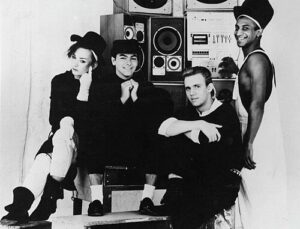
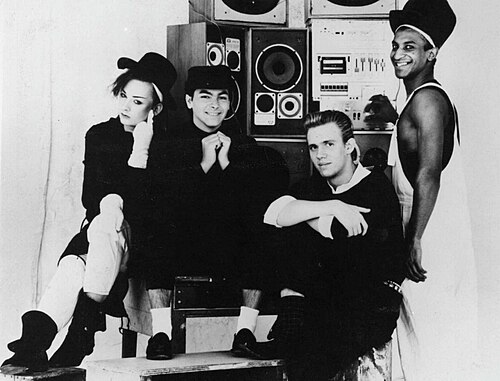
Culture Club in 1983, fronted by Boy George

Boy George is the lead singer of Culture Club, the British band that became one of the biggest pop acts of the early 80s with hits like “Do You Really Want to Hurt Me” and “Karma Chameleon.” His androgynous look and rich, soulful voice made him a global star and a lightning rod all at once. Culture Club turned gender-bending style and reggae-tinged soul-pop into chart-topping mainstream success.

The band that conquered 1983

Culture Club formed in London in 1981, and by 1982–83 they were everywhere. “Do You Really Want to Hurt Me” announced them with a lush, aching melody, and “Karma Chameleon” — with its instantly singable “karma, karma, karma, karma, karma chameleon” hook — became a massive worldwide No. 1 in 1983, one of the defining singles of the era. “Church of the Poison Mind,” “Time (Clock of the Heart),” and “It’s a Miracle” kept them on the charts. For a stretch, few pop acts were bigger.

A look that started a conversation

Boy George’s androgynous presentation was genuinely radical for early-80s mainstream television. In an era when he’d appear on a talk show and the host would openly ask about his makeup and clothes, George’s refusal to fit any box made him a global talking point. He was soft-spoken, funny, and disarming about it — often deflecting shock with a witty one-liner — which won over millions even as it scandalized others. He became a defining face of the “New Romantic” movement and a symbol of the decade’s willingness to blur old boundaries.

Remember when Culture Club broke huge in America and everyone kept asking the same bewildered question — “is that a boy or a girl?” — while “Karma Chameleon” sat at the top of the charts anyway? George’s whole appeal was making the question feel beside the point next to the music.

The voice under the image

It’s easy to focus on the look and forget the talent, but Boy George could really sing. His voice had a genuine soul and blue-eyed-soul warmth that gave Culture Club’s pop songs real emotional weight — this wasn’t novelty, it was craft. That combination of striking image and legitimate musicality is exactly why the band won the Grammy for Best New Artist and why the songs still hold up decades later.

Why Boy George still matters

Culture Club’s mainstream peak was brief — the band fractured amid the pressures of fame and George’s later struggles — but its cultural dent was permanent. Boy George helped make pop a place where you could look however you wanted and still top the charts, paving the way for countless artists who followed. And “Karma Chameleon” remains one of the most inescapably catchy songs the 80s ever produced.

FAQ

What were Culture Club’s biggest hits?
“Do You Really Want to Hurt Me,” “Karma Chameleon,” “Church of the Poison Mind,” “Time (Clock of the Heart),” and “It’s a Miracle.”

Who is Boy George?
The stage name of George O’Dowd, the lead singer of Culture Club, known for his soulful voice and androgynous style.

When did Culture Club form?
The band formed in London in 1981 and reached its commercial peak in 1982–1983.

Why was Boy George considered groundbreaking?
His androgynous look challenged mainstream expectations of gender and appearance while the band topped the pop charts, making him a defining figure of the era.

Did Culture Club win any major awards?
Yes — the band won the Grammy Award for Best New Artist, recognizing their explosive early success.

What is Culture Club’s most famous song?
“Karma Chameleon,” a worldwide No. 1 in 1983 and one of the decade’s signature singles.


Boy George was one of the boldest icons of 80s pop — explore more of the decade’s stars in our 80s pop culture icons guide, or meet fellow trailblazer George Michael next.
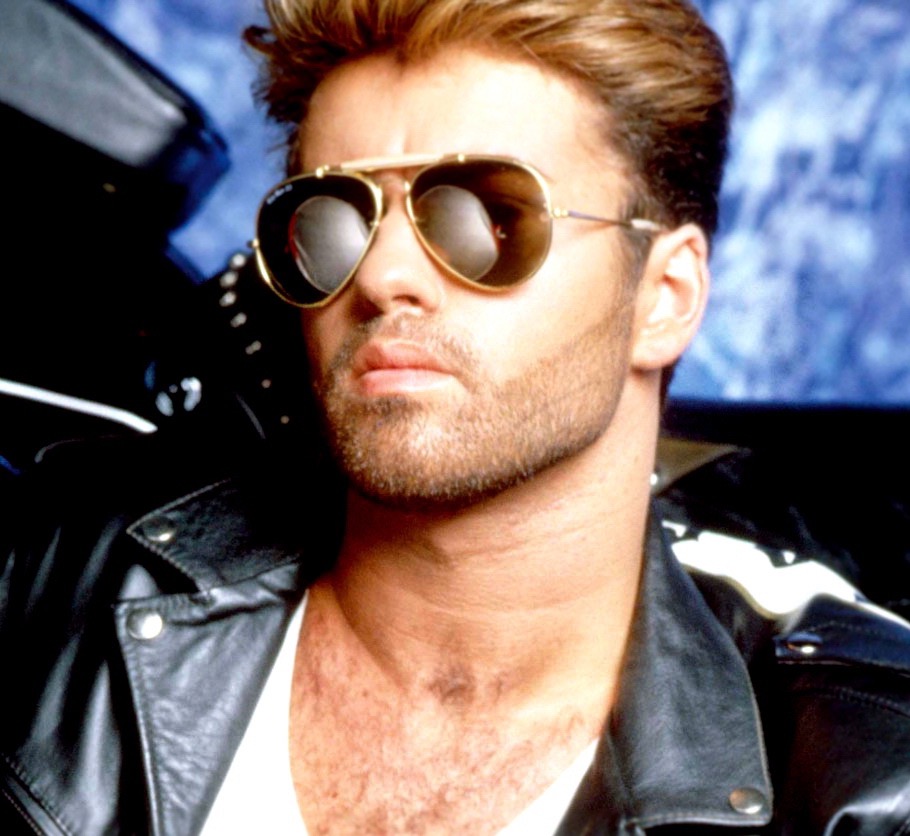
Sun-drenched videos, shuttlecocks down the shorts, and a chorus so bright it could power a summer — that was Wham! at the start. And then that same young man opened his mouth on a smoky saxophone ballad and revealed one of the great soul voices of the decade. George Michael’s 80s journey, from bubblegum pop to serious artist, is one of the most impressive glow-ups in music history.

George Michael in his Faith-era leather jacket and aviators

George Michael is the English singer-songwriter who rose to fame in the 80s with the pop duo Wham! — behind hits like “Wake Me Up Before You Go-Go” and “Careless Whisper” — before conquering the late decade as a solo superstar with Faith. He had the rare gift of being both effortlessly fun and genuinely soulful.

Wham!: the sound of 80s summer

George Michael formed Wham! in 1981 with his schoolmate Andrew Ridgeley, and the duo became the sound of carefree 80s pop. Their debut album Fantastic (1983) topped the UK charts, and then came the global smash: “Wake Me Up Before You Go-Go” (1984), their first UK and US No. 1, all handclaps and sunshine. Wham! were bright, young, and impossibly catchy — the kind of pop that makes you feel like it’s permanently summer.

The ballad that revealed the real artist

Buried inside all that pop joy was a clue to how good George Michael really was: “Careless Whisper.” Released in 1984, this sultry ballad of infidelity — anchored by that unforgettable saxophone hook and the killer line “guilty feet have got no rhythm” — shot to No. 1 and became an instant classic. Suddenly it was clear that the guy in the fun pop duo had a supple, soulful voice capable of real emotional depth. It was the bridge between the two halves of his career.

Going solo with Faith

When Wham! split in 1986, George Michael stepped out on his own — and proved he was a major artist, not just half of a pop act. His 1987 solo debut Faith was a blockbuster: a mature, confident, genre-spanning record that showcased him as a serious singer-songwriter and producer. It cemented him as one of the defining voices of the late 80s and set him up for a long, celebrated career. The transformation was complete: from teen-pop heartthrob to respected superstar in the space of a few years.

Remember when “Careless Whisper” came on at a school dance and the whole room suddenly got very serious — that saxophone doing all the heavy lifting? It’s one of the most instantly recognizable intros of the decade, and proof that George Michael understood the power of a song better than almost anyone.

Why George Michael endures

George Michael’s 80s run is a masterclass in growth: he gave the decade some of its most joyful pop and some of its most soulful ballads, then reinvented himself as a serious solo artist without missing a beat. That combination of irresistible melody and genuine vocal talent is why his songs never left the radio, and why he’s remembered as one of the finest pop craftsmen of his generation. Few artists made the leap from fun to profound as gracefully as he did.

FAQ

What were Wham!’s biggest hits?
“Wake Me Up Before You Go-Go,” “Careless Whisper,” “Last Christmas,” and “Everything She Wants.”

Was “Careless Whisper” a Wham! or George Michael song?
It was credited to George Michael (in some regions as Wham! featuring George Michael) and showcased his solo potential while he was still in the duo.

When did George Michael go solo?
After Wham! split in 1986; his solo debut album Faith arrived in 1987 and was a massive success.

Who was the other member of Wham!?
Andrew Ridgeley, George Michael’s schoolmate and co-founder of the duo.

What made George Michael stand out?
His rare combination of bright, irresistible pop songwriting and a genuinely soulful, emotive singing voice.

What is George Michael’s most recognizable song?
“Careless Whisper,” with its unmistakable saxophone hook, remains one of the most instantly recognizable ballads of the entire decade.

Did George Michael write his own songs?
Yes — he wrote and produced much of Wham!’s material as well as his solo work, establishing himself as a genuine songwriting and production talent, not just a performer.


George Michael mastered 80s pop — explore more of the decade in our 80s pop culture guide, or meet fellow British invaders Duran Duran next.

Dun-dun-dun-dunnn… dun-dun-dun-dun-dunnn. You didn’t even need the words. That synth fanfare is so deeply lodged in the collective brain that it plays at sports arenas, in movies, and in commercials to this day — usually to announce that something big is about to happen. It might be the single most recognizable keyboard riff of the entire decade, and it came from a band in Sweden who almost didn’t take it seriously.

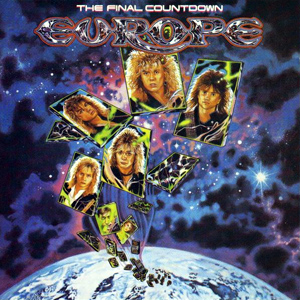
Europe – The Final Countdown (1986) album cover

Europe is the Swedish rock band, fronted by Joey Tempest, whose 1986 song “The Final Countdown” became one of the most globally recognizable anthems of the 80s. One towering riff turned a Scandinavian band into worldwide chart-toppers.

A worldwide phenomenon

“The Final Countdown” was the title track and lead single from Europe’s 1986 album, and it went supernova. The song reached No. 1 in 25 countries, spending two weeks atop the UK chart, and climbed to No. 8 on the Billboard Hot 100 in the United States. Built on that soaring, unmistakable synthesizer fanfare and Tempest’s high, clear vocals, it captured the epic, larger-than-life spirit of 80s rock in a single hook. Few songs from the decade traveled further or lodged themselves deeper.

The riff that sat in a drawer

Here’s the great origin story. Joey Tempest wrote “The Final Countdown” around a keyboard riff he’d created years earlier — back in his college days — and had simply tucked away and forgotten. When it came time to build the new album, he pulled the old riff out of the drawer, found a tempo, and wrote lyrics inspired by David Bowie’s “Space Oddity” and its imagery of leaving Earth. And here’s the kicker: he never intended it as a radio single at all. It was written to be the opening of the band’s live show — a grand, dramatic entrance. That throwaway concert-opener became a No. 1 hit in two dozen countries. You never know which idea in the drawer is the one.

Remember when that fanfare started playing and a whole room instinctively knew something epic was coming? The song became such universal shorthand for “the big moment” that it’s now used everywhere — a rare tune that escaped its own decade to become part of the global soundtrack.

Why Europe endures

In the U.S., Europe is often filed under “one-hit wonder” — and to their credit, Tempest has said the band is completely okay with that. When your one hit is this enormous and this permanent, it’s a legacy most bands would trade almost anything for. “The Final Countdown” remains one of the most licensed, quoted, and instantly identifiable songs of the 80s, and Europe still tours on the strength of a riff that started as a forgotten scrap from a college notebook. Sometimes one perfect idea is more than enough.

Beyond the countdown

Being known for one colossal song doesn’t mean there was nothing else there. Europe scored other hits in the 80s — “Carrie,” a tender ballad, and “Rock the Night” both charted — and the band had genuine musical chops beyond that famous fanfare. Years later, after a long hiatus, Europe reunited and reinvented themselves as a grittier, blues-influenced hard-rock band, earning fresh respect from critics who’d written them off as synth-pop lightweights. Joey Tempest’s songwriting matured, and the band found a devoted second-life audience in Europe and beyond. It’s a quietly satisfying arc: the group forever tied to one of the most recognizable riffs in history turned out to have real staying power, growing into something more substantial than the anthem that made them famous — while never once being ashamed of it.

FAQ

Who sings “The Final Countdown”?
Swedish band Europe, fronted by Joey Tempest, who also wrote the song.

How successful was “The Final Countdown”?
It reached No. 1 in 25 countries and No. 8 on the U.S. Billboard Hot 100 in 1986.

Was “The Final Countdown” meant to be a single?
No — Joey Tempest wrote it as an opening number for the band’s live shows, built around a keyboard riff he’d saved since his college years.

Where is Europe from?
Sweden — they became one of the biggest rock exports of the decade.

What are Europe’s other hits?
Beyond “The Final Countdown,” the band charted with the tender ballad “Carrie” and the rocker “Rock the Night” during their 80s peak.


Europe launched one of the decade’s biggest anthems — see the whole scene in our best 80s hair bands guide, or meet White Lion next.

Face paint like a war mask, hair like a lion, and a fist raised against every authority figure who ever told a kid to turn it down. Twisted Sister wasn’t the slickest band of the 80s or the best-selling — but they wrote the decade’s ultimate rebellion anthem, and then they actually backed it up in front of the United States Senate.

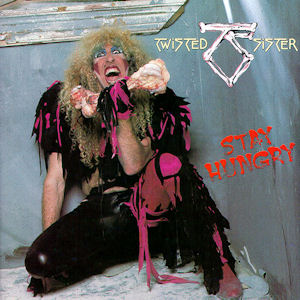
Twisted Sister – Stay Hungry (1984) album cover

Twisted Sister is the American heavy-metal band fronted by Dee Snider, whose 1984 anthem “We’re Not Gonna Take It” became a defiant rallying cry of the decade. Loud, theatrical, and unapologetically confrontational, they turned teenage rebellion into a battle hymn.

The anthem and the album

“We’re Not Gonna Take It,” from the 1984 album Stay Hungry, was the band’s breakthrough — and, remarkably, their only Top 40 single, reaching No. 21 on the Billboard Hot 100. It didn’t need a string of hits. That one song was so perfectly built for shouting along that it became bigger than most bands’ entire catalogs, played at sporting events, rallies, and parties to this day.

Here’s a fun bit of songwriting trivia: Dee Snider has said he built the melody partly from the Christmas carol “O Come, All Ye Faithful,” with the glam-rock stomp of Slade as his other influence. A hymn and a party band, fused into the loudest “no” of the decade.

When a hair band testified before the Senate

This is what sets Twisted Sister apart. In 1985, the Parents Music Resource Center (PMRC) — a group co-founded by political spouses — put “We’re Not Gonna Take It” on its “Filthy Fifteen” list of songs it deemed dangerous, accusing it of violent content. Rather than lie low, Dee Snider showed up at the U.S. Senate hearings on music censorship and testified. Articulate, sober, and sharp, he calmly dismantled the accusations and defended the song as being about standing up for yourself, not violence. A face-painted metal frontman became one of the most effective voices against censorship in American music history.

Remember when the “We’re Not Gonna Take It” video turned every kid’s fantasy into cartoon reality — the browbeating dad (played to perfection by Mark Metcalf) getting launched out a window while the son cranked the music? It was funny, it was cathartic, and it made the anthem impossible to forget.

Why Twisted Sister endures

Twisted Sister proved you don’t need a shelf of hits to leave a permanent mark — you need one song that says exactly what a generation is feeling, and the nerve to defend it. Decades later, “We’re Not Gonna Take It” is still the go-to anthem for anyone digging in their heels, and Dee Snider’s Senate stand is remembered as a genuine moment of principle. Loud, painted, and absolutely unbowed — that’s the whole point.

The look, the second anthem, and the afterlife

Twisted Sister was as much a visual assault as a musical one — Dee Snider’s clownish-yet-menacing face paint and the band’s ragged, oversized glam look made them unmistakable on MTV, the perfect foil for their message of gleeful defiance. And “We’re Not Gonna Take It” wasn’t their only rallying cry; “I Wanna Rock” became a second fist-pumping anthem, ensuring the band had a one-two punch of arena shout-alongs. Snider, meanwhile, built a long and varied career after the band’s heyday — as a radio host, actor, author, and reality-TV personality — remaining one of metal’s most articulate and quotable ambassadors. Few bands got more mileage out of a compact run of hits, precisely because those hits said something people never stopped needing to shout.

FAQ

Who is the lead singer of Twisted Sister?
Dee Snider, the band’s frontman, songwriter, and public face.

What is Twisted Sister’s biggest song?
“We’re Not Gonna Take It,” from the 1984 album Stay Hungry — their only Top 40 hit and an enduring rebellion anthem.

Did Twisted Sister testify before Congress?
Yes — Dee Snider testified at the 1985 U.S. Senate PMRC hearings on music censorship, defending the band against accusations of violent content.

What inspired “We’re Not Gonna Take It”?
Dee Snider drew the melody partly from the carol “O Come, All Ye Faithful,” with glam-rock band Slade as a key influence.


Twisted Sister fought the good fight — meet more of the scene in our best 80s hair bands guide, or bang your head with Quiet Riot next.

Striped suit. Wild green-tinged hair like he stuck a fork in an outlet. That cackling, wheedling, gross-out voice. Say his name three times and — well, you know better than to actually do it. Beetlejuice is one of the most unforgettable characters of the 80s, and here’s the kicker: he’s barely in his own movie.

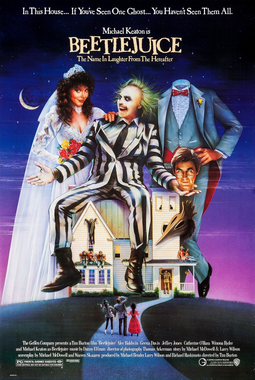
Beetlejuice (1988) movie poster

Beetlejuice is the sleazy, chaotic “bio-exorcist” played by Michael Keaton in Tim Burton’s 1988 gothic comedy — a con-artist ghost hired to scare the living out of a haunted house. He’s on screen for only about 17 minutes, and he owns every second.

The character Keaton built from scratch

The most famous fact about Beetlejuice is that Michael Keaton essentially invented the look himself. He told the makeup team he wanted mold on his face and hair that looked electrocuted, and asked wardrobe to send clothes from every different era at once — because this was a character who’d been dead a very long time and had stopped caring. The result is a ghost who feels genuinely unwell, in the funniest possible way.

Burton wasn’t even that familiar with Keaton’s work before casting him (Dudley Moore and Sam Kinison were considered). One meeting changed his mind — and one of the weirdest characters in Hollywood history was born.

Why less is so much more

Beetlejuice works precisely because he’s rationed. The movie is really about the sweet dead couple (Alec Baldwin and Geena Davis) and the goth teenager Lydia (Winona Ryder). Beetlejuice erupts into it like a chaos bomb — loud, crude, unpredictable — and then it yanks him back before he wears out his welcome. That restraint is the whole trick. You leave wanting more Beetlejuice, which is exactly why the character became bigger than the film.

Remember when the dinner party guests were possessed into a full performance of Harry Belafonte’s “Day-O (The Banana Boat Song)” — floating shrimp and all? It’s one of the most joyfully bizarre scenes of the decade, and Beetlejuice isn’t even in it. That’s how much he’d already infected the movie’s DNA.

Why he endures

Made for $15 million and grossing $84 million, Beetlejuice was a hit that launched Burton’s signature style and turned Keaton loose. The character became a cartoon, a Broadway musical, and eventually a long-awaited sequel. Not bad for a mold-covered con man with 17 minutes of screen time. Beetlejuice is proof that in the 80s, a great character didn’t need the most scenes — just the most nerve.

The afterlife of Beetlejuice

Fittingly for a character obsessed with the afterlife, Beetlejuice refused to stay dead. He got his own Saturday-morning cartoon, Beetlejuice, which ran from 1989 into the early ’90s and reimagined the ghoul as a mischievous best friend to Lydia — softening the sleaze for kids without losing the chaos. Decades later he leapt to the stage as a hit Broadway musical, and in 2024 Michael Keaton and Winona Ryder reunited for a long-awaited film sequel, Beetlejuice Beetlejuice.

That’s a remarkable run for a character with 17 minutes of screen time in his debut. Credit the whole package: Tim Burton’s gothic-candy visual style, Danny Elfman’s playful, spooky score, and above all Keaton’s fearless, mold-covered performance. Beetlejuice became the blueprint for a certain kind of 80s creation — the gleefully grotesque character who’s somehow fun — and he opened the door for the Burton–Keaton team-up that would soon reinvent Batman. Say his name three times and, four decades later, he still shows up. Just maybe don’t actually try it.

FAQ

Who played Beetlejuice?
Michael Keaton, in Tim Burton’s 1988 film. He improvised and designed much of the character himself.

How much screen time does Beetlejuice have?
Only about 17 minutes — despite being the film’s title character and most memorable presence.

Who directed Beetlejuice?
Tim Burton, in the movie that helped establish his gothic-comedy style.

What’s the famous dinner-party scene?
The guests are possessed into performing Harry Belafonte’s “Day-O (The Banana Boat Song),” one of the film’s most iconic moments.

Is there a Beetlejuice sequel?
Yes — after decades of demand, Michael Keaton and Winona Ryder reunited for Beetlejuice Beetlejuice in 2024. The character also headlined a long-running animated series and a hit Broadway musical, an impressive afterlife for a ghost with just 17 minutes of screen time in the original.


Beetlejuice is one of the decade’s wildest creations — meet more in our 80s movie characters roundup, or hop on a bike with Pee-wee Herman next.

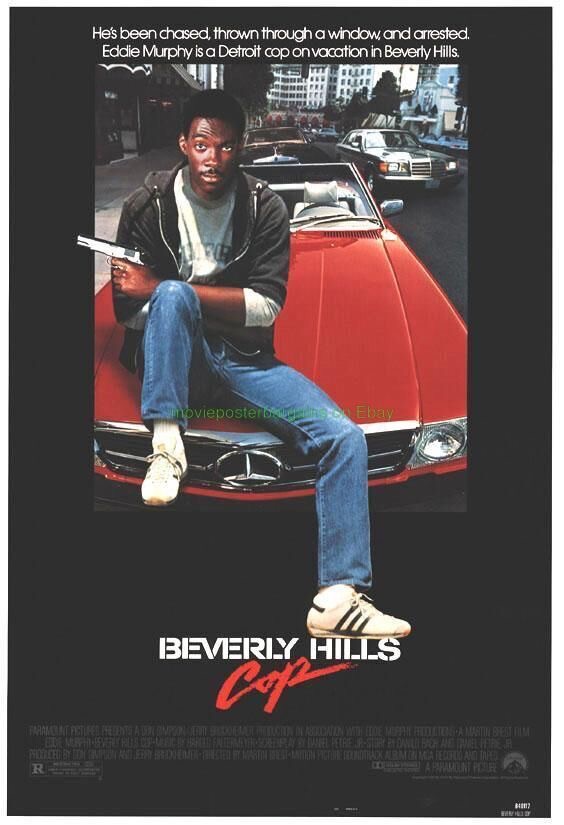
That laugh. Before anything else, you remember the laugh — the wheezing, delighted, “you cannot be serious” cackle that Eddie Murphy fired off whenever Axel Foley talked his way past somebody who should’ve known better. In 1984, that laugh was the sound of an action movie deciding it would rather be funny.

Beverly Hills Cop (1984) movie poster

Axel Foley is a street-smart Detroit detective who cons his way through Beverly Hills to solve his best friend’s murder in Beverly Hills Cop (1984), played by Eddie Murphy. He’s the character that made Murphy an international movie star and rewired what an action hero was allowed to be.

It was almost Sylvester Stallone’s movie

Here’s the fact that reframes the whole thing: Beverly Hills Cop was originally built as a straight, serious action vehicle for Sylvester Stallone. When Murphy stepped in, he didn’t just recast it — he rebuilt it. He turned Axel from a hard-nosed tough guy into a fast-talking hustler whose real weapon isn’t a gun, it’s his mouth. The action stayed. But now the hero’s superpower was improvisation.

That’s the whole miracle of Axel Foley. He walks into rooms he has no business being in — luxury hotels, art galleries, snooty front desks — and simply talks until reality reshuffles to let him through.

The blueprint for cool

Axel is fearless without being invincible, funny without being a clown, and completely unbothered by the buttoned-up Beverly Hills world he’s crashing. He runs circles around the local cops, drags them into his investigation, and does it all in a Detroit Lions jacket while everyone else is in a suit. He’s the outsider who’s smarter than the room and knows it.

Remember when he stuffed bananas in the tailpipe of the cops tailing him — and then grinned at them through the window? That’s Axel in one gag: three steps ahead, and enjoying it way too much.

Why Axel earned his spot

The role shot Murphy to global stardom, won the People’s Choice Award for Favorite Motion Picture, and landed Axel a permanent place on lists of the greatest movie characters ever. Three sequels followed across four decades, all built around the same simple, unbeatable premise: put Eddie Murphy in a place he doesn’t belong and let him talk. Axel Foley proved an action hero could carry a movie on charm alone — and made it look effortless.

The synth riff and the long afterlife

You can’t talk about Axel Foley without the sound that follows him everywhere: “Axel F,” Harold Faltermeyer’s bouncing synthesizer theme, which became a genuine chart hit in its own right. That skittering keyboard line is as much a part of the character as the Detroit Lions jacket — pure 80s, instantly recognizable, and permanently welded to Eddie Murphy’s grin.

The character earned his stripes beyond the box office, too. Axel landed on Empire magazine’s lists of the greatest movie characters of all time (No. 55), and the franchise proved so durable that Murphy strapped the jacket back on for Beverly Hills Cop: Axel F in 2024 — forty years after the original. Few 80s characters get a legacy that long, and fewer still come back feeling like no time passed at all. That’s because Axel was never about the era’s gadgets or fashions. He was about one impossibly charismatic guy talking his way through the world, and that never goes out of style.

FAQ

Who played Axel Foley?
Eddie Murphy, in Beverly Hills Cop (1984) and its sequels.

Was Beverly Hills Cop written for someone else?
Yes — it was originally developed as a straight action film for Sylvester Stallone before Eddie Murphy took over and reshaped it into a comedy-action hybrid.

What city is Axel Foley from?
Detroit — his streetwise Detroit style is the running contrast against buttoned-up Beverly Hills.

How many Beverly Hills Cop movies are there?
Four, all starring Murphy: the 1984 original, Beverly Hills Cop II (1987), III (1994), and Beverly Hills Cop: Axel F (2024).

What is the Beverly Hills Cop theme song?
“Axel F,” a bouncing synthesizer instrumental composed by Harold Faltermeyer. It became a genuine hit single on its own and is now so fused to the character that the 2024 sequel was named after it. That skittering keyboard riff is as much Axel Foley’s signature as his laugh or his Detroit Lions jacket.


Axel is one of the decade’s defining heroes — meet the rest in our 80s movie characters roundup, or ring in Christmas with John McClane next.

That synth riff. That impossibly high note in the chorus. That pencil-sketch music video where a comic book comes to life. “Take On Me” is one of the most instantly recognizable songs of the entire decade — and here’s the part almost nobody knows: it was a flop, twice, before it became a classic. The story of how it finally broke through is one of the great 80s comeback tales.

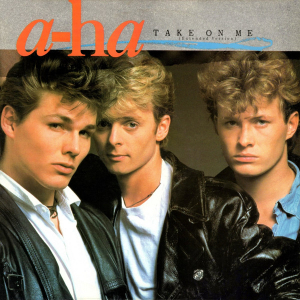
a-ha – Take On Me (1985) single cover

“Take On Me” is the 1985 synth-pop smash by the Norwegian band a-ha, famous for its soaring vocals and groundbreaking animated music video — a song that failed repeatedly before becoming a worldwide No. 1. Its journey to icon status is as memorable as the song itself.

A riff that waited years

The heart of “Take On Me” — that bright, cascading synthesizer hook — wasn’t a sudden inspiration. Band member Magne Furuholmen created the core riff when he was just 15 years old, years before a-ha existed. The song went through a long evolution, even carrying different titles along the way (“Miss Eerie” and then “Lesson One”) before it finally became “Take On Me.” The three members — Furuholmen, singer Morten Harket, and Pål Waaktaar — kept believing in it and reworking it, convinced there was a hit buried inside. They were right, but it took patience.

Failing its way to the top

Here’s the remarkable part: “Take On Me” didn’t succeed on its first release. Early versions of the single came and went without catching fire. The band and label kept at it, re-recording and re-releasing the song. What finally changed everything wasn’t the music — it was the visuals. A new, groundbreaking music video was created using rotoscoping, a painstaking animation technique that traced live footage into a moving pencil-sketch comic book. It reportedly took around six months to complete, and it was unlike anything on MTV. On the strength of that video, the re-released single finally exploded, hitting No. 1 on the US Billboard Hot 100 and turning a-ha into international stars.

The video that made history

That rotoscoped video is the reason “Take On Me” became more than a good song. Its story — a young woman pulled into a sketched comic-book world by a dashing hero — was romantic, inventive, and visually stunning, blending live action and hand-drawn animation in a way audiences had never seen. It went on to win a haul of awards at the 1986 MTV Video Music Awards and is regularly cited as one of the greatest music videos ever made. It’s the perfect case study of how, in the 80s, the right video could turn a struggling single into an immortal hit.

Remember when you tried, and failed, to hit that impossibly high note in the chorus — the one Morten Harket sails up to like it’s nothing? That vocal leap is one of the great “everybody attempts it in the car” moments in pop, and it’s a huge part of why the song has never faded.

Why “Take On Me” endures

Decades on, “Take On Me” has achieved a kind of global ubiquity few 80s songs can match — it’s everywhere, from films to commercials to a permanent spot on every retro playlist, and it recently passed the milestone of 40 years of near-constant airplay. Its endurance is a tribute to patience and reinvention: a riff a teenager wrote, a song that refused to die, and a video that changed its fate. “Take On Me” is proof that sometimes a classic just needs the world to catch up to it.

FAQ

Who sings “Take On Me”?
The Norwegian band a-ha, fronted by Morten Harket, with the song released in its hit version in 1985.

Why is the “Take On Me” video famous?
It used rotoscoping to blend live action with pencil-sketch animation, creating a groundbreaking comic-book style that won multiple MTV Video Music Awards.

Did “Take On Me” flop before becoming a hit?
Yes — earlier releases failed to chart well; it only became a worldwide No. 1 after the striking animated video was created for a re-release.

Who wrote “Take On Me”?
a-ha members Magne Furuholmen, Morten Harket, and Pål Waaktaar; the core synth riff was written by Furuholmen at age 15.

What was “Take On Me” originally called?
It went through earlier titles including “Miss Eerie” and “Lesson One” before becoming “Take On Me.”

Where is a-ha from?
Norway — they became one of the country’s most successful musical exports of all time.


“Take On Me” is one of the decade’s great stories — explore more in our 80s pop culture guide, or dive into the decade’s one-hit wonders next.

Every doll has a face. Cabbage Patch Kids had a birth certificate. That single idea — that you weren’t buying a toy, you were adopting a one-of-a-kind kid — turned a soft-sculpture doll into the most violently coveted object of the 1983 holiday season. Parents did not fight over Barbies. They fought over these.

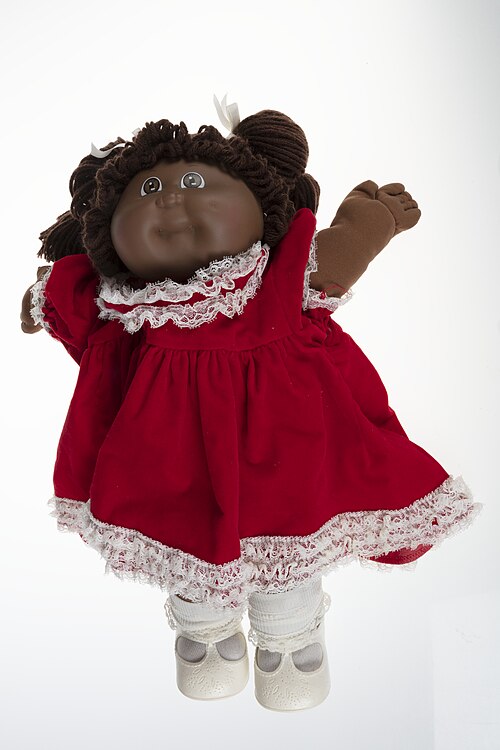
A 1980s Cabbage Patch Kids doll

Cabbage Patch Kids were soft-sculpture dolls created by Georgia artist Xavier Roberts and mass-produced by Coleco, which licensed them in 1982; each came with a unique face, a name, adoption papers, and a birth certificate, and by Christmas 1983 demand had exploded into nationwide shopping stampedes. No two were exactly alike — and that was the whole trick.

From “Little People” to a licensing goldmine

Before Coleco, they weren’t even called Cabbage Patch Kids. Xavier Roberts sold hand-stitched soft-sculpture dolls he called “Little People,” complete with the adoption gimmick that would become the brand’s signature. In 1982, Coleco secured the rights, renamed them Cabbage Patch Kids, and pushed them into mass production.

The genius was in the paperwork. Each doll shipped with a name already chosen, adoption papers to sign, and a birth certificate — so kids didn’t own a doll, they adopted a baby. Computerized manufacturing meant faces, hair, and outfits were mixed and matched so that yours felt genuinely, specifically yours. It was emotional marketing years ahead of its time.

The Christmas that turned into a stampede

Mass production couldn’t keep up with the hunger it created. During the 1983 holiday season, shortages collided with hype and produced scenes that made the national news: mobs mobbing store shelves, shoppers trampled, fistfights breaking out in toy aisles, and store clerks reportedly bracing themselves like riot police when a shipment arrived. Reports from that winter describe injuries, near-riots, and desperate parents driving state to state hunting for a doll.

It was one of the first times America watched a toy craze turn into genuine chaos — a preview of every Black Friday frenzy to come.

Remember when getting the specific Cabbage Patch Kid you wanted felt like winning the lottery — and the name on the birth certificate was non-negotiable, because that was your kid’s name and that was that?

Why they stuck

Plenty of toys sell out at Christmas. Cabbage Patch Kids did something stranger: they made kids feel like parents. The adoption ritual, the individuality, the yarn hair and the dimpled cheeks — it added up to a bond most toys never earn. They kept selling long after the 1983 madness cooled, spawned countless variations, and remain one of the most recognizable dolls ever made. Not bad for a face that only a mob could love.

FAQ

Who created the Cabbage Patch Kids?
Georgia artist Xavier Roberts created the original soft-sculpture dolls, which he first sold as “Little People” before Coleco licensed and mass-produced them as Cabbage Patch Kids.

Why did each Cabbage Patch Kid come with adoption papers?
The adoption gimmick — a unique name, adoption papers, and a birth certificate — made buyers feel like they were adopting a one-of-a-kind child rather than purchasing a doll. It was the brand’s defining hook.

When were Cabbage Patch Kids most popular?
Their peak was the 1983 Christmas season, when shortages and demand triggered nationwide shopping stampedes and made national news.

Were there really Cabbage Patch Kid riots?
Yes — the 1983 holiday shortages led to widely reported mob scenes, injuries, and fights in stores as parents scrambled to get the scarce dolls.

Are Cabbage Patch Kids still made?
Yes. The brand has continued for decades through various manufacturers, and vintage 80s dolls are collectible today, though nothing matched the original 1983 frenzy.


The Cabbage Patch craze was so big it got its own gross-out parody — meet the Garbage Pail Kids next, or explore more in our 80s pop culture icons guide.

A glowing fingertip. A red heart pulsing through a wrinkled chest. “E.T. phone home.” If you saw this movie as a kid in 1982, you didn’t watch a friendship — you felt one, and then you sobbed in a dark theater with a few hundred strangers doing exactly the same thing.

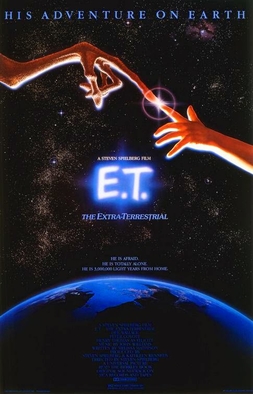
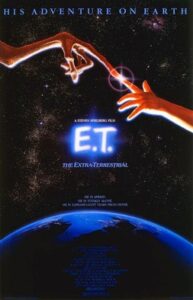
E.T. the Extra-Terrestrial (1982) movie poster

E.T. is the gentle stranded alien of Steven Spielberg’s E.T. the Extra-Terrestrial (1982), and Elliott is the lonely 10-year-old boy who hides him, protects him, and helps him get home. Together they became the most tender duo the decade produced — a story with no villain, really, just a kid, a creature, and the ache of saying goodbye.

Elliott — a lonely kid Spielberg knew by heart

Elliott Taylor, played by then-10-year-old Henry Thomas, is a child of divorce living with his mom, older brother Michael, and little sister Gertie (a scene-stealing young Drew Barrymore). Spielberg and screenwriter Melissa Mathison built Elliott partly from Spielberg’s own childhood as a kid of divorced parents — which is why the loneliness feels so real. E.T. doesn’t just land in Elliott’s backyard. He lands in the exact hole in Elliott’s life.

The casting story is pure movie magic: Henry Thomas flubbed his formal audition, then nailed an improvised scene by summoning tears thinking about his dead dog. The filmmakers knew instantly.

E.T. — the alien with a heart you could see

E.T. is stranded, frightened, and impossibly kind. He learns to speak, forms a psychic bond with Elliott (when one feels, so does the other), and just wants to go home. He’s not here to conquer anyone. That’s the quiet radical move of the film: in a decade of aliens as monsters, Spielberg made one you’d want to protect.

Remember when Elliott’s bike lifted off the road, silhouetted against a giant full moon with E.T. bundled in the basket? That single frame became the logo of an entire film studio — the most famous image of childhood wonder ever put on screen.

Why it still wrecks people

E.T. was the highest-grossing film of its time for a reason: it bottled something universal. The fear of losing a friend. The pain of being the odd one out. The wild hope that someone would understand you completely. Elliott and E.T. gave the 80s its softest, most human story — and “phone home” still puts a lump in your throat forty years on.

The phenomenon that swallowed 1982

It’s hard to overstate how big E.T. was. It became the highest-grossing film of its era, holding the record for years, and turned into a full-blown cultural event — the movie everyone saw, cried at, and talked about. John Williams’ score won an Academy Award, and that soaring “flying theme” is now permanently fused to the image of a bike lifting off toward the moon.

It even moved candy. The film famously featured Reese’s Pieces as the treat Elliott uses to coax E.T. out of hiding — and sales reportedly surged afterward, a moment often credited with kicking off the modern age of movie product placement. That’s the kind of reach E.T. had: it didn’t just top the box office, it rippled out into music, marketing, and the way a whole generation pictured wonder. Underneath all of it, though, the pull was always the same simple thing — a lonely kid and a gentle alien who understood each other completely. Spielberg made the biggest movie of the decade out of the smallest, truest feeling, and that’s why it still lands.

FAQ

Who played Elliott in E.T.?
Henry Thomas, who was 10 during filming; his improvised, tearful audition won him the role.

Who directed E.T. the Extra-Terrestrial?
Steven Spielberg, from a screenplay by Melissa Mathison, released in 1982.

Who plays Elliott’s little sister?
A young Drew Barrymore plays Gertie, one of the film’s most memorable roles.

What’s the most famous line?
“E.T. phone home,” the alien’s plea to return to his own planet.

How successful was E.T.?
Enormously — it became the highest-grossing film of its era and held that record for years. Beyond the box office it was a full cultural event, winning an Academy Award for John Williams’ score and even reportedly boosting sales of Reese’s Pieces, the candy Elliott uses to coax E.T. out of hiding.


E.T. gave the decade its heart — find more unforgettable faces in our 80s movie characters roundup, or go treasure hunting with the Goonies next.

A car that folds into a robot the size of your hand is a good toy. A car that folds into a robot who’s also a noble intergalactic warrior locked in eternal war against an evil counterpart who becomes a gun — that’s a universe. In 1984, Hasbro didn’t just sell toys. It sold kids an entire mythology, one transforming brick of die-cast metal and plastic at a time.

The Transformers (1984) animated series title card

Transformers launched in the United States in 1984 as a Hasbro toy line — robots that converted into cars, planes, and other machines — paired from day one with an animated series and a Marvel comic that split the toys into heroic Autobots and villainous Decepticons. The toys and the story arrived together, and that combination is what made them unstoppable.

Japanese engineering, American mythology

The transforming figures themselves weren’t invented from scratch. Hasbro sourced the molds from Japanese toy lines by Takara — the Diaclone and Microman toys — and repackaged them for the American market under a single, brilliant unifying idea: give them a war, give them factions, give them names. “Robots in Disguise” wasn’t just a slogan; it was a promise that any vehicle in the world might secretly be alive.

That framing turned a shelf of unrelated transforming toys into a single, sprawling saga.

Optimus Prime, Megatron, and the war for a generation

At the heart of it stood two figures. Optimus Prime, the Autobot leader — a red-and-blue truck cab with the voice of a born commander — became the moral center of the whole franchise, the toy every kid begged for. Across the battle lines stood Megatron, the Decepticon leader, who famously transformed into a handgun. Around them Hasbro built a deep bench: Bumblebee, Starscream, Soundwave, Grimlock and the Dinobots, and dozens more, each with a bio and a personality printed right on the box.

The 1984 cartoon and the Marvel comic ran in lockstep with the toy releases, so playing with the figures and following the story became the same activity. Then came The Transformers: The Movie in 1986 — a startlingly bold animated feature that shocked a generation by killing off major characters, Optimus Prime included, to clear the shelf for a new wave of toys.

Remember when you spent twenty minutes transforming a figure back into its “correct” mode because a Transformer left as a robot on the shelf just felt wrong? The transformation was half the play.

Why Transformers never stopped

Most 80s toy lines burned bright and faded. Transformers became a permanent franchise — comics, cartoons, and eventually a globe-conquering live-action film series decades later. The reason traces straight back to that original 1984 masterstroke: Hasbro didn’t sell you a robot, it sold you a side in a war, a favorite character, and a reason to collect the whole army. The die-cast may have been Japanese, but the obsession was pure 80s Americana.

FAQ

When did Transformers toys come out?
The Transformers line launched in the United States in 1984, produced by Hasbro and released alongside an animated series and a Marvel comic.

Where did the Transformers designs come from?
Hasbro licensed the transforming figure molds from Japanese toy maker Takara’s Diaclone and Microman lines, then unified them under the Autobots-vs-Decepticons story.

Who are the main Transformers characters?
The heroic Autobots are led by Optimus Prime, and the villainous Decepticons are led by Megatron. Other favorites include Bumblebee, Starscream, Soundwave, and the Dinobots.

What happened in The Transformers: The Movie (1986)?
The animated film famously killed off several major characters, including Optimus Prime, to make room for new toys — a move that stunned young fans at the time.

Why were Transformers so popular?
The toys shipped with a full mythology — factions, named characters, and a war — reinforced by a cartoon and comic, so kids weren’t just buying robots, they were joining a story.


From robot warriors to sword-and-sorcery heroes — see how He-Man and the Masters of the Universe pulled the same toy-plus-cartoon trick, or browse our 80s pop culture icons guide.

Scroll to top