Pour some sugar on me. Photograph. Love bites. If you owned a radio in the late 80s, Def Leppard lived on it — those huge, glossy, layered-to-the-sky choruses that sounded like the future of rock. But behind the polish is one of the most genuinely inspiring stories the decade produced, and it belongs to the man behind the drum kit.

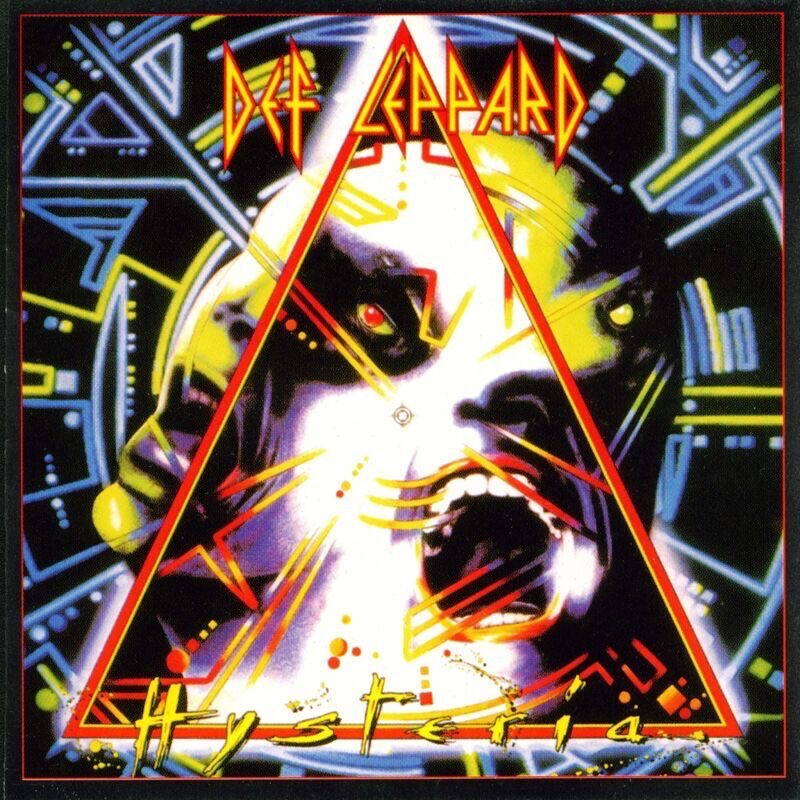
Def Leppard is the English rock band whose 1983 album Pyromania and 1987 blockbuster Hysteria made them one of the biggest acts of the decade — and whose drummer, Rick Allen, kept playing after losing his left arm. They brought British craftsmanship to American arena rock and outsold nearly everyone.
Pyromania and the monster called Hysteria
Pyromania (1983) — with hits like “Photograph” and “Rock of Ages” — turned Def Leppard into MTV royalty and sold millions. But the album that defined them was Hysteria (1987). It took over three years to make, cost a fortune, and came back with seven hit singles, including “Pour Some Sugar on Me,” “Love Bites,” and the title track. It sold over 20 million copies worldwide — 12 million in the U.S. alone — an almost unheard-of number, and proof that their meticulous, over-produced perfectionism paid off.
The comeback that defines them
Here is the fact that puts Def Leppard in a category of their own. On New Year’s Eve 1984, during the long sessions for Hysteria, drummer Rick Allen was in a car accident that cost him his left arm. For most drummers that would be the end. Instead, Allen — with the band refusing to replace him — worked with engineers to build a custom electronic kit that let him trigger with his feet the parts he’d once played with two hands. He relearned his entire craft. And when Hysteria became a global smash with Allen behind the kit, it turned a tragedy into one of the most triumphant comeback stories in rock history.
Remember when “Pour Some Sugar on Me” became inescapable — the song that seemingly played at every party, every dance, every summer of 1988? It almost didn’t make the album; it was written late and added near the end. It went on to become the band’s signature anthem and one of the definitive songs of the entire decade.
Why Def Leppard endures
Def Leppard never chased the danger of their glam-metal peers — they chased perfection, layering vocals and guitars into a sound so big and clean it still defines “80s rock radio.” Combine that with Rick Allen’s incredible story, and you get a band that means more than its hits. They kept touring for decades and landed in the Rock and Roll Hall of Fame. But the heart of their legend is simple: they didn’t quit, on the music or on each other.
The sound that took years to build
Part of what made Hysteria take so long — and sound so unmistakable — was the band’s obsessive studio perfectionism. Working with a famously demanding producer, Def Leppard layered vocals and guitars into a dense, gleaming wall of sound, chasing a pop sheen that no metal band had really attempted before. Every harmony was stacked, every hook polished until it gleamed. The result didn’t sound like a live band in a room; it sounded like the future — a hyper-produced, radio-ready version of hard rock that influenced countless records after it. Some purists grumbled that it was too slick, but the sales and the staying power settled the argument. That painstaking craft is exactly why “Pour Some Sugar on Me” and “Love Bites” still leap out of any speaker sounding enormous.
FAQ
What are Def Leppard’s biggest 80s albums?
Pyromania (1983) and Hysteria (1987); the latter sold over 20 million copies and spawned seven hit singles.
What happened to drummer Rick Allen?
He lost his left arm in a car accident on New Year’s Eve 1984, then learned to drum again using a custom electronic kit — and played on the band’s biggest album.
What are Def Leppard’s most famous songs?
“Pour Some Sugar on Me,” “Photograph,” “Love Bites,” “Hysteria,” and “Rock of Ages.”
Where is Def Leppard from?
Sheffield, England — they brought a British polish to American-style arena rock.
Def Leppard set the standard for 80s rock radio — see the full field in our best 80s hair bands guide, or slink over to Whitesnake next.