Year: 2026

Before the Walkman, music was something you shared — a radio in the kitchen, a stereo in the living room, everyone hearing the same thing. After the Walkman, music became something you had, privately, in your own head, walking down your own street with your own soundtrack. That’s not a small gadget. That’s a change in how human beings experience the world, and it happened in the 80s.
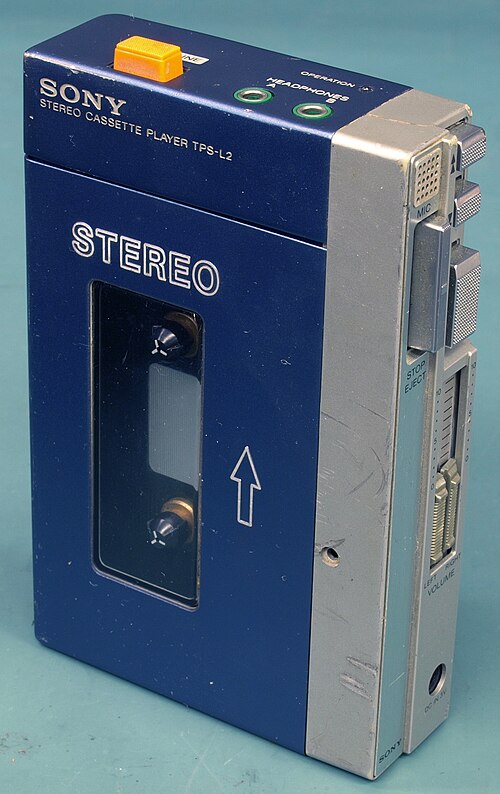
Sony Walkman TPS-L2 portable cassette player

The Sony Walkman was a portable cassette player that debuted in Japan in 1979 and swept the 1980s, making it possible to carry your own music anywhere through headphones — a device so culturally dominant that the word “Walkman” entered the dictionary. It didn’t play music louder. It played it only for you, and that was revolutionary.

A radical little blue-and-silver box

The original model, the TPS-L2, launched in Japan in July 1979 and reached the United States in 1980 (briefly sold under names like “Soundabout” before Sony standardized “Walkman” worldwide). It was a compact, battery-powered cassette player paired with lightweight foam headphones — no speaker, no recording, just playback. That was the whole point.

Company lore credits Sony co-founder Masaru Ibuka, who wanted a way to listen to music on long flights, and chairman Akio Morita, who championed the idea over skeptics who couldn’t believe anyone would buy a tape player that couldn’t record. The first TPS-L2 even had two headphone jacks, in case you still wanted to share — a charming hedge that the culture almost immediately abandoned. People didn’t want to share. They wanted their own world.

The soundtrack goes everywhere

Through the 80s, the Walkman became inescapable. Joggers ran to it, commuters rode to it, kids walked to school inside their own private concert. It arrived at the perfect moment — the cassette tape was king, the mixtape was an art form, and suddenly you could take your carefully curated 90 minutes of songs anywhere on earth. The Walkman and the mixtape were made for each other.

Its cultural saturation was total. The name became a genericized term for any personal stereo, so ubiquitous that it was added to the Oxford English Dictionary in the mid-80s. Sony sold the devices by the hundreds of millions, and the brand expanded into a whole family of portable audio, eventually including the CD-playing Discman.

Remember when you’d walk around with the Walkman clipped to your belt, flipping the cassette to side B without breaking stride, and rationing your batteries because you knew they wouldn’t last the whole day?

Why the Walkman still matters

Every device you’ve ever used to listen to music privately in public — the Discman, the iPod, the phone with earbuds you’re maybe wearing right now — is a direct descendant of that first blue TPS-L2. The Walkman invented the idea of the personal soundtrack, the notion that you could score your own ordinary life like a movie. It’s one of the most influential consumer products ever made, and it’s pure 80s: optimistic, personal, and just a little bit rebellious. The technology moved on. The idea never did.

FAQ

When did the Sony Walkman come out?
The first Walkman, the TPS-L2, launched in Japan in July 1979 and arrived in the United States in 1980, becoming a defining gadget of the 1980s.

What did the Walkman do?
It was a portable, battery-powered cassette player designed for private listening through headphones — playback only, with no speaker and no recording function.

Why was the Walkman so revolutionary?
It made music personal and portable for the first time, letting people carry their own soundtrack anywhere. It shifted music listening from a shared, stationary experience to a private, mobile one.

Where does the name “Walkman” come from?
Sony coined it to convey portable, on-the-go listening. It became so common a term for personal stereos that it was added to the Oxford English Dictionary in the 1980s.

Is the Walkman the ancestor of the iPod?
Yes, conceptually. The Walkman established the personal-soundtrack idea that later portable players — the Discman, the iPod, and today’s smartphones — all built upon.


The Walkman was the 80s tech marvel for your pocket; the Nintendo NES was the one for your living room. Explore more in our 80s pop culture icons guide.
Here’s the funny thing about one-hit wonders: their single song is often more beloved than the entire catalogs of much bigger stars. The 80s was the golden age of them — an era when a new wave band, a novelty act, or a group from out of nowhere could land one perfect, unforgettable song that everybody still knows by heart. Here’s a celebration of the decade’s greatest one-hit wonders.

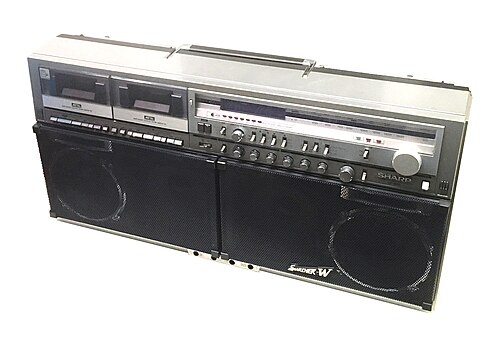
A classic 1980s boombox

80s one-hit wonders are artists who scored one massive, enduring hit and never quite matched it — from “Come On Eileen” to “Take On Me” to “Tainted Love,” these songs became permanent fixtures of the decade’s soundtrack. One song was all they needed to become immortal.

The definitive one-hit wonders

Some of these tracks are as recognizable as anything by the era’s superstars:

  • “Come On Eileen” — Dexys Midnight Runners. The fiddle-driven, overall-clad singalong that’s still guaranteed to fill a dance floor.
  • “Tainted Love” — Soft Cell. A synth-pop reinvention of an old soul song that became one of the defining sounds of the early 80s.
  • “99 Luftballons” — Nena. A German new-wave protest song that became a global smash, sung in a language most of its fans didn’t speak.
  • “Take on Me” — a-ha. In the U.S. especially, this synth masterpiece and its groundbreaking video made the Norwegian band a one-hit legend (though they scored plenty more hits back in Europe).
  • “Mickey” — Toni Basil. The cheerleader chant that’s been impossible to get out of your head for 40 years.

The new wave and novelty crowd

The 80s new wave scene was a one-hit-wonder machine, and the results were glorious:

  • “I Ran (So Far Away)” — A Flock of Seagulls, as famous for the haircut as the song.
  • “The Safety Dance” — Men Without Hats, pure quirky new-wave fun.
  • “You Spin Me Round (Like a Record)” — Dead or Alive, a relentless dance anthem.
  • “(I Just) Died in Your Arms” — Cutting Crew and “I Melt with You” — Modern English, two of the most romantic songs of the decade.
  • “867-5309/Jenny” — Tommy Tutone, the phone number nobody can forget.

Why one great song is enough

There’s a special magic to the one-hit wonder. Freed from the pressure of a long career, these songs often capture a single, pure moment — a perfect hook, a perfect vibe, a perfect slice of the era. And because the artists didn’t stick around to complicate the picture, the song stays frozen in its moment, forever “the 80s” in three or four minutes. In many ways these tracks are the decade’s soundtrack more than the deep cuts of the superstars, precisely because everybody knows them equally well.

Remember when one of these came on at a party and the entire room — people who’d never agree on anything else — suddenly knew every single word? That’s the one-hit wonder superpower. These aren’t anybody’s deep cuts; they’re everybody’s shared memory, the common language of an entire generation.

Why the one-hit wonders endure

The 80s one-hit wonders have proven every bit as durable as the decade’s biggest names — arguably more so, since a great one-and-done song carries zero baggage and pure nostalgia. They fill wedding dance floors, movie soundtracks, and retro playlists to this day. So here’s to the artists who gave us one perfect song and then stepped aside: they may have had a single moment, but what a moment it was, and we’re still singing along.

FAQ

What are the most famous 80s one-hit wonders?
“Come On Eileen” (Dexys Midnight Runners), “Take On Me” (a-ha), “Tainted Love” (Soft Cell), “99 Luftballons” (Nena), and “Mickey” (Toni Basil) are among the most iconic.

What makes a song a “one-hit wonder”?
An artist who scores one major, memorable hit but never achieves comparable success with another song.

Why were there so many one-hit wonders in the 80s?
The rise of MTV and new wave meant a single great song and video could rocket an unknown act to fame, even if they never repeated it.

Is “Take On Me” a one-hit wonder?
In the U.S., a-ha is often considered a one-hit wonder for “Take On Me,” though they had a longer, more successful career in Europe.

Why do one-hit wonders stay so popular?
Freed from long careers, these songs capture a single perfect moment of the era, and everyone knows them equally well — making them a shared generational memory.

What’s the best 80s one-hit wonder?
It’s endlessly debated, but “Come On Eileen,” “Take On Me,” and “Tainted Love” consistently top the lists.


The one-hit wonders are the heart of the 80s soundtrack — explore more in our 80s pop culture guide, or read the story behind a-ha’s “Take On Me” next.

Some 80s pop was pure sugar. Tears for Fears made pop that sounded enormous and meant something — sweeping synth anthems about power, anxiety, and the human condition that you could hum in the shower and think about for years. They proved that a song built for the radio could still have a brain, and the result was some of the most enduring music the decade produced.

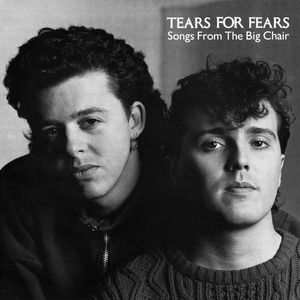
Tears for Fears – Songs from the Big Chair (1985) album cover

Tears for Fears is the English band, formed by Roland Orzabal and Curt Smith, whose thoughtful synth-pop made them 80s icons with the anthems “Everybody Wants to Rule the World” and “Shout.” They were the rare pop act that paired huge hooks with genuine substance.

Songs from the Big Chair and world domination

Formed in Bath in 1981, Tears for Fears hit their peak with their second album, Songs from the Big Chair (1985), which reached No. 1 on the Billboard 200 and went multi-platinum on both sides of the Atlantic. It delivered two of the biggest songs of the decade — “Shout” and “Everybody Wants to Rule the World,” both of which topped the US Billboard Hot 100. Their sound — lush, layered synth-pop with big melodies and even bigger themes — made them a defining part of the Second British Invasion.

The accidental masterpiece

Here’s a great piece of trivia about their signature song. “Everybody Wants to Rule the World” — the track that became their biggest hit and one of the most beloved songs of the entire decade — was almost an afterthought. It was the final song recorded for Songs from the Big Chair, written and put together quickly at the end of the sessions in under two weeks. That breezy, effortless quality is right there in the finished record, which only makes it more remarkable that a late-addition, tossed-off track became an immortal classic. Sometimes the magic arrives when you’ve stopped straining for it.

Depth beneath the hooks

What set Tears for Fears apart was the seriousness under the shine. Their name itself came from primal-therapy psychology, and their lyrics wrestled with real subjects — the desire for power and control (“Everybody Wants to Rule the World”), the urge to speak out and let feelings loose (“Shout”). Yet none of it felt heavy-handed, because the melodies were so strong. They managed the difficult trick of being both thoughtful and completely accessible, which is exactly why the songs have aged so well.

Remember when “Everybody Wants to Rule the World” seemed to be playing out of every car window in the summer of 1985 — that bright, rolling guitar line and Curt Smith’s cool, easy vocal? It’s the rare song that sounds like pure sunshine while quietly singing about something darker, and that tension is why it never gets old.

Why Tears for Fears endures

Tears for Fears’ 80s classics have proven remarkably durable, showing up constantly in films and TV and being covered by artist after artist across the generations. That staying power comes down to the combination that defined them: songs big enough for a stadium and smart enough to reward a closer listen. In a decade sometimes accused of prizing style over substance, Tears for Fears delivered both — and made it look easy.

FAQ

What are Tears for Fears’ biggest hits?
“Everybody Wants to Rule the World,” “Shout,” “Head Over Heels,” and “Sowing the Seeds of Love.”

What album made Tears for Fears famous?
Songs from the Big Chair (1985), which topped the Billboard 200 and produced two No. 1 US singles.

Was “Everybody Wants to Rule the World” written quickly?
Yes — it was the last song recorded for the album, put together in under two weeks, yet became their biggest and most enduring hit.

Who are the members of Tears for Fears?
Roland Orzabal and Curt Smith, who formed the band in Bath, England, in 1981.

Where does the band’s name come from?
It’s drawn from concepts in primal-therapy psychology, reflecting the emotional depth in their lyrics.

Why have their songs lasted so long?
Their combination of huge, accessible melodies and genuinely thoughtful themes keeps the songs popular in films, covers, and playlists decades later.

Are Tears for Fears still active?
Yes — Roland Orzabal and Curt Smith have continued recording and touring into recent years, and their 80s classics remain staples of films, covers, and playlists.


Tears for Fears brought brains to the party — explore more of the decade in our 80s pop culture guide, or meet drum legend Phil Collins next.

The 80s action movie is a genre unto itself: bigger muscles, bigger guns, bigger explosions, and a hero who walks away from the fireball without looking back — usually after a perfect one-liner. This was the decade that turned the action star into a god and the action movie into the multiplex’s main event. Nobody has done it quite the same way since.

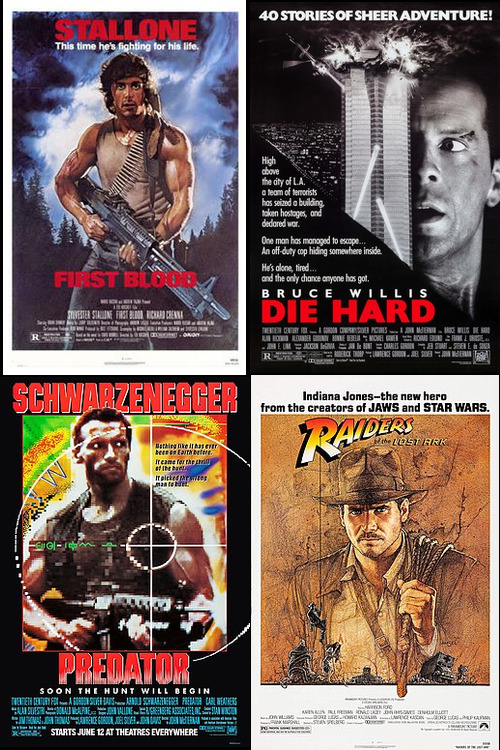
A selection of 1980s action movie posters

The best 80s action movies include Die Hard, First Blood and Rambo: First Blood Part II, Predator, The Terminator, Lethal Weapon, Beverly Hills Cop, and Raiders of the Lost Ark — films that built the modern action blockbuster around larger-than-life heroes like Schwarzenegger, Stallone, and Bruce Willis. Loud, lean, and endlessly quotable, they set the template.

The muscle era

For much of the 80s, action meant Arnold Schwarzenegger and Sylvester Stallone in a friendly arms race of bigger biceps and body counts. Stallone gave us the traumatized Vietnam vet John Rambo in First Blood (1982) — a surprisingly somber film — before the sequel Rambo: First Blood Part II (1985) turned him into a one-man army. Meet the character in full in our John Rambo profile. Schwarzenegger, meanwhile, stacked up classics: The Terminator (1984), Commando (1985), and the sci-fi-action masterpiece Predator (1987).

These were heroes built like tanks, delivering justice and quips in equal measure. The one-liner became an art form: “I’ll be back,” “Get to the choppah,” “If it bleeds, we can kill it.”

The everyman revolution

Then, in 1988, one movie changed the formula. Die Hard swapped the invincible muscleman for Bruce Willis’s John McClane — a regular cop, barefoot and bleeding, in over his head in a Los Angeles skyscraper. It made action feel human again, and it’s still the gold standard for the genre (and, yes, a Christmas movie). Get the full breakdown in our John McClane profile.

The same instinct powered the buddy-cop boom: 48 Hrs. (1982), Beverly Hills Cop (1984) with Eddie Murphy, and Lethal Weapon (1987), pairing Mel Gibson and Danny Glover. Action got funnier, faster, and more character-driven.

Remember when the hero would survive an explosion, dust himself off, and deliver a pun so perfect the whole theater cheered? The 80s made the one-liner as important as the stunt.

Why 80s action endures

The 80s action movie holds up because it understood something simple: charismatic heroes, clear stakes, practical stunts, and a great villain never go out of style. These films were made with real fire, real squibs, and real physical presence, giving them a weight that modern CGI-heavy spectacle sometimes lacks. From Die Hard to Predator, they remain the blueprint that Hollywood keeps returning to — and the reason a well-timed one-liner still lands 40 years later.

FAQ

What is the best 80s action movie?
Die Hard (1988) tops most lists for reinventing the genre around a relatable hero, though Raiders of the Lost Ark, The Terminator, and Predator are all frequent contenders.

Who were the biggest 80s action stars?
Arnold Schwarzenegger and Sylvester Stallone led the muscle-bound era, joined by Bruce Willis, Mel Gibson, Eddie Murphy, and Harrison Ford.

What made 80s action movies unique?
Larger-than-life heroes, practical stunts and effects, memorable villains, and a signature blend of extreme action with quotable one-liners.

Is Die Hard a Christmas movie?
It’s set on Christmas Eve, which fuels one of pop culture’s most enjoyable debates — many fans firmly count it as a Christmas movie.

What’s the difference between First Blood and Rambo?
First Blood (1982) is a grounded drama about a troubled veteran, while its sequel Rambo: First Blood Part II (1985) reinvented the character as an over-the-top one-man army, defining the “Rambo” image.


Action and sci-fi shared plenty of DNA in the 80s — see our 80s sci-fi movies roundup, or go inside Nakatomi Plaza with the John McClane profile.

Orange hair, thrift-store dresses, a laugh you could hear from across a room, and a voice that could swing from a joyful yelp to a heartbreaking ache in the space of one song. Cyndi Lauper burst onto MTV in 1983 looking and sounding like nobody else, and she gave the decade two of its most enduring anthems — one for dancing, one for crying.

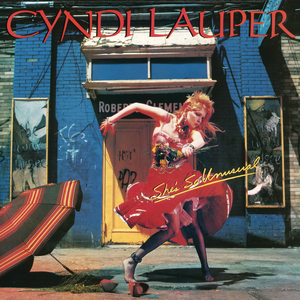
Cyndi Lauper – She's So Unusual (1983) album cover

Cyndi Lauper is the singer whose 1983 debut She’s So Unusual made her an 80s icon, powered by the joyful anthem “Girls Just Want to Have Fun” and the tender ballad “Time After Time.” She was quirky, kind-hearted, and blessed with one of the most distinctive voices of the era.

An unusual debut that changed everything

Lauper’s solo debut, She’s So Unusual (1983), was a firework. It spun off a remarkable string of singles — “Girls Just Want to Have Fun,” “Time After Time,” “She Bop,” and “All Through the Night” — whose sound and style helped define the early 80s. The album made her a star and, in 1985, earned her the Grammy for Best New Artist. Few debuts have arrived so fully formed or so instantly beloved.

Two sides of one artist

What made Lauper special was her range — not just vocal, but emotional. “Girls Just Want to Have Fun” became a joyful, defiant anthem of female independence, complete with an MTV Video Music Award–winning video that packed the screen with color and personality. Then, in the very same breath, she’d turn around and deliver “Time After Time,” a tender, aching ballad that revealed a completely different, deeply vulnerable side. That she could be both the life of the party and the friend who understands your heartbreak is exactly why she connected so deeply.

The anthem she made her own

Here’s a great piece of trivia: “Girls Just Want to Have Fun” wasn’t originally Lauper’s, and it wasn’t originally about female empowerment. It was written back in 1979 by a male songwriter named Robert Hazard, from a very different point of view. Lauper reworked the lyrics and reframed the whole song, transforming it into a feminist anthem sung by women, for women. In her hands, a throwaway tune became a rallying cry — proof that a great performer doesn’t just sing a song, she can completely rewrite what it means.

Remember when that video played and Cyndi’s whole colorful, chaotic, joyful world spilled out of the screen — the hair, the vintage clothes, the dancing in the streets? She made being a weird, exuberant individual look like the most fun thing in the world, and a generation of kids felt seen.

Why Cyndi Lauper endures

Lauper’s 80s peak gave the decade some of its most beloved songs and one of its most original personas. Her follow-up True Colors (1986) delivered another timeless title track that’s since become an anthem of acceptance. And her talent kept opening new doors well beyond the 80s, including a celebrated turn writing for Broadway. But it’s those early songs — one for the dance floor, one for the tears — that guarantee Cyndi Lauper a permanent place in the soundtrack of the 1980s.

FAQ

What are Cyndi Lauper’s biggest 80s hits?
“Girls Just Want to Have Fun,” “Time After Time,” “She Bop,” “All Through the Night,” and “True Colors.”

Did Cyndi Lauper write “Girls Just Want to Have Fun”?
No — it was written by Robert Hazard in 1979, but Lauper reworked the lyrics and reframed it into a feminist anthem, making it her own.

Did Cyndi Lauper win a Grammy?
Yes — she won the Grammy for Best New Artist in 1985 following the success of She’s So Unusual.

What made Cyndi Lauper’s style so distinctive?
Her wild, colorful thrift-store fashion, bright dyed hair, and one-of-a-kind voice made her instantly recognizable and hugely influential on MTV.

What is “Time After Time” about?
It’s a tender ballad about love, longing, and reassurance — the emotional counterweight to her upbeat anthems, and one of her most covered songs.

Did Cyndi Lauper find success beyond 80s music?
Yes — she remained a respected performer and songwriter for decades, including an acclaimed, award-winning turn writing the music for a hit Broadway show.


Cyndi Lauper brought color and heart — explore more of the decade in our 80s pop culture guide, or meet fellow original Boy George next.

“Big money, big money — no Whammies, STOP!” Nobody yelled at a television in the 80s quite like they yelled at Press Your Luck. A flashing board, piles of cash one square away from a grinning red cartoon devil who’d steal it all — it was the most nerve-shredding thirty minutes in daytime television.

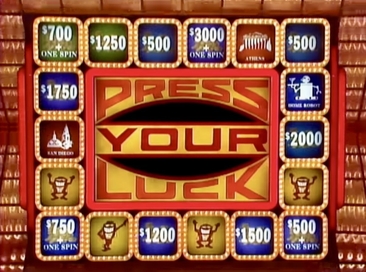
Press Your Luck Big Board (1984)

Press Your Luck premiered on CBS on September 19, 1983, and ran until 1986. Contestants answered trivia to earn spins on the “Big Board,” trying to land on cash and prizes while avoiding the Whammy — a cartoon creature that wiped out their entire winnings. Hosted by Peter Tomarken, it turned pure greed-versus-fear into one of the decade’s most beloved game shows.

The Big Board and the Whammy

The whole game lived on that board: a ring of squares flashing randomly between cash, prizes, extra spins, and the dreaded Whammy. You’d hit your buzzer to stop the light, and either bank a fortune or watch a little red animated gremlin scamper on screen and gleefully zero you out. Land four Whammies and you were done. The tension of choosing whether to keep spinning or pass your spins to an opponent — greed pulling one way, terror the other — was the entire appeal. “No Whammies!” became a national catchphrase.

The heist: Michael Larson breaks the board

Here’s the story that makes Press Your Luck legendary. In 1984, an unemployed ice cream truck driver from Ohio named Michael Larson went on the show having spent months studying tapes of the Big Board at home. He’d figured out that the “random” light wasn’t random at all — it followed a small number of memorizable patterns, and two squares never held a Whammy and always offered cash plus another spin. On air, he hit those squares over and over, running up spin after spin without ever getting Whammied, until he’d amassed $110,237 in cash and prizes — the biggest one-day haul in the show’s history and one of the most famous moments in game show history.

Remember when the studio audience and even the host slowly realized Michael Larson wasn’t going to stop — spin after spin after spin, the total climbing past $100,000 while everyone watched in disbelief? CBS was stunned, investigated whether he’d cheated, and ultimately had to pay him because he’d broken no rules — he’d just outsmarted the board.

The aftermath and the legend

CBS quietly reprogrammed the Big Board afterward, adding far more patterns so the trick could never work again. Larson’s run was so improbable that it became the subject of documentaries and specials decades later — the ultimate underdog beating a TV game at its own game. It’s the story that keeps Press Your Luck famous long after most of its daytime peers were forgotten.

Why Press Your Luck still spins

Between the primal cash-or-Whammy tension, Peter Tomarken’s game host energy, and the single most audacious contestant in game show history, Press Your Luck punched way above its weight. It was revived decades later for a new generation, and “No Whammy, no Whammy, STOP!” remains one of the most quoted lines the genre ever produced.

FAQ

When did Press Your Luck air?
It premiered September 19, 1983, on CBS and ran until 1986, hosted by Peter Tomarken.

What was the Whammy?
A red cartoon creature that appeared when a contestant landed on its square and wiped out all of their accumulated winnings.

Who was Michael Larson?
An Ohio contestant who, in 1984, memorized the Big Board’s patterns and won a record $110,237 in a single appearance without ever hitting a Whammy.

Did Michael Larson cheat?
No — CBS investigated but found he broke no rules. He’d simply studied the board’s patterns from home, so the network had to pay him.

What was the show’s catchphrase?
“No Whammies!” — shouted by contestants (and viewers) hoping to avoid the money-stealing Whammy.

Was Press Your Luck ever revived?
Yes — it returned in later years, including a primetime revival, keeping the Whammy alive for new audiences.


Press Your Luck was one of the wildest of the great 80s game shows — see the full board of them there, or get messy with Double Dare next.

If you were a teenager in the tri-state area in the late 80s, there was a good chance you rushed home, flipped on cable, and watched a studio full of kids your own age dance to the exact songs playing on your radio. That was Dance Party USA — and for a whole generation up and down the East Coast, it was appointment television before anyone used that phrase.

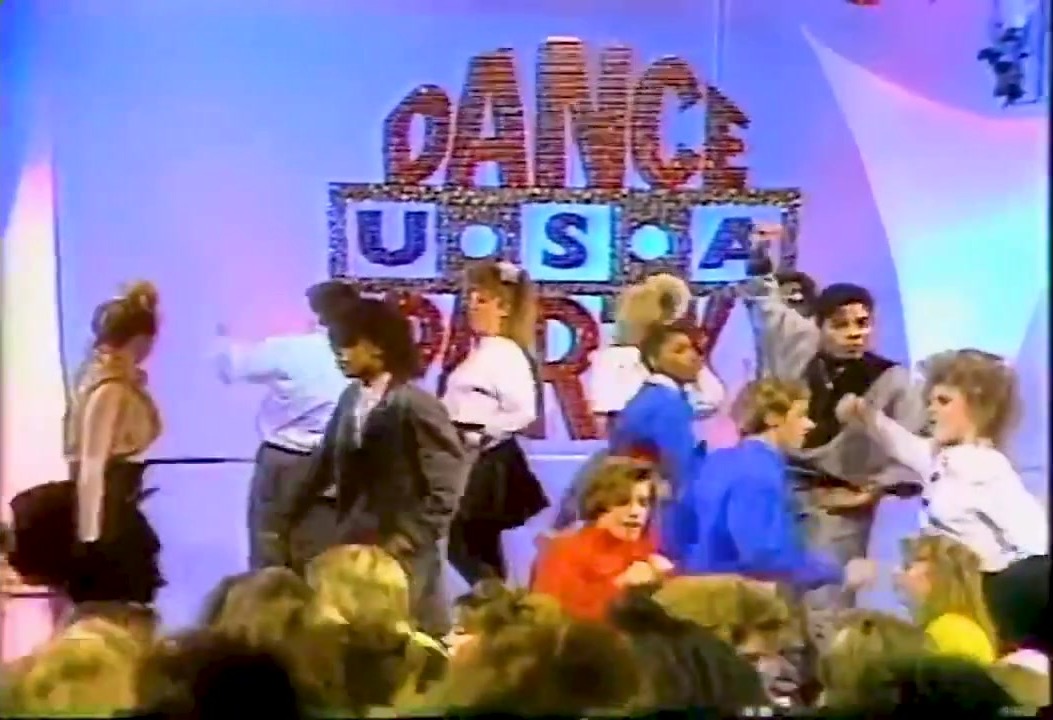
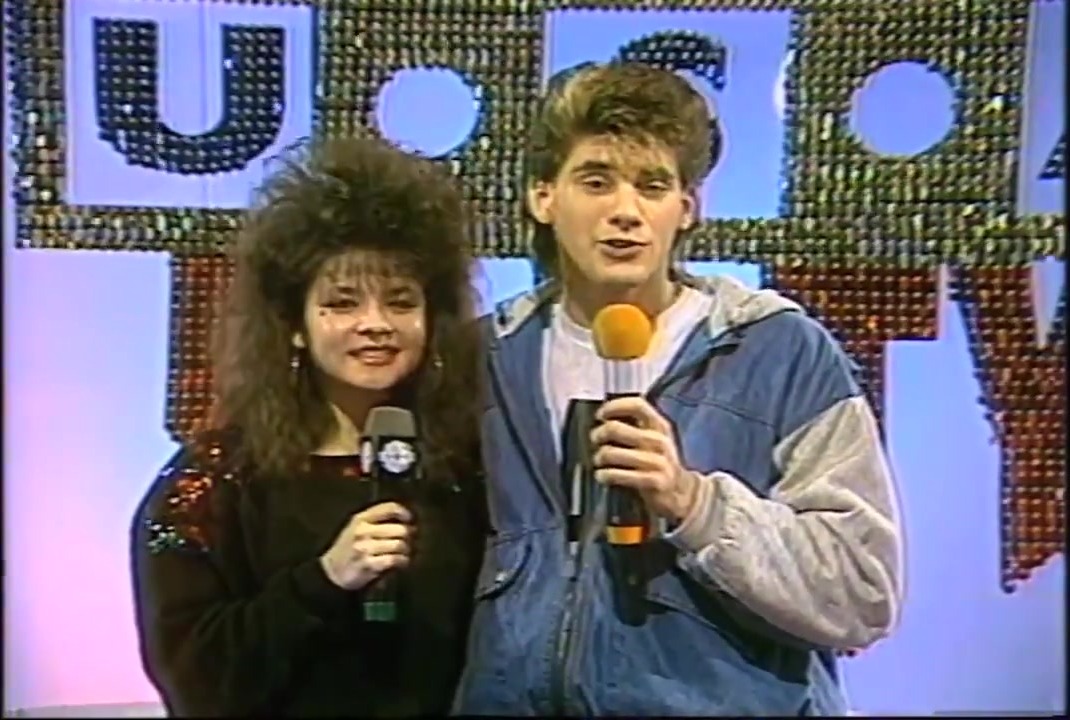
The Dance Party USA sign over the studio dance floor, from a late-80s promo tape

Dance Party USA was a daily teen dance show that aired on the USA Network from April 12, 1986 to June 27, 1992, filmed in Philadelphia, where a rotating cast of teenage regulars danced and lip-synced to the day’s biggest hits. It was the cable cousin of the older Philly dance program Dancin’ On Air, it minted local celebrities out of ordinary suburban kids, and it served as an early launchpad for future television stars.

The format: your friends, on TV, dancing to your music

The premise was beautifully simple. Fill a studio with photogenic, high-energy teenagers, cue up the current chart hits, and let them dance. Regulars had signature moves, on-camera nicknames, and fans who tuned in specifically to see them. There were lip-sync performances, spotlight dances, and the kind of unforced, sweaty fun that a modern reality producer would kill to fake. The exact records that ruled the studio floor are in our Dance Party USA songs rundown.

It started as a half-hour show in 1986 and was expanded to a full hour in 1987 once the audience took hold. The production was rooted in the Philadelphia–South Jersey corridor — the studios were WPHL-TV (channel 17) and WGBS in Philadelphia, with production offices across the river in Camden, New Jersey. That geography is why the show hit hardest in the tri-state area: these weren’t distant Hollywood kids, they were the kids from the next town over.

The hosts: Dave Raymond, Andy Gury, and a young Bobby Catalano

The show’s first host was Dave Raymond, a name Philadelphia sports fans know for a completely different reason — Raymond was the original performer inside the Phillie Phanatic costume. Andy Gury took over the main hosting duties for much of the run (1986–89, and again in 1992).

Then, from 1989 to 1991, one of the show’s own regulars stepped up to host: Bobby Catalano — yes, the same Bobby who now co-hosts Bobby and Jason’s Awesome 80s Podcast and this very site. He came up through the studio as a regular — first on the air in 1985 — and ended up in front of the camera as one of its hosts. The full then-and-now is in our Bobby Catalano story. His friend and co-conspirator, Jason Pascoe, was there too, as one of the show’s regulars from 1986 to 1988. Jason’s Dance Party USA story gets its own telling too. Two Jersey kids who lived the show from the inside — which is exactly why the 80s still feels like home turf to them.

Remember when the biggest flex in your town wasn’t being on national TV — it was being on Dance Party USA and having kids recognize you at the mall? For the regulars, that local fame was very, very real.

The regulars and dancers everyone remembers get their own roll call in our Dance Party USA dancers rundown.

Why it mattered

Dance Party USA sat in a lineage that runs from American Bandstand through Soul Train and Solid Gold — the great American tradition of putting real dancers on TV and letting the music do the rest. We mapped that whole family tree in our guide to 80s teen dance shows. What made it special wasn’t polish; it was proximity. The dancers looked like your classmates because, in the tri-state area, they basically were. It also proved to be a genuine launchpad: some of its teenage regulars went on to real television careers, and you can follow those threads in our Dance Party USA cast: where are they now? rundown. It ran for six years, survived the shift from half-hour to hour, and left behind a very specific, very warm memory for everyone who grew up watching it.

And you don’t have to settle for reading about it: a 24/7 broadcast of classic Dance Party USA episodes streams free at WatchParty USA. Their archive also keeps a complete guide to the show if you want every detail in one place.

FAQ

When did Dance Party USA air?
It ran daily on the USA Network from April 12, 1986 to June 27, 1992.

Where was Dance Party USA filmed?
In Philadelphia, at the WPHL-TV (channel 17) and WGBS studios, with production offices in Camden, New Jersey.

Who hosted Dance Party USA?
Dave Raymond was the original host, followed by Andy Gury for much of the run. Bobby Catalano hosted from 1989 to 1991 after coming up as one of the show’s regulars.

How long was each episode?
It began as a half-hour show in 1986 and was expanded to a full hour in 1987 as its audience grew.

Is Dance Party USA related to Dancin’ On Air?
Yes — Dance Party USA followed the same format as the earlier Philadelphia show Dancin’ On Air, and for a time the two shared studio space, regulars, and even a weekly radio spot.

Is Dance Party USA on anywhere today?
There’s no official streaming home, but a devoted fan community keeps clips, episodes, and reunions alive online, and several former cast members — including Bobby and Jason — still celebrate the show today.


Dance Party USA is one corner of a whole decade of pop culture we love — start with our 80s pop culture icons guide, or find out where the Dance Party USA cast is now.

The gray glen-plaid suit two sizes too tight. The red bow tie. The white shoes. That impossible giggle and the comeback every 80s kid deployed on the playground: “I know you are, but what am I?” Pee-wee Herman wasn’t like any other character of the decade — he was a cartoon come to life, and he was everywhere.

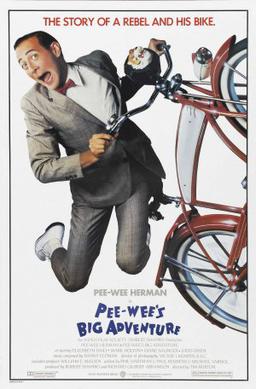
Pee-wee's Big Adventure (1985) movie poster

Pee-wee Herman is the giddy, bow-tied man-child created and played by comedian Paul Reubens, who broke through in Tim Burton’s 1985 film Pee-wee’s Big Adventure and became a Saturday-morning phenomenon. He’s an adult who acts like a hyperactive kid, and the 80s couldn’t get enough of him.

From the Groundlings to a stolen bicycle

Reubens built Pee-wee at the Los Angeles improv troupe the Groundlings in the 1970s. After a failed Saturday Night Live audition, he doubled down and launched The Pee-wee Herman Show as a stage act in 1981 — and it caught fire. That momentum carried the character to the big screen in Pee-wee’s Big Adventure (1985), the debut feature of a young director named Tim Burton.

The plot is almost aggressively simple: somebody steals Pee-wee’s beloved bicycle, and he goes on a cross-country quest to get it back. That’s it. And it’s wonderful — a live-action cartoon full of surreal detours, powered entirely by Reubens’ total commitment to the bit.

Why the man-child worked

Pee-wee’s genius is that he plays a child with zero winking. He throws tantrums, hoards toys, tells secrets to the audience, and finds pure joy in the dumbest things. Reubens never once signals “I’m an adult pretending” — he just is Pee-wee, completely. That absolute conviction is what separated the character from a novelty and turned him into an icon kids and adults both adored.

Remember when he begged the biker gang for mercy, then took the dance floor to “Tequila” in those giant platform shoes — and won the whole bar over? “Big Shoe Dance” is the moment Pee-wee’s Big Adventure tips from funny into legendary.

The Playhouse and the world it built

Pee-wee’s Big Adventure did more than launch a character — it launched careers. It was Tim Burton’s feature debut, and it carried the first major film score by a young composer named Danny Elfman, kicking off one of the great director-composer partnerships in movie history. Not bad for a movie about a stolen bicycle.

Then came the crown jewel: Pee-wee’s Playhouse. The Emmy-winning CBS series (1986–1991) was unlike anything else on Saturday mornings — a riot of talking furniture, claymation, puppets, and a secret word that made the whole cast scream. It was genuinely subversive kids’ TV, and a generation grew up quoting it. Reubens even brought Pee-wee back for a second feature, Big Top Pee-wee (1988). Across the films and the Playhouse, Pee-wee Herman became one of the most original creations the decade produced — a reminder that the 80s had a big, weird heart, and room for a grown man in a too-tight suit who found pure joy in absolutely everything.

FAQ

Who created and played Pee-wee Herman?
Comedian Paul Reubens created and played the character, developing him at the Groundlings improv troupe in the 1970s.

What is Pee-wee’s Big Adventure about?
Pee-wee’s prized bicycle is stolen, and he sets off on a surreal cross-country journey to recover it — in Tim Burton’s 1985 feature debut.

What’s Pee-wee’s famous catchphrase?
“I know you are, but what am I?”

What was Pee-wee’s Playhouse?
An Emmy-winning children’s series that ran on CBS from 1986 to 1991 — a gleefully surreal world of talking furniture, puppets, claymation, and a “secret word” that made everyone scream. It became appointment TV for a generation and cemented Pee-wee as one of the decade’s most original creations.


Pee-wee is one of the decade’s most original characters — meet more in our 80s movie characters roundup, or keep the weirdness going with our Beetlejuice deep-dive next.

Pink hair, wild makeup, star-shaped earrings, and a secret identity powered by a holographic supercomputer. Jem and the Holograms took the 80s obsession with rock stardom, glam fashion, and neon everything and poured it into a cartoon aimed squarely at a generation of kids — with a toy line waiting at the end of every episode. It was “truly, truly, truly outrageous,” and it knew it.

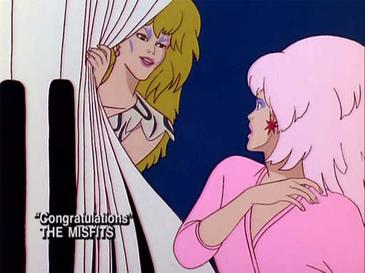
Jem and the Holograms music video still

Jem (also known as Jem and the Holograms) aired from 1985 to 1988. It followed Jerrica Benton, a young music-company owner who uses a holographic computer named Synergy to transform into glamorous rock star Jem, fronting the band the Holograms while battling the rival group the Misfits. Produced by Hasbro’s animation arm, it was a stylish, music-packed series built hand-in-hand with a doll line.

A secret identity built on holograms

The premise was pure 80s wish-fulfillment. Jerrica Benton runs Starlight Music and a foster home for girls, and when she needs to become a star, she touches her star-shaped earrings and summons Synergy — a holographic AI her late father built — to project the dazzling disguise of “Jem.” As Jem, she leads the Holograms to fame while keeping her real identity hidden, all while running a business and caring for the Starlight Girls. Secret pop star by night, responsible guardian by day: it was a fantasy tailor-made for its audience.

Music videos in cartoon form

What set Jem apart was the music. Nearly every episode stopped for full-blown animated “music videos” — original songs by the Holograms or the Misfits, staged with the era’s MTV sensibility. The show essentially delivered a mini music video several times an episode, which made it feel current and cool in a way few Saturday-morning cartoons did. The songs were catchy enough that they were released on records, blurring the line between cartoon and real pop act.

Remember when the Holograms and the villainous Misfits would face off in some flashy on-stage battle of the bands, each launching into a full animated music video mid-episode — “We are the Misfits, our songs are better!” — while Jem’s earrings flashed and Synergy worked her holographic magic? Those musical showdowns were the whole appeal.

Fashion, feuds, and a toy line

Jem was as much about style as story. The over-the-top outfits, the neon color palette, the glam-rock looks of both bands — it was a fashion show with a plot. And the rivalry with the Misfits gave it real conflict: a snarling, punky girl group forever scheming to sabotage the Holograms. Every character, outfit, and instrument was, of course, also a doll or accessory you could buy, making the show a masterclass in the 80s art of the toy-driven cartoon.

Why Jem is still truly outrageous

Jem and the Holograms has aged into a beloved cult favorite, celebrated for its glam style, its catchy songs, and its rare-for-the-era focus on ambitious young women running the show. It inspired comics, merchandise revivals, and a 2015 live-action movie. “Truly outrageous” remains one of the most quotable catchphrases the decade’s cartoons produced.

FAQ

When did Jem and the Holograms air?
It ran from 1985 to 1988, produced in connection with Hasbro’s doll line.

Who is Jem, really?
Jerrica Benton, a music-company owner who transforms into the rock star Jem using a holographic computer called Synergy.

What is Synergy?
A holographic supercomputer built by Jerrica’s late father that projects Jem’s disguise and other illusions, activated through Jerrica’s star-shaped earrings.

Who were the Misfits?
A rival girl band and the show’s recurring villains, constantly trying to outdo and sabotage the Holograms.

Why was the show unusual for its time?
It packed original songs and music-video-style sequences into nearly every episode and centered ambitious young women, standing out from typical 80s cartoons.

What’s the show’s famous catchphrase?
“Jem is truly outrageous — truly, truly, truly outrageous,” from its theme song.


Jem was one of the most stylish faces of 80s TV — meet the rest in our 80s pop culture icons guide, or hang out with ALF next.

For six years, Dance Party USA turned a rotating cast of tri-state teenagers into local celebrities. Then the cameras stopped, the 80s became the 90s, and everybody grew up. So where did all those dancers, hosts, and regulars actually end up? A few of them have stories worth catching up on.

Two Dance Party USA cast members on camera in front of the studio sign

The Dance Party USA cast scattered into all kinds of lives after the show ended in 1992 — one teenage dancer became one of the most recognizable faces in American daytime television, the show’s hosts moved on to new stages, and several regulars, including Bobby Catalano and Jason Pascoe, still celebrate the show today. Here’s where some of the most memorable faces landed.

Among those alumni, a teenage Kelly Ripa danced and did on-camera segments before landing a role on All My Children in 1990 and going on to a major television career — a reminder that this after-school dance show was a genuine launchpad — her dance-floor years get a full profile at the WatchParty USA archive. But she was one of many faces, so let’s walk through where a range of them landed.

The hosts

Dave Raymond, the show’s original host, is a Philadelphia legend for an entirely different reason — he was the original performer inside the Phillie Phanatic costume, one of the most beloved mascots in American sports. Andy Gury carried the main hosting duties through much of the run, becoming one of the show’s steadiest on-air presences.

And then there’s Bobby Catalano, who came up as a regular — first on the air in 1985 — and hosted the show from 1989 to 1991. Today he co-hosts Bobby and Jason’s Awesome 80s Podcast right here at bobbyandjason.com — you can read his full story in our Bobby Catalano profile.

The regulars who kept the flame

Not every regular chased the spotlight afterward, but plenty kept the connection alive. Jason Pascoe, one of the show’s regulars, reunited with Bobby decades later to build an entire 80s podcast on the memories they made in that studio — here’s Jason’s Dance Party USA story. Fan favorite Heather Henderson, known to viewers as “Baby Heather,” went on to a creative career of her own as a performer, singer, and podcast host.

Remember when the regulars on your local dance show felt like celebrities — and then you grew up and realized some of them actually became famous? Dance Party USA had more of those stories than almost any show its size.

A show that keeps reuniting

What’s remarkable about Dance Party USA is how tightly its alumni have held onto it. Decades later, former dancers reconnect, hosts sit down for interviews, and fans still trade clips and memories online. For a low-budget cable dance show out of Philadelphia, that staying power says everything — the people who were on it, and the people who watched it, never really let it go.

FAQ

Who was the most famous Dance Party USA cast member?
Kelly Ripa, who danced and did segments on the show as a teenager before becoming a daytime television star on All My Children and, later, a national talk-show host.

What happened to the show’s dancers?
Most moved on to ordinary lives, but many stay connected to the show’s legacy through reunions and online fan communities, and a few — like Bobby Catalano and Jason Pascoe — turned their time on the floor into a lasting celebration of the decade.

What happened to Dave Raymond, the original host?
He’s best known as the original performer inside the Phillie Phanatic costume — one of the most famous mascots in American sports.

Where are Bobby Catalano and Jason Pascoe now?
The two former Dance Party USA cast members co-host Bobby and Jason’s Awesome 80s Podcast and run bobbyandjason.com, celebrating 80s pop culture.

When did Dance Party USA end?
The show wrapped its run on the USA Network on June 27, 1992, after six years on the air.

Do the Dance Party USA cast members still keep in touch?
Many do — former dancers and hosts reconnect for interviews and reunions, and a devoted fan community keeps the show’s memory alive online.


Catch up with the hosts who still fly the flag in our Bobby Catalano profile, or head back to the start with what Dance Party USA was.

Scroll to top