Year: 2026

No muscles like Rambo. No headband, no bandolier. Just a New York cop in a filthy undershirt, barefoot on broken glass, in way over his head and bleeding for it. When John McClane crawled through an air vent muttering to himself in 1988, he quietly rewrote the rules for what an action hero could be.
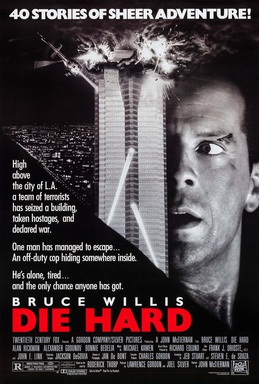
Die Hard (1988) movie poster

John McClane is the wisecracking, off-duty NYPD detective played by Bruce Willis in Die Hard (1988), who single-handedly takes on a team of thieves holding a Los Angeles skyscraper hostage on Christmas Eve. He’s the everyman action hero — and the whole genre bent around him afterward.

The casting nobody believed in

Here’s the fact that seems impossible now: casting Bruce Willis as an action lead was considered a bad idea. He was known as the smirking star of the TV comedy Moonlighting — a “goofy sitcom regular,” not a tough guy. Director John McTiernan picked him precisely because of that. He didn’t want an invincible slab of muscle. He wanted an everyman: a normal, hard-working cop thrown into an impossible situation, scared and improvising.

That choice is the entire reason Die Hard works. McClane bleeds. He panics. He talks to himself to keep from losing it. And audiences connected instantly, because for the first time the action hero was somebody who felt like us.

Vulnerable, funny, and human

McClane’s weapons are grit and a sense of humor, not a physique. He’s separated from his wife Holly, in town to try to patch things up, when everything goes wrong. He spends the movie barefoot (his shoes are gone early), cut up, exhausted, and sarcastic — trading one-liners with the villain over a stolen radio. The famous “Yippee-ki-yay” catchphrase is pure McClane: defiance from a guy who knows he’s outgunned and refuses to quit anyway.

Remember when he had to run across a floor of shattered glass in bare feet, leaving bloody footprints while the bad guys closed in? It’s the moment Die Hard declared its whole philosophy: this hero has no armor, and every wound is real.

Nakatomi Plaza and a villain for the ages

A hero is only as good as his villain, and McClane got one of the greatest. Die Hard marked the film debut of Alan Rickman as Hans Gruber — the silky, impeccably dressed mastermind whose intelligence and menace made McClane’s grimy, improvised heroics look even more human by contrast. The cat-and-mouse between the barefoot cop and the elegant thief, mostly conducted over a stolen radio, is the engine the whole movie runs on. Rickman was so good that he essentially wrote the template for the modern action villain in a single role.

The setting became iconic too: Nakatomi Plaza, a gleaming L.A. skyscraper turned into a vertical battleground. That “one man trapped in one building” structure was so clean and so effective that Hollywood spent the next decade pitching movies as “Die Hard on a bus,” “Die Hard on a plane,” “Die Hard on a boat.” John McClane didn’t just star in a great action movie — he became the blueprint an entire genre copied.

Why McClane endures

Die Hard opened July 15, 1988, and turned Bruce Willis from sitcom punchline into an action icon practically overnight. More than that, it created a template — “one regular guy, one contained location, impossible odds” — that Hollywood is still copying. John McClane proved the most relatable action hero is the one who’s just barely hanging on, cracking jokes the whole way down.

FAQ

Who plays John McClane?
Bruce Willis, across the Die Hard franchise, starting with the 1988 original.

Why was casting Bruce Willis controversial?
He was known as a TV-comedy star from Moonlighting, not an action lead — but director John McTiernan wanted his everyman quality, not a muscleman.

What’s John McClane’s catchphrase?
“Yippee-ki-yay” — his signature line of defiance in every film.

Is Die Hard a Christmas movie?
It’s set on Christmas Eve at a holiday office party, which fuels the long-running debate that it counts as one.

Who plays the villain in Die Hard?
Alan Rickman, in his film debut, as the silky criminal mastermind Hans Gruber. Rickman’s cool, intelligent menace was so effective that he essentially defined the template for the modern action-movie villain — the perfect foil to McClane’s grimy, improvised heroism.


John McClane changed the action hero forever — meet more in our 80s movie characters roundup, or grab a laugh with Axel Foley next.
“Dead or alive, you’re coming with me.” Delivered in that flat, metallic monotone, it’s one of the great 80s action lines. But RoboCop pulled a fast one on everybody who bought a ticket for the shootouts: underneath the chrome and the firepower is one of the saddest, smartest movies the decade made.

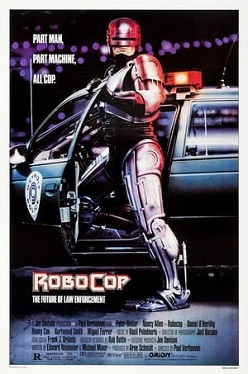
RoboCop (1987) movie poster

RoboCop is Alex Murphy, a Detroit police officer who is brutally murdered and then rebuilt as a cyborg law-enforcer by the megacorporation Omni Consumer Products, in Paul Verhoeven’s 1987 film — played by Peter Weller. He’s part action figure, part tragedy: a machine slowly remembering it used to be a man.

The man inside the metal

The genius of RoboCop is the ghost in the machine. OCP wipes Murphy’s identity and rebuilds him as a product — a walking, gun-toting brand designed to clean up a crime-ridden near-future Detroit. But fragments of Murphy’s humanity keep surfacing: flashes of his family, his old reflexes, the man he used to be. The whole movie is his fight to reclaim an identity a corporation tried to erase. That’s a lot heavier than the poster lets on.

Satire hiding in a shoot-’em-up

Verhoeven loaded RoboCop with sly satire that a lot of kids missed the first time. The fake TV commercials, the gleefully evil corporation, the “I’d buy that for a dollar!” gags — it’s a sharp send-up of 80s greed, privatization, and media culture, smuggled inside a hyper-violent action movie. That double life is exactly why the film got critically re-evaluated over the years and is now hailed as one of the best of the decade, not just a fun bit of ultraviolence.

Remember when OCP demoed its other law-enforcement robot, the ED-209 — and it malfunctioned, gunning down an executive in the boardroom while everyone stood frozen in horror? It’s brutal, it’s darkly hilarious, and it tells you exactly what kind of movie you’re really watching.

“I’d buy that for a dollar” — the satire that aged perfectly

The deeper you look at RoboCop, the sharper it gets. Those fake commercials and news breaks scattered through the film — the game shows, the car ads, the gleeful “I’d buy that for a dollar!” catchphrase — are Verhoeven skewering a media-saturated, buy-everything culture that only looks more accurate with time. The villains aren’t just street thugs; they’re the executives of a corporation that treats a murdered cop as a product line. In 1987 that read as dark comedy. Today it reads as prophecy.

That double-layered design is why the character kept going — sequels, a TV series, cartoons, a 2014 remake — and why film critics who once flinched at the violence now rank it among the best movies of the decade. RoboCop endures because he’s two things at once, held in perfect tension: a badass action figure kids wanted on their shelf, and a tragic figure asking what’s left of a man when a company owns his body. Peter Weller’s mournful, mechanical performance sells both. Few 80s heroes were ever this smart while looking this cool.

Why RoboCop endures

RoboCop was a financial hit in 1987, earning over $53 million, but its real staying power is the mix nobody expected: a crowd-pleasing action icon that’s secretly about grief, identity, and what makes us human. Peter Weller’s precise, mournful performance sells both halves. RoboCop is the rare 80s hero who could headline the action aisle and the film-studies syllabus at the same time.

FAQ

Who is RoboCop, really?
Alex Murphy, a Detroit police officer who is murdered and rebuilt as a cyborg by the corporation OCP. He’s played by Peter Weller.

Who directed RoboCop?
Paul Verhoeven, from a screenplay by Edward Neumeier and Michael Miner, released in 1987.

Is RoboCop just an action movie?
No — beneath the action it’s a satire of 80s corporate greed and media culture, plus a tragedy about a man reclaiming his lost humanity.

What is ED-209?
OCP’s rival law-enforcement robot, whose violent boardroom malfunction is one of the film’s most memorable scenes.

Were there RoboCop sequels?
Yes — RoboCop 2 (1990) and RoboCop 3 (1993), plus TV series, cartoons, and a 2014 remake. But the 1987 original remains the definitive version, prized for balancing brutal action with sharp satire of corporate greed and media culture.


RoboCop is 80s action with a brain — meet more heavy hitters in our 80s movie characters roundup, or go back to John Rambo next.

Before the Sunset Strip was crawling with glam-metal bands, before MTV was wall-to-wall spandex, somebody had to prove that a metal band could actually top the charts. That somebody was Quiet Riot — and when they did it, they didn’t just score a hit. They kicked down a door the whole decade came pouring through.

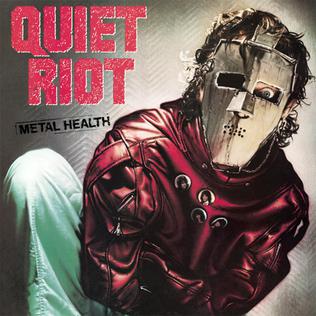
Quiet Riot – Metal Health (1983) album cover

Quiet Riot is the Los Angeles heavy-metal band whose 1983 album Metal Health became the first heavy-metal album ever to hit No. 1 on the Billboard album chart, led by singer Kevin DuBrow and the smash “Cum on Feel the Noize.” They were the icebreaker for the entire 80s metal explosion.

The album that made history

Metal Health was released in March 1983, and it did something no metal record had done before: it reached No. 1 on the Billboard 200. That was a genuine watershed. Until then, heavy metal was a concert-hall and album-cut phenomenon; suddenly it was the biggest album in the country. The lineup — Kevin DuBrow on vocals, Carlos Cavazo on guitar, Rudy Sarzo on bass, and Frankie Banali on drums — had cracked the mainstream wide open.

The record’s two anthems still ring out at any 80s party: the title track “Bang Your Head (Metal Health)” and, above all, “Cum on Feel the Noize.”

The cover that broke the ceiling

Here’s a detail fans love: “Cum on Feel the Noize,” the song that carried Metal Health to No. 1, wasn’t even a Quiet Riot original — it’s a cover of the British glam-rock band Slade. And the band didn’t especially want to record it. According to drummer Frankie Banali, the cover was the producer’s idea — a “safety” commercial track — while DuBrow had actually lobbied to cover a different Slade song. The one they were reluctant about became the hit that made history. It’s a perfect reminder that in the studio, the reluctant choice sometimes turns out to be the door-opener.

Remember when a metal band hitting No. 1 actually felt impossible — and then Quiet Riot did it, and within a couple of years the whole scene followed? Being first is easy to forget once the party’s crowded, but Quiet Riot got there before almost anyone.

Why Quiet Riot endures

Quiet Riot’s chart-topping breakthrough is a cornerstone of the 80s metal story — the proof of concept that convinced labels the genre could sell to the masses. Every glam-metal band that flooded the charts in the years after owes a little something to Metal Health clearing the path. Kevin DuBrow’s booming voice and those two unkillable anthems keep the band on every serious 80s playlist. First through the door, and the door never closed again.

The Randy Rhoads connection

Here’s a piece of history that gives Quiet Riot even deeper roots in the story of metal: the band was originally co-founded in the mid-1970s by a young guitar prodigy named Randy Rhoads — the same Randy Rhoads who would go on to become Ozzy Osbourne’s legendary guitarist and one of the most revered players in all of heavy metal. Rhoads was in Quiet Riot’s earliest incarnation before leaving to join Ozzy’s band, where he helped define the sound of metal guitar before his tragic early death. So the band that broke the mainstream ceiling for metal in 1983 also happened to be the launching pad for one of the genre’s greatest guitarists years earlier. That’s a remarkable amount of metal history running through one L.A. band — another reason Quiet Riot’s place in the story is bigger than a single chart-topping album.

FAQ

What made Quiet Riot’s Metal Health historic?
It was the first heavy-metal album to reach No. 1 on the Billboard album chart, in 1983.

What are Quiet Riot’s biggest songs?
“Cum on Feel the Noize” and “Bang Your Head (Metal Health).”

Is “Cum on Feel the Noize” a cover?
Yes — it’s a cover of the British glam-rock band Slade, and it was reportedly the producer’s idea to record it.

Who was the lead singer of Quiet Riot?
Kevin DuBrow, the band’s frontman and one of the most recognizable voices of early 80s metal.

Who was Quiet Riot’s famous early guitarist?
Randy Rhoads, who co-founded the band in the 1970s before leaving to become Ozzy Osbourne’s legendary guitarist — one of the most revered players in metal history.


Quiet Riot opened the door — see who walked through in our best 80s hair bands guide, or raise a fist with Twisted Sister next.

Saturday detention. A library. Five kids who’d never say a word to each other in the hall. If you were a teenager in 1985, you didn’t watch The Breakfast Club — you recognized it. Those five were everybody you knew, and probably a little bit of you.

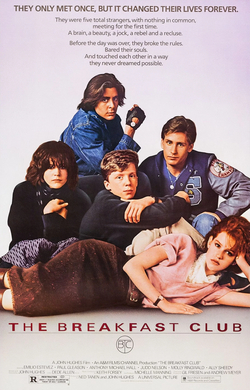
The Breakfast Club (1985) movie poster

The Breakfast Club characters are five students from different high-school cliques — the Criminal, the Princess, the Brain, the Athlete, and the Basket Case — stuck together for Saturday detention in John Hughes’ 1985 classic. Over one day they trade insults, secrets, and eventually the truth, walking out as something none of them expected: friends.

The five, and the actors who became them

  • John Bender — “The Criminal” (Judd Nelson): the sneering troublemaker with a home life that explains the armor. The fist-pump freeze-frame that ends the movie? That’s him.
  • Claire Standish — “The Princess” (Molly Ringwald): the popular girl who’s more trapped by expectations than any of them.
  • Brian Johnson — “The Brain” (Anthony Michael Hall): the straight-A kid buckling under the weight of a failing grade.
  • Andrew Clark — “The Athlete” (Emilio Estevez): the wrestler crushed under his father’s ambition.
  • Allison Reynolds — “The Basket Case” (Ally Sheedy): the silent outsider who turns out to be the most honest one in the room.

They report to fictional Shermer High in Shermer, Illinois — Hughes’ recurring make-believe hometown — for a detention that officially takes place on March 24, 1984, under the thumb of principal Richard Vernon (Paul Gleason).

The genius was the label — then the peel

Hughes hands you the labels on purpose: Criminal, Princess, Brain, Athlete, Basket Case. Then he spends the whole movie proving how little those labels actually hold. The assignment — write an essay about “who you think you are” — becomes the film’s whole thesis. By the last bell, the point is that no one is only one thing.

Remember when they all sat in a circle on the library floor and finally just told the truth — about their parents, their fears, the pressure? No car chase, no explosion. Five teenagers talking. And it was the most gripping thing in theaters that year.

Why five strangers still matter

The Breakfast Club took the teen movie and made it about interior lives instead of gags. Every kid who ever felt reduced to a single word — jock, nerd, weirdo — saw themselves get a fair hearing. That’s why the freeze-frame fist in the air still lands. It’s not just Bender crossing a football field. It’s the whole idea that you’re more than the box they put you in.

The Brat Pack and a song you can’t shake

The Breakfast Club didn’t just give us five characters — it helped christen a movement. Its young cast, alongside the stars of St. Elmo’s Fire and other mid-80s hits, got tagged “the Brat Pack,” the loose crew of hot young actors who defined the decade’s coming-of-age movies. Molly Ringwald and Anthony Michael Hall in particular became the faces of the whole John Hughes universe.

And then there’s the sound. The film opens and closes on Simple Minds’ “Don’t You (Forget About Me)” — a song the band almost turned down, which went on to become one of the definitive anthems of the 1980s. Now you literally cannot hear those opening “hey, hey, hey, hey” notes without picturing Bender’s fist punching the sky. That’s the mark of a movie that fused image and music so tightly they became one memory. Decades on, it earned a spot in the Criterion Collection — not bad for five kids in a library.

FAQ

Who are the five Breakfast Club characters?
John Bender (the Criminal), Claire Standish (the Princess), Brian Johnson (the Brain), Andrew Clark (the Athlete), and Allison Reynolds (the Basket Case).

Who directed The Breakfast Club?
John Hughes wrote and directed the film, released in 1985.

Where is The Breakfast Club set?
At fictional Shermer High School in Shermer, Illinois — a town Hughes used across several of his movies.

What’s the assignment in the movie?
Principal Vernon makes them write an essay about “who you think you are,” which becomes the film’s central theme.

Who does the famous fist-pump at the end?
Judd Nelson’s John Bender, walking across the football field as the movie freezes on his raised fist.


The Breakfast Club is a cornerstone of the John Hughes era — explore the rest in our 80s movie characters guide, or spend a day off with Ferris Bueller next.

Some singers have a great voice. Whitney Houston had the voice — a soaring, crystal-clear, gospel-trained instrument that could fill a stadium and break your heart in the same phrase. When she arrived in the mid-80s, she didn’t just join the pop landscape. She rose above it, and set records that still stand.

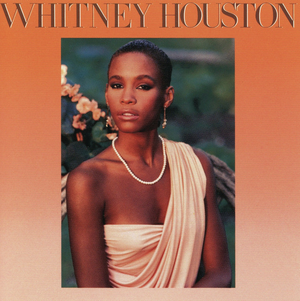
Whitney Houston – Whitney Houston (1985) debut album cover

Whitney Houston is the singer whose 1985 debut album made her one of the biggest stars of the decade, delivering a record-setting run of No. 1 hits with her once-in-a-generation voice. She turned pure vocal talent into chart history.

A debut for the record books

Whitney Houston’s self-titled debut arrived on Valentine’s Day 1985. It started slowly, but once it caught fire it became unstoppable, eventually topping the Billboard 200 for fourteen weeks and generating three No. 1 singles: “Saving All My Love for You,” “How Will I Know,” and “Greatest Love of All.” Her second album, Whitney (1987), kept the streak alive with “I Wanna Dance with Somebody (Who Loves Me).” Across those two records she racked up an astonishing run of consecutive chart-toppers, a feat that set a new standard for pop dominance.

“I Wanna Dance with Somebody” and the joy of the era

“I Wanna Dance with Somebody,” the lead single from Whitney, was designed to bring Houston a brighter, more accessible pop sound — and it worked spectacularly. Written by the duo Boy Meets Girl (who’d also penned “How Will I Know”) and produced by Narada Michael Walden, it went on to sell over 18 million copies worldwide, making it the best-selling single by a female artist of the entire 1980s. It’s a pure shot of 80s joy, still guaranteed to fill any dance floor decades later.

The voice above everything

What set Houston apart wasn’t image or gimmick — it was raw, staggering vocal ability. Trained in gospel and blessed with extraordinary power and control, she could belt with force and then float into delicate, note-perfect runs. On a ballad like “Greatest Love of All,” she made the technical difficulty sound effortless, delivering a message of self-worth that became an anthem. In an era of big style and bigger production, Whitney’s superpower was the simplest and rarest of all: she could flat-out sing like almost no one before or since.

Remember when “Greatest Love of All” would come on and the whole room went still, everyone quietly hoping they could hit even one of those notes? Whitney made vocal perfection sound easy, which only made it more jaw-dropping when you tried to sing along and realized how impossibly good she really was.

Why Whitney Houston endures

Houston’s 80s breakthrough established her as one of the most gifted vocalists in the history of popular music, and set commercial records that spoke to just how completely audiences fell for that voice. She’d go on to even greater fame with The Bodyguard in the 90s, but the foundation was laid in the 80s — two albums, a string of No. 1s, and a voice that defined what pop singing could be. She remains the benchmark, the artist other singers are still measured against.

FAQ

What were Whitney Houston’s biggest 80s hits?
“Saving All My Love for You,” “How Will I Know,” “Greatest Love of All,” and “I Wanna Dance with Somebody (Who Loves Me).”

When did Whitney Houston’s debut album come out?
February 14, 1985 — it eventually topped the Billboard 200 for fourteen weeks and produced three No. 1 singles.

What is the best-selling single by a female artist of the 80s?
Whitney Houston’s “I Wanna Dance with Somebody (Who Loves Me),” which sold over 18 million copies worldwide.

Why was Whitney Houston’s voice so celebrated?
Her gospel-trained power, control, and clarity let her deliver both huge belted notes and delicate runs with seemingly effortless perfection.

What made her debut album historic?
It set a record with its run of consecutive No. 1 singles, an achievement that established her as one of pop’s dominant new stars.

What came after Whitney Houston’s 80s success?
She reached even greater heights in the 1990s with the film The Bodyguard and its record-breaking soundtrack — but her two 80s albums built the foundation for it all.


Whitney Houston set the vocal standard — explore more of the decade in our 80s pop culture guide, or revisit the King of Pop, Michael Jackson, next.

Every 80s kid has the same memory: the satisfying clack of a fresh cube, the pride of solving one side, and the slow horror of realizing that solving one side had wrecked the other five. Then — the peeling. Come on. You peeled the stickers. Everybody peeled the stickers.

A solved Rubik's Cube, the iconic 1980s puzzle toy

The Rubik’s Cube was invented in 1974 by Hungarian professor Ernő Rubik, hit the Western market in 1980, and by 1981 had sold in the hundreds of millions — making it the best-selling toy in history. It wasn’t just a toy. For a few blinding years, a six-sided plastic puzzle was a genuine cultural obsession, and it belonged to the 80s the way big hair and synthesizers did.

From “Magic Cube” to worldwide fever

Rubik built the thing as a teaching tool — a way to explain three-dimensional geometry to his students. He originally called it the Magic Cube (Bűvös kocka in Hungarian), and it took years to escape Hungary. When Ideal Toy Corp licensed it and renamed it the Rubik’s Cube for a 1980 Western launch, it detonated.

By 1981 it was everywhere. It won Germany’s prestigious Game of the Year award. Sales hit the hundreds of millions. And the number that made it legendary: a standard cube has 43 quintillion possible arrangements — 43,000,000,000,000,000,000 — and exactly one of them is solved. That’s not a toy. That’s a tiny mechanical villain that fit in your backpack.

The craze that turned into a subculture

Here’s what separates the Rubik’s Cube from a passing fad: it grew its own world. The first World Championship was held in Rubik’s home city of Budapest in 1982, where the fastest solvers on Earth raced the clock. “Speedcubing” was born right there, and it never actually died.

The cube leaked into everything. It showed up in movies and commercials. There were how-to-solve books that sat on bestseller lists. There were spin-off puzzles. And — the deepest 80s flex of all — there was a Saturday morning cartoon, Rubik, the Amazing Cube, in which a sentient, flying Rubik’s Cube had adventures with a group of kids. If your toy got its own cartoon, you had truly arrived in the 1980s.

Remember when the cool kid in class could solve it in under a minute and the rest of us quietly bought the little instruction booklet — or, let’s be honest, twisted it apart and popped the pieces back in the “right” order? Both are valid. Both are 80s.

Why it never really left

Most 80s crazes burned white-hot and vanished. The Rubik’s Cube did something rarer — it faded from fad and settled into permanent. It’s still sold, still solved, still raced. Speedcubers now finish in a handful of seconds. But for anyone who was there, the cube isn’t a competition — it’s a color-block time machine back to a bedroom floor, a tangle of frustration, and a suspicious little pile of peeled stickers.

From fad to permanent fixture

What separates the Rubik’s Cube from the countless toys that flared up and vanished in the 80s is that it never actually went away. The speedcubing subculture born at that first 1982 Budapest championship only grew, with dedicated competitors chipping the solve time down from minutes to a handful of seconds using advanced algorithms and specialized, lightning-fast cubes. Today there’s a global competitive circuit, world records that fall regularly, and an endless supply of tutorials teaching anyone willing to learn. The cube also became a design icon — its six-color grid instantly recognizable, endlessly referenced in art, advertising, and pop culture as visual shorthand for cleverness and puzzles. Most 80s crazes are memories. The Rubik’s Cube is still sitting on shelves, still frustrating new generations, still being solved.

FAQ

Who invented the Rubik’s Cube?
Hungarian professor Ernő Rubik invented it in 1974 as a tool for teaching three-dimensional geometry. He first called it the “Magic Cube.”

When did the Rubik’s Cube become popular?
It launched in the Western market in 1980 and became a massive craze through 1981–82, selling in the hundreds of millions and becoming the best-selling toy in history.

How many combinations does a Rubik’s Cube have?
About 43 quintillion (43,000,000,000,000,000,000) possible arrangements — only one of which is the solved state.

Was there really a Rubik’s Cube cartoon?
Yes — Rubik, the Amazing Cube was a 1980s Saturday morning cartoon featuring a flying, talking Rubik’s Cube.

Is the Rubik’s Cube still around?
Very much so. It never disappeared like most 80s fads — it’s still sold worldwide, and competitive “speedcubing” has solvers finishing in seconds.


The cube was one obsession in a decade full of them — dig into more in our 80s pop culture icons guide, or revisit the toy aisle with the Cabbage Patch Kids craze next.

A blockbuster fills theaters for a summer. A cult classic fills basements, midnight screenings, and quotable group chats for the rest of your life. The 80s were a golden age for the cult movie — films that didn’t always dominate the box office but earned something rarer and more durable: a fanbase that never lets go. These are the movies people don’t just like. They belong to them.

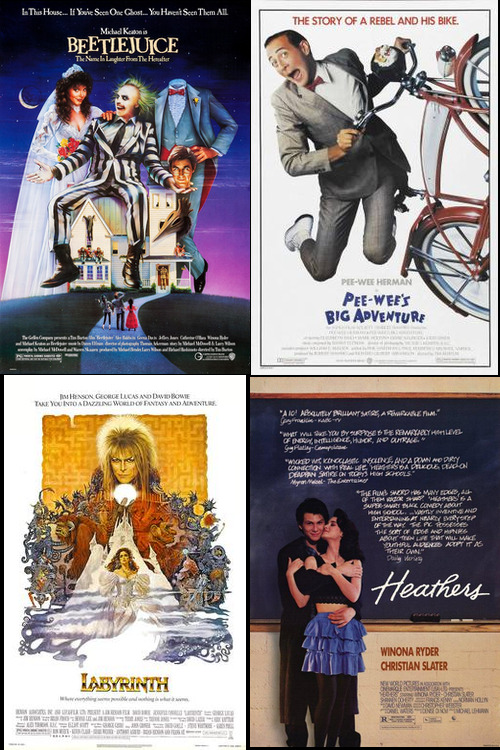
A selection of 1980s cult classic movie posters

The best 80s cult classics include The Goonies, Beetlejuice, They Live, Heathers, Labyrinth, Pee-wee’s Big Adventure, The Evil Dead, and Little Shop of Horrors — films that built passionate, enduring followings through sheer originality, quotability, and heart. Some were hits, some were flops, but all of them found their people.

The adventure and fantasy cults

Some 80s cult classics were beloved from the start and only grew. The Goonies (1985), Steven Spielberg and Richard Donner’s kids-on-a-treasure-hunt adventure, is the ultimate childhood-nostalgia film — meet its ragtag crew in our Goonies characters guide. Jim Henson’s darkly beautiful fantasies Labyrinth (1986), starring David Bowie as the Goblin King, and The Dark Crystal (1982) underwhelmed on release but became touchstones for a generation of fantasy lovers.

Then there’s Tim Burton’s breakout weird-comedy double: Pee-wee’s Big Adventure (1985), which introduced the world to the manic man-child (see our Pee-wee Herman profile), and Beetlejuice (1988), whose “ghost with the most” became an instant icon — get the details in our Beetlejuice character breakdown.

The dark and satirical cults

The 80s cult canon also has a sharp, subversive streak. John Carpenter’s They Live (1988) wrapped anti-consumerist satire in a sci-fi wrestler brawl and gave us the immortal “I have come here to chew bubblegum and kick ass.” Heathers (1988) turned the teen movie pitch-black, with Winona Ryder and Christian Slater skewering high-school cruelty in a way that felt genuinely dangerous. And Sam Raimi’s The Evil Dead (1981) and its wilder sequel launched a splatter-comedy empire from almost nothing.

Even a musical made the cut: Little Shop of Horrors (1986), with its man-eating alien plant, became a beloved midnight-movie staple.

Remember when finding another person who loved the same obscure cult movie you did felt like meeting a member of a secret society — an instant, unspoken bond over a film most people had never heard of?

What makes a cult classic

A cult classic isn’t measured by opening weekend. It’s measured by devotion — by the fans who quote every line, host the screenings, wear the shirts, and press the movie into their friends’ hands for decades. The 80s produced so many because it was a decade of bold, strange, personal filmmaking, where a movie could be too weird for the mainstream and find its true home on cable, video, and midnight screens. These films didn’t need to be everyone’s favorite. They just needed to be somebody’s favorite, forever.

FAQ

What is a cult classic movie?
A film that develops a passionate, dedicated fanbase over time, often after modest or poor initial box-office performance — beloved intensely by a devoted audience rather than universally popular.

What are the best 80s cult classics?
Favorites include The Goonies, Beetlejuice, They Live, Heathers, Labyrinth, Pee-wee’s Big Adventure, and The Evil Dead, among many others.

Was The Goonies a hit or a cult film?
Both — it did solid business in 1985 but its true legacy is as a cherished cult favorite, endlessly rewatched by fans who grew up with it.

Why did the 80s produce so many cult classics?
The decade’s bold, offbeat filmmaking, combined with the rise of cable TV and home video, gave strange and original movies the chance to find devoted audiences long after their theatrical runs.

What’s the difference between a cult classic and an underrated movie?
An underrated movie simply deserves more recognition, while a cult classic has already earned an intensely loyal following — though many films are both.


Plenty of cult favorites came straight from the horror aisle — see our best 80s horror movies roundup, or hunt for One-Eyed Willy’s treasure with the Goonies characters.

Some 80s metal bands ran on chemistry. Dokken ran on friction — the constant, crackling tension between a frontman and a guitar hero who could barely stand each other and made some of the decade’s sharpest metal anyway. When it comes to Dokken, the fighting wasn’t a footnote. It was practically the engine.

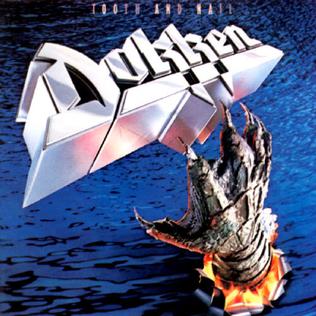
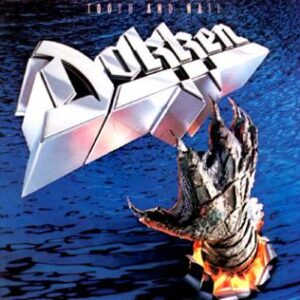
Dokken – Tooth and Nail (1984) album cover

Dokken is the American hard-rock band, led by singer Don Dokken and featuring guitar virtuoso George Lynch, that scored a string of hits in the mid-80s including “Alone Again,” “In My Dreams,” and “Dream Warriors.” Melodic, muscular, and famously combustible, they were one of the era’s most respected metal acts.

The albums that made their name

Dokken’s classic lineup — Don Dokken on vocals, George Lynch on lead guitar, Jeff Pilson on bass, and Mick Brown on drums — hit their stride with Tooth and Nail (1984), which sold over a million copies in the U.S. on the back of hits like “Just Got Lucky,” “Alone Again,” and “Into the Fire.” They followed it with Under Lock and Key (1985) and their most successful album, Back for the Attack (1987), which reached No. 13 on the U.S. charts.

What set Dokken apart was craft. Lynch was one of the most gifted guitarists of the entire scene — a genuine virtuoso whose playing gave the band a heavier, more technical edge than a lot of their glam peers. Don Dokken’s melodic vocals on top made for a combination that critics and musicians took seriously.

The Nightmare on Elm Street connection

Here’s a great piece of crossover 80s trivia: Dokken recorded “Dream Warriors” for the soundtrack of A Nightmare on Elm Street 3: Dream Warriors (1987). The band even appeared in the song’s horror-themed music video, doing battle with Freddy Krueger himself. It’s a perfect collision of two pillars of 80s pop culture — the hair-metal band and the slasher icon — and it introduced Dokken to a whole new audience of horror fans.

Remember when the tension in a band was so well-known it became part of the story? The push-and-pull between Don Dokken and George Lynch was legendary, fueling both the music and years of breakups and reunions. It’s the classic case of a group whose members clashed constantly and produced something great in spite of — or because of — it.

Why Dokken endures

Dokken proved that the 80s metal scene had real musicianship in it, not just hairspray and hooks. George Lynch is still revered as a guitarist’s guitarist, Don Dokken’s melodies still hold up, and the band’s catalog remains a favorite among fans who want their glam-era metal with a little more bite. The feud may have cost them stability, but it never cost them respect. Sometimes the bands that can’t get along leave the most interesting fire behind.

Lynch: a guitar hero’s guitar hero

If there’s one thing that lifts Dokken above the pack, it’s George Lynch. Widely regarded as one of the most gifted guitarists of the entire 80s metal scene, Lynch played with a fluid, aggressive, instantly identifiable style that earned him worshipful respect from other players — his instrumental showcase “Mr. Scary” became a staple of guitar-nerd legend. His custom “Kamikaze” guitars and his fretboard fireworks gave Dokken a technical credibility that a lot of glossier bands couldn’t match. It’s part of why the Don Dokken–George Lynch friction was so frustrating to fans: two enormously talented people who made something special together and couldn’t stop clashing. Lynch went on to a long, respected career, and to this day he’s a name that makes serious guitarists sit up. In Dokken, the fireworks weren’t just the feuding — they were coming off the fretboard, too.

FAQ

Who are the key members of Dokken?
Singer Don Dokken and lead guitarist George Lynch, alongside bassist Jeff Pilson and drummer Mick Brown, made up the classic lineup.

What is Dokken’s most successful album?
Back for the Attack (1987), which reached No. 13 on the U.S. charts.

What is the Nightmare on Elm Street connection?
Dokken recorded “Dream Warriors” for the 1987 film A Nightmare on Elm Street 3 and appeared in its horror-themed music video.

Why is Dokken known for a feud?
The long-running friction between Don Dokken and guitarist George Lynch was famous, driving repeated breakups and reunions throughout the band’s career.


Dokken brought the musicianship — meet more of the scene in our best 80s hair bands guide, or slink over to Whitesnake next.

Purple everything. A voice that could leap from a whisper to a scream in a single line. A guitar he played like his life depended on it — and a mind that heard every other instrument on the record, too. In a decade full of giants, Prince stood apart because he wasn’t just a star. He was a one-man musical universe, and in 1984 he unleashed the album that made the world understand it.

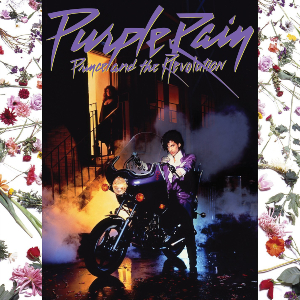
Prince – Purple Rain (1984) album cover

Prince is the singular musical genius whose 1984 album and film Purple Rain made him one of the defining icons of the 80s, powered by “When Doves Cry,” “Let’s Go Crazy,” and the title track. He wrote it, performed it, and often played nearly every instrument himself.

Purple Rain: album, film, phenomenon

Purple Rain, released in June 1984 with his band the Revolution, was the most commercially and culturally impactful release of Prince’s career. Paired with the semi-autobiographical film of the same name, it didn’t just top the charts — it shaped the fashion and sound of the rest of the decade. The album gave the world “Let’s Go Crazy,” the epic title ballad, and the extraordinary lead single “When Doves Cry,” which became Prince’s first Billboard Hot 100 No. 1, sat there for five weeks, and was the top-selling single of all of 1984.

The song with no bassline

Here’s the detail that reveals Prince’s genius. “When Doves Cry” has no bass line — almost unheard of for an 80s dance song, which typically live or die on their bass. Prince wrote and recorded the track after every other song on the album was finished, playing all the instruments himself. There originally was a bassline, but after a conversation with singer Jill Jones, Prince decided the song sounded too conventional with it, and stripped it out entirely. That fearless, rule-breaking instinct — cutting the one element everyone assumed a hit needed — is exactly what made him a genius rather than just a hitmaker. And it still went to No. 1.

A one-man band

What truly set Prince apart was his complete musical self-sufficiency. He was a virtuoso guitarist, but also a gifted player of keyboards, drums, bass, and more — frequently writing, arranging, producing, and performing entire songs entirely on his own. He was staggeringly prolific, pouring out music at a pace few artists could match. He also won an Academy Award for the Purple Rain score, a rare crossover honor. In an industry built on collaboration, Prince proved one person could contain a whole band, a whole studio, a whole sound.

Remember when “Purple Rain” would come on and the whole room would go quiet for that guitar solo — the one that builds and builds until it feels like the ceiling might lift off? Prince could make a stadium feel like an intimate confession and a private ballad feel like a revolution, sometimes in the same song.

Why Prince endures

Prince’s 80s peak established him as one of the most talented and original musicians of any era — a boundary-dissolving artist who blended funk, rock, pop, and soul into something entirely his own, and who answered to no one’s rules but his own. Purple Rain remains a landmark, and Prince remains the standard for pure, self-contained musical genius. There was truly no one else like him.

FAQ

What is Prince’s most famous album?
Purple Rain (1984), the soundtrack to his film of the same name and the most impactful release of his career.

What’s unusual about “When Doves Cry”?
It has no bass line — Prince removed it to make the song less conventional, a bold choice for an 80s dance track — and he played all the instruments himself.

Did Prince really play all the instruments?
Frequently, yes — he was a multi-instrumentalist who often wrote, produced, and performed entire songs on his own.

Did Prince win an Oscar?
Yes — he won an Academy Award for the Purple Rain score.

What was the Purple Rain film?
A 1984 semi-autobiographical musical drama starring Prince as a struggling Minneapolis musician; its soundtrack became one of the defining albums of the decade.

What are Prince’s biggest 80s songs?
“When Doves Cry,” “Let’s Go Crazy,” “Purple Rain,” “1999,” “Little Red Corvette,” and “Kiss” are among his most iconic.


Prince was one of a kind — explore more of the decade in our 80s pop culture guide, or revisit the King of Pop, Michael Jackson, next.

An announcer bellows your name, you leap out of your studio seat screaming, sprint down the aisle high-fiving strangers, and take your place at Contestants’ Row — all for the chance to guess what a can of beans costs. In the 80s, The Price Is Right turned the price of ordinary groceries into the most joyful hour on daytime television.

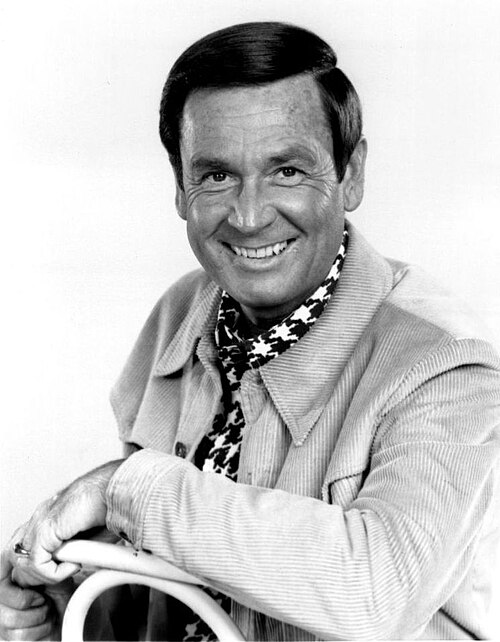
Bob Barker, longtime host of The Price Is Right

The Price Is Right, hosted by Bob Barker, dominated 80s daytime on CBS. Contestants guess the prices of everyday products and prizes across a series of pricing games, competing to reach the Showcase Showdown and win cars, trips, and cash. Already running since 1972, the show hit its beloved stride in the 80s and became a permanent fixture of American mornings.

“Come on down!” and Contestants’ Row

The whole ritual started with those three words. Announcer Rod Roddy would call four names, and the studio would explode as contestants bolted to Contestants’ Row to bid on a prize — closest without going over got called up on stage to play a pricing game. That opening jolt of pure, screaming excitement set the tone: this was a show about ordinary people getting an extraordinary shot at winning big, and the audience’s joy was half the entertainment.

The pricing games everybody knew

The Price Is Right wasn’t one game — it was dozens, each with its own props and rules, and viewers knew them all. Plinko, introduced in 1983, became the most famous: drop a chip down a peg-covered board and pray it lands in the big-money slot. There was also Cliff Hangers with its little yodeling mountain climber, the Big Wheel contestants spun trying to hit a dollar without busting, and the grand Showcase Showdown finale where finalists bid on lavish prize packages. The variety is exactly why you could watch every day and never get bored.

Remember when a contestant on Plinko would let go of the chip at the top of the board and the entire studio would lean and sway with it, groaning and screaming as it bounced from peg to peg — before dropping into a slot and either winning a fortune or almost nothing? That single pricing game became so iconic it now stands for the whole show.

Bob Barker, the eternal host

For 80s viewers, The Price Is Right was Bob Barker — tanned, silver-haired, unfailingly smooth, guiding contestants through their nerves with a microphone that famously tapered to a point. By the 80s he was already a daytime institution, and he closed every show with his signature plea to “help control the pet population — have your pets spayed or neutered,” a line he made a national public-service catchphrase. He hosted the show for an astonishing 35 years.

Why The Price Is Right is still on

The formula proved close to immortal. The Price Is Right is the longest-running game show in American television history, still airing today, though Barker eventually passed the microphone to Drew Carey. But for a whole generation, the 80s version — Barker, Rod Roddy’s “Come on down!”, Plinko, and the Big Wheel — is the definitive one, comfort-food TV at its very best.

FAQ

Who hosted The Price Is Right in the 80s?
Bob Barker, who hosted the show for 35 years before handing it to Drew Carey in 2007.

What is “Come on down!”?
The catchphrase announcer Rod Roddy used to call selected audience members to Contestants’ Row to start bidding.

When was Plinko introduced?
Plinko debuted in 1983 and became the show’s most iconic pricing game.

How does the show work?
Contestants guess the prices of products and prizes through a series of pricing games, advancing toward the Showcase Showdown to win big prizes like cars and trips.

What was Bob Barker’s famous sign-off?
He ended each episode urging viewers to “help control the pet population — have your pets spayed or neutered.”

Is The Price Is Right still on the air?
Yes — it’s the longest-running game show in U.S. television history and continues today.


The Price Is Right was daytime royalty among the great 80s game shows — see them all there, or spin over to Wheel of Fortune next.

Scroll to top