Year: 2026

That drum fill. You know the one — the slow, brooding build of “In the Air Tonight” that erupts, around three and a half minutes in, into the most air-drummed moment in music history. Phil Collins spent the 80s doing the seemingly impossible: being everywhere at once, on the radio, on MTV, behind the drum kit and out front at the microphone, and racking up more hits than just about anyone alive.

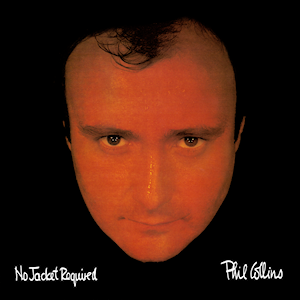
Phil Collins – No Jacket Required (1985) album cover

Phil Collins is the Genesis drummer who became one of the biggest solo stars of the 80s, with hits like “In the Air Tonight,” “Against All Odds,” and “Sussudio” — scoring more US top-40 singles in the decade than any other artist. He was, quite simply, unavoidable, in the best possible way.

From behind the kit to center stage

Collins launched his solo career in 1981 with Face Value, an album shaped by the pain of his first marriage breakup and a deep love of soul music. Its lead single, “In the Air Tonight,” became an instant classic, famous for its haunting slow build and that iconic gated-reverb drum sound — a sonic signature that would come to define 80s production. From there the hits simply poured out: “Against All Odds (Take a Look at Me Now),” the theme to a 1984 film, became his first US No. 1 (the first of seven he’d score as a solo artist). No Jacket Required (1985) brought “Sussudio” and “One More Night,” and the decade closed with the chart-topping “Another Day in Paradise” (1989).

The most 80s day imaginable

Here’s the fact that captures just how in-demand Phil Collins was. On July 13, 1985, for the globe-spanning Live Aid benefit, Collins performed at the concert in London — and then boarded a Concorde jet, flew across the Atlantic, and performed again at the concert in Philadelphia, all on the same day. Playing two continents in one afternoon is about the most 80s-superstar thing a person could possibly do, and it perfectly summed up his ubiquity in that decade. Nobody was working harder or turning up in more places.

Doing it all at once

What made Collins remarkable was the sheer volume and range of his output. He was simultaneously fronting the band Genesis to blockbuster success (their Invisible Touch was a smash in 1986), running a hugely successful solo career, drumming, songwriting, producing, and collaborating with other artists. That combined workload gave him more US top-40 singles than any other artist across the entire 1980s — a staggering stat that speaks to how completely he saturated the decade’s airwaves.

Remember when “In the Air Tonight” would come on and everyone in the room would go silent, waiting, bracing… and then absolutely lose it on that drum fill? Decades later it still gets the same reaction. Collins built a moment so perfect it became a shared cultural reflex.

Why Phil Collins endures

Phil Collins’ 80s dominance was built on craft, versatility, and an almost superhuman work rate — songs that ranged from moody and confessional to bright and irresistibly poppy, all delivered with a distinctive voice and an unmistakable drum sound. His biggest hits remain radio and playlist staples, and that “In the Air Tonight” fill is permanently lodged in the collective memory. For sheer, sustained presence, few artists ruled the decade quite like he did.

FAQ

What are Phil Collins’ biggest 80s hits?
“In the Air Tonight,” “Against All Odds,” “Sussudio,” “One More Night,” and “Another Day in Paradise.”

What band was Phil Collins in?
Genesis, where he was the drummer and later lead singer, while simultaneously running a hugely successful solo career.

What’s special about “In the Air Tonight”?
Its slow, brooding build erupts into one of the most famous drum fills in music history, and its gated-reverb drum sound became a defining 80s production signature.

Did Phil Collins really play Live Aid on two continents?
Yes — on July 13, 1985, he performed in London, then flew by Concorde to perform again in Philadelphia the same day.

How many No. 1 solo hits did Phil Collins have?
Seven US No. 1 singles as a solo artist, beginning with “Against All Odds” in 1984.

Why was Phil Collins so dominant in the 80s?
He scored more US top-40 singles than any other artist of the decade, thanks to his solo career, his work with Genesis, and constant collaborations.


Phil Collins was everywhere in the 80s — explore more of the decade in our 80s pop culture guide, or meet the thoughtful Tears for Fears next.
Plenty of filmmakers made movies about teenagers in the 80s. John Hughes made movies that took teenagers seriously — that treated a high schooler’s heartbreak, embarrassment, and rebellion as worthy of the same care a prestige drama gave to adults. That single act of respect made him the defining voice of a generation, and his films are still the gold standard for coming-of-age cinema.

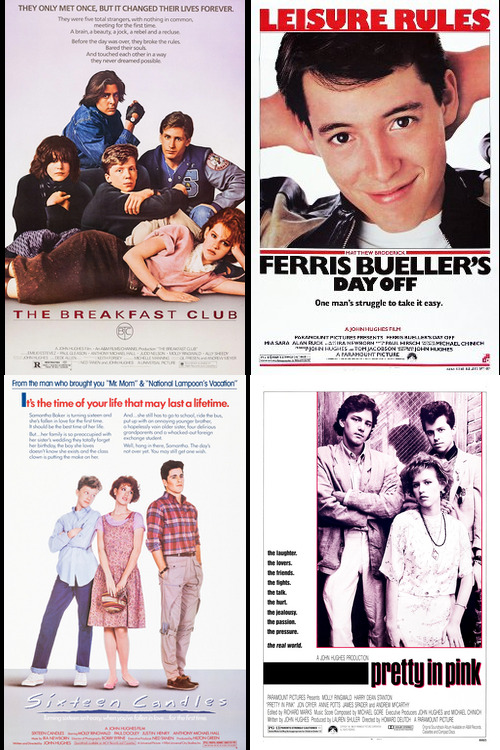
A selection of John Hughes 1980s movie posters

John Hughes was the writer-director behind the definitive 80s teen movies — Sixteen Candles, The Breakfast Club, Weird Science, and Ferris Bueller’s Day Off — and the writer of others like Pretty in Pink and National Lampoon’s Vacation, before pivoting to family comedies like Uncle Buck and Home Alone. In a five-year run, he essentially invented the modern teen film.

The films he wrote and directed

Hughes’s directorial run is a murderers’ row of 80s classics. He kicked off with Sixteen Candles (1984), a sweet, sharp comedy that made a star of Molly Ringwald. Then came The Breakfast Club (1985) — five students, one Saturday detention, and a script that turned teenage archetypes into fully human beings. You can meet those five in our Breakfast Club characters guide.

He followed with Weird Science (1985), a wild sci-fi comedy, and then Ferris Bueller’s Day Off (1986), the ultimate skip-school fantasy and arguably his most beloved film — get the full story in our Ferris Bueller profile. Later he stretched beyond teens with Planes, Trains and Automobiles (1987), She’s Having a Baby (1988), and Uncle Buck (1989), proving his gift for character worked at any age.

The films he wrote (but didn’t direct)

Hughes was just as influential from the writer’s chair. He wrote National Lampoon’s Vacation (1983), launching the Griswold family saga. And he wrote — while handing directing duties to his collaborator Howard Deutch — two more cornerstones of the teen canon: Pretty in Pink (1986) and Some Kind of Wonderful (1987). Both carry his unmistakable fingerprints: the class divides, the aching crushes, the outsider heroes.

The Brat Pack and the Hughes sound

Hughes built a loose repertory company of young actors — Molly Ringwald, Anthony Michael Hall, and others often grouped with the “Brat Pack” — and gave them dialogue that actually sounded like how kids talked. He also had an unerring ear for music, filling his soundtracks with new-wave and alternative tracks (Simple Minds’ “Don’t You (Forget About Me)” from The Breakfast Club is forever his). The look, the feel, the sound of the 80s teen movie is largely his invention.

Remember when a movie finally showed a version of high school that felt true — the cliques, the crushes, the sense that your small problems were enormous? That recognition is the Hughes magic.

Shermer, Illinois: one shared universe

Here’s a detail that rewards Hughes obsessives: many of his films are set in the same fictional Chicago suburb, Shermer, Illinois. It’s a loose shared universe — the world of The Breakfast Club, Ferris Bueller, Sixteen Candles, and Weird Science all overlap in the same idealized-yet-real Midwestern town. Hughes was fiercely loyal to the Chicago area, shooting on location there rather than faking it in Los Angeles, and that authenticity of place is a big part of why his movies feel so lived-in.

He was also astonishingly prolific. Beyond the teen canon, he kept the Griswold family going as a writer with National Lampoon’s European Vacation (1985) and the perennial National Lampoon’s Christmas Vacation (1989), wrote The Great Outdoors (1988), and then engineered the biggest hit of his career from the producer’s chair: Home Alone (1990), which became a global phenomenon. He worked so much that he sometimes wrote under the pen name Edmond Dantès.

The legacy of a quiet giant

Hughes largely stepped back from Hollywood in the 1990s, retreating from the spotlight even as his influence only grew. Nearly every teen comedy, coming-of-age drama, and “one crazy day” high-school movie made since is chasing something he did first and better. Filmmakers and actors cite him constantly; the term “a John Hughes movie” is itself shorthand for a whole tone — funny, warm, aching, and true. When he died suddenly in 2009, the tributes made clear how deeply his films had lodged in people’s hearts. He didn’t just make hits; he made the movies a generation grew up inside.

Why his movies endure

John Hughes, who passed away in 2009, left behind films that refuse to age because their subject never changes: the universal experience of being young, uncertain, and desperate to be understood. New generations discover The Breakfast Club and Ferris Bueller and find themselves in them, exactly as their parents did. He didn’t just capture the 80s teenager — he captured the teenager, period. That’s why his movies are still passed down like family heirlooms.

FAQ

What movies did John Hughes direct?
He directed Sixteen Candles (1984), The Breakfast Club (1985), Weird Science (1985), Ferris Bueller’s Day Off (1986), Planes, Trains and Automobiles (1987), She’s Having a Baby (1988), and Uncle Buck (1989).

What movies did John Hughes write but not direct?
Among others, he wrote National Lampoon’s Vacation (1983), Pretty in Pink (1986), and Some Kind of Wonderful (1987) — the latter two directed by Howard Deutch — plus the smash hit Home Alone (1990).

What is John Hughes best known for?
Defining the 80s teen movie with honest, funny, emotionally real coming-of-age stories, especially The Breakfast Club and Ferris Bueller’s Day Off.

Who were the actors in John Hughes movies?
He frequently worked with young stars like Molly Ringwald and Anthony Michael Hall, part of the group often called the Brat Pack, along with actors like Matthew Broderick and John Candy.

Did John Hughes make family movies too?
Yes. He later focused on family comedies, writing and producing Home Alone (1990) and directing Uncle Buck (1989), broadening his range beyond teen films.


Hughes wrote the rulebook for the whole genre — read our 80s teen movies roundup next, or step into detention with the Breakfast Club characters.

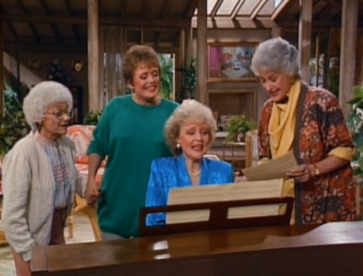
Four women of a certain age sharing a Miami ranch house, gathered around the kitchen table at 2 a.m. over yet another cheesecake, trading insults sharp enough to draw blood and stories filthy enough to make you gasp. The Golden Girls took a group television had always ignored — older women — and made them the funniest, warmest, most quotable people on the air.

The Golden Girls (1985) cast photo

The Golden Girls premiered on NBC on September 14, 1985, and ran for seven seasons until 1992. It followed four mature single women living together in Miami: substitute teacher Dorothy, naive Rose, man-hungry Blanche, and Dorothy’s razor-tongued mother Sophia. Created by Susan Harris, it was a massive hit and a genuine landmark — a top-rated comedy built entirely around women over fifty.

The four-woman engine

The chemistry was the whole show. Bea Arthur’s Dorothy Zbornak was the tall, dry, long-suffering brains of the group. Betty White’s Rose Nylund was the sweet, dim naïf forever telling baffling stories about her hometown of St. Olaf. Rue McClanahan’s Blanche Devereaux was the Southern belle with an endless dating life and no shame about it. And Estelle Getty’s Sophia Petrillo — Dorothy’s tiny, ancient mother, fresh from a stroke that “broke the part of the brain that censors what you say” — fired off the cruelest and best lines in the house. Four archetypes, perfectly cast, bouncing off each other for seven years.

It made “old” funny and fearless

What was quietly radical about The Golden Girls is that it never treated its characters as past their prime. These women dated, argued about sex, chased careers, buried husbands, took in the world’s problems, and refused to be invisible. The show tackled subjects a lot of “younger” sitcoms wouldn’t touch, and it did it while being flat-out hilarious. A generation of viewers grew up wanting to age exactly like them.

Remember when the four of them would end up around the kitchen table in their robes in the middle of the night, working through a crisis over a cheesecake — and somebody would launch into a St. Olaf story while Sophia said “Picture it: Sicily, 1922…”? That table was the emotional center of the whole show.

Sophia’s “Picture it” and other permanent quotes

Few sitcoms have left behind as many catchphrases. Sophia’s stories always opened “Picture it: Sicily…” Blanche purred about her many gentleman callers. Rose derailed every conversation with St. Olaf nonsense. And Dorothy’s exasperated “Rose…” could carry an entire scene. The writing was fast, filthy, and generous — jokes that respected the audience’s intelligence and the characters’ dignity at the same time.

Why The Golden Girls still shines

Decades on, The Golden Girls has only gotten bigger — beloved by new generations who found it in reruns and streaming, quoted endlessly, its four leads treated as icons. It proved that the audience for smart, warm, dirty comedy about friendship has no age limit. Thank you for being a friend, indeed.

FAQ

When did The Golden Girls air?
It premiered September 14, 1985, on NBC and ran for seven seasons, ending in 1992.

Who were the four Golden Girls?
Dorothy (Bea Arthur), Rose (Betty White), Blanche (Rue McClanahan), and Sophia (Estelle Getty).

Where was the show set?
In a shared house in Miami, Florida.

Who created The Golden Girls?
Susan Harris, an acclaimed sitcom writer-producer also known for Soap.

Why was the show considered groundbreaking?
It was a top-rated network comedy centered entirely on women over fifty, treating them as vibrant, funny, and fully alive at a time TV usually sidelined them.

What was Sophia’s catchphrase?
She began her stories with “Picture it: Sicily…” followed by a year, before launching into a tall tale.


The Golden Girls was one jewel of the 80s TV golden age — see the rest of the crown in our 80s pop culture icons guide, or pull up a barstool at Cheers next.

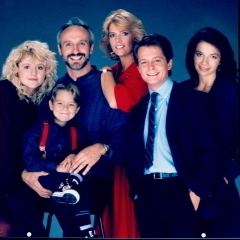
Two former flower children raising a teenage son who idolized Richard Nixon, carried a briefcase to high school, and read The Wall Street Journal for fun. Family Ties built its whole comedy on the funniest generational flip of the decade: the rebellious kid rebelling by becoming a Reagan Republican.

Family Ties (1982) cast photo

Family Ties premiered on NBC on September 22, 1982, and ran for seven seasons until 1989. It followed the Keaton family of suburban Ohio — ex-hippie parents Steven and Elyse and their money-loving, conservative eldest son Alex. Created by Gary David Goldberg, it captured the exact moment America pivoted from the 60s to the 80s, and it turned Michael J. Fox into a superstar.

The kid who stole the whole show

Alex P. Keaton wasn’t supposed to be the lead. The show was pitched around the parents — Steven (Michael Gross) and Elyse (Meredith Baxter), decent liberals bewildered by the Reagan era. But Michael J. Fox’s Alex, with his sweater vests, his worship of wealth, and his rapid-fire wit, was so magnetic that the writers followed the laughs. Within a season Family Ties was Alex’s show, and audiences loved him for it. It’s one of TV’s great examples of a supporting character quietly taking over.

Michael J. Fox becomes the biggest kid in America

Family Ties made Fox the definitive young star of the 80s. He was so beloved that he shot Back to the Future at night while filming the sitcom by day — sleeping a few hours in between — because producers wanted him badly enough to work around the schedule. The result: for a stretch in the mid-80s he had the number-one movie and one of the number-one shows in the country at the same time. Alex P. Keaton and Marty McFly, running in tandem.

Remember when an episode would suddenly turn serious — Alex losing a friend, or grieving, or facing something real — and the laugh track just stopped? Family Ties pioneered the “very special episode,” and Fox could pivot from punchline to heartbreak in the same scene without missing a beat.

A whole decade in one living room

What made Family Ties more than a gag machine was its premise: it was literally about America changing. The parents were the idealistic 60s; Alex was the ambitious, money-minded 80s; and the show let them argue it out around the dinner table every week with genuine affection on both sides. It didn’t pick a winner. It just made the collision funny — and, often, unexpectedly moving.

Why Family Ties still holds

The show’s a snapshot of a country mid-transformation, anchored by one of the most charming performances of the decade. It launched Michael J. Fox into the stratosphere, gave the Reagan years their sharpest sitcom mirror, and proved a comedy could break your heart when it wanted to. That theme song — “Sha la la la” — still cues up the whole warm, wood-paneled world in an instant.

FAQ

When did Family Ties air?
It premiered September 22, 1982, on NBC and ran for seven seasons, ending in 1989.

Who played Alex P. Keaton?
Michael J. Fox, in the breakout role that made him a star and won him multiple Emmy Awards.

What was the show’s central joke?
Ex-hippie liberal parents raising a proudly conservative, money-obsessed son — a comic reversal of the usual generation gap.

Who created Family Ties?
Gary David Goldberg, who based elements of the show on his own generational experience.

Did Michael J. Fox really film Back to the Future at the same time?
Yes — he shot the 1985 movie at night while filming Family Ties during the day, holding down both at the peak of his fame.

What is a “very special episode”?
A term popularized partly by Family Ties for an episode that drops the comedy to tackle a serious subject like grief, addiction, or loss.


Family Ties was one cornerstone of 80s TV — visit the rest of the neighborhood in our 80s pop culture icons guide, or pull up a barstool at Cheers next.

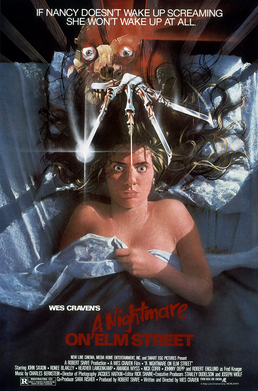
The red-and-green striped sweater. The battered fedora. And that glove — four blades where fingers should be, scraping down a pipe. Freddy Krueger figured out the one thing you couldn’t run from: sleep. Every kid who saw him spent at least one night fighting to keep their eyes open, and that’s exactly the power the character had.

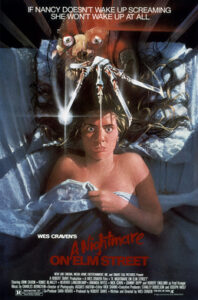
A Nightmare on Elm Street (1984) movie poster

Freddy Krueger is the burned, wisecracking dream-killer of Wes Craven’s A Nightmare on Elm Street (1984), played by Robert Englund — an undead murderer who hunts teenagers inside their own dreams. He became one of the defining horror icons of the 80s, and the movie that introduced him built an entire studio.

A monster you couldn’t wake up from

Craven’s masterstroke was the premise: Freddy attacks you when you’re asleep, and if he kills you in the dream, you die for real. There’s no hiding, no locking the door, no staying up forever. That turned an ordinary slasher into something genuinely primal — a villain who lives in the one place you have to go every single night.

He’s identified instantly by his uniform: the burned, disfigured face, the dirty striped sweater, the brown fedora, and the homemade clawed glove. It’s one of the most recognizable silhouettes in movie history.

The audition that made the monster

Craven has said he struggled to cast Freddy — he couldn’t find an actor with the right menace. Then Robert Englund walked in. Craven noted that Englund “wasn’t as tall as I’d hoped” and had a baby face, but impressed him with a willingness to go to the dark places in his mind. Englund understood Freddy — the cruelty, the sick sense of humor — and turned him into a character who was terrifying and weirdly charismatic at once.

Remember when A Nightmare on Elm Street gave a young unknown named Johnny Depp his very first film role — as one of Freddy’s teenage victims? The movie didn’t just launch a monster. It launched a movie star, in his debut.

The house that Freddy built

A Nightmare on Elm Street was made for around $1.1 million and became one of the first hits for a scrappy young company called New Line Cinema — which grew so successful off the franchise that it earned the nickname “The House That Freddy Built.” Sequel after sequel followed, and Freddy, with his one-liners and that scraping glove, became the wise-cracking face of 80s horror.

The empire the glove built

One movie became a machine. A Nightmare on Elm Street spawned a long run of sequels through the 80s and beyond, plus a TV anthology series (Freddy’s Nightmares) that Englund hosted in character. Freddy got so big he crossed over to battle the other titan of 80s horror in Freddy vs. Jason (2003) — the slasher-movie equivalent of a heavyweight title fight fans had argued about for years.

What kept the franchise alive where so many slashers fizzled was Freddy’s personality. Unlike the silent killers, Freddy talked — cracking sick jokes as he stalked his victims, turning each kill into a twisted piece of theater. Robert Englund leaned into it, making the monster weirdly magnetic even as he terrified you. That glove, that sweater, that fedora became one of the most merchandised, costumed, and instantly readable villains in movie history. Freddy Krueger didn’t just scare the 80s. He built a house on the fear — and never let anyone get a good night’s sleep again.

Why he endures

Plenty of 80s slashers came and went. Freddy stuck because he weaponized something universal — the fear of falling asleep — and because Robert Englund gave the monster a personality. Scary, funny, and impossible to outrun, Freddy Krueger turned bedtime into the most dangerous part of the day for a whole generation.

FAQ

Who plays Freddy Krueger?
Robert Englund, beginning with A Nightmare on Elm Street (1984) and across the franchise.

Who created Freddy Krueger?
Writer-director Wes Craven created the character for the 1984 film.

How does Freddy attack his victims?
He hunts teenagers inside their dreams — and if he kills you while you’re asleep, you die in real life.

Which future star had his debut in the film?
Johnny Depp made his film debut in A Nightmare on Elm Street as one of the teenage characters.


Freddy is the face of 80s horror — meet his rival in our Jason Voorhees profile, or browse the full 80s movie characters roundup next.

Exotic locations, glamorous yachts, sharp suits, and a frontman rising in slow motion out of a jungle river as the rain poured down. Other bands made music videos. Duran Duran made mini-movies — and in doing so, they turned MTV into their personal playground and became the biggest teen idols of the decade. If the 80s had a house band for pure style, this was it.

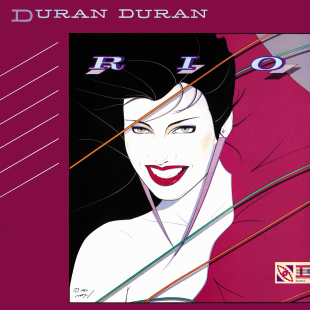
Duran Duran – Rio (1982) album cover

Duran Duran is the English New Romantic band whose sleek sound and cinematic music videos made them 80s superstars, behind hits like “Hungry Like the Wolf,” “Rio,” and “The Reflex.” They were pioneers of the video age and the ultimate stylish pop group.

Rio and the birth of a sensation

Duran Duran broke through globally with their 1982 album Rio and its unstoppable singles. “Hungry Like the Wolf” climbed to No. 3 on the Billboard Hot 100 and made them an international sensation, while the title track “Rio” and “Save a Prayer” cemented their sound — a slick, danceable blend of new wave, funk, and glossy pop. Fronted by Simon Le Bon with Nick Rhodes on keyboards and the three unrelated Taylors (John, Roger, and Andy), they had the looks, the hooks, and the timing to ride the new MTV era straight to the top.

The videos that changed the game

Here’s what set Duran Duran apart: they understood before almost anyone that in the MTV age, the video was the message. The band and their label poured real money and ambition into their clips — famously spending a fortune to fly to Sri Lanka to shoot lavish, exotic videos for “Hungry Like the Wolf” and “Save a Prayer.” The imagery was cinematic, glamorous, and unlike anything on TV. Those videos didn’t just promote the songs; they made Duran Duran look like international jet-setters and turned them into the most-watched band on the channel. They basically wrote the playbook for how to become a star through music video.

Riding the Second British Invasion

Duran Duran were at the very front of the “Second British Invasion” — the wave of stylish UK acts that conquered American MTV in the early-to-mid 80s. They kept the hits coming with “The Reflex” (a 1984 No. 1), “The Wild Boys,” and even a James Bond theme, “A View to a Kill” (1985), which also topped the chart. For a stretch, they were as big as pop got, complete with screaming fans and full-blown teen-idol mania.

Remember when your bedroom wall was papered with Duran Duran posters torn from magazines, and everyone had a favorite member? The band turned pop stardom into a full sensory experience — the sound, the style, the videos, the fashion — and a generation of fans was completely swept up in it.

Why Duran Duran endures

Duran Duran’s 80s peak made them one of the defining acts of the decade, not just for their catchy, sophisticated pop but for how completely they mastered the new visual language of music. They proved that image and substance could go hand in hand, and their best songs still sound effortlessly cool. The band that treated the music video as an art form remains one of the most stylish and influential acts the 80s ever produced.

FAQ

What are Duran Duran’s biggest 80s hits?
“Hungry Like the Wolf,” “Rio,” “The Reflex,” “Save a Prayer,” “The Wild Boys,” and the Bond theme “A View to a Kill.”

Why were Duran Duran’s music videos so important?
They were among the first to treat videos as cinematic mini-movies, shooting lavish, exotic clips that made them MTV superstars and defined the visual style of the era.

What is the “New Romantic” movement?
A stylish early-80s British scene, blending new wave music with glamorous fashion, of which Duran Duran were the biggest stars.

Who is the lead singer of Duran Duran?
Simon Le Bon, alongside keyboardist Nick Rhodes and the three unrelated Taylors — John, Roger, and Andy.

Did Duran Duran record a James Bond theme?
Yes — “A View to a Kill” (1985), which became a No. 1 hit and remains one of the most successful Bond themes.

What was the “Second British Invasion”?
The wave of British acts, led by bands like Duran Duran, that dominated American MTV and charts in the early-to-mid 1980s.


Duran Duran ruled the video age — explore more of the decade in our 80s pop culture guide, or meet the sneering Billy Idol next.

A dance show lives and dies by its music, and Dance Party USA had a sound as specific as a zip code. Turn it on any afternoon in the late 80s and you’d hear the thumping, heartbroken, impossibly catchy records that ruled the tri-state dance floors — the ones that made a studio full of teenagers move like the world was ending after school.

Biz Markie performs for the studio crowd, from a Dance Party USA promo reel

The music of Dance Party USA was built on freestyle and late-80s dance-pop — the club-born, drum-machine-driven sound that dominated the Philadelphia and New York area — mixed with chart hits that the show’s teen regulars danced and lip-synced to. It wasn’t just background. The songs were the show.

Freestyle was the heartbeat

If one genre owns Dance Party USA, it’s freestyle — the electronic, Latin-and-urban-flavored dance music that exploded out of New York and Philadelphia in the mid-80s. The show was one of freestyle’s great TV homes, giving the genre’s artists a floor full of kids who knew every beat. Acts associated with that scene — names like Safire, Trinere, Lisette Melendez, Angel, and Betty Dee — were the exact sound the show was built around.

Freestyle mattered here for a reason: it was regional. This was tri-state music, born in the same Philadelphia–New York corridor the show broadcast from, danced by kids who heard it on local radio and in local clubs. Dance Party USA didn’t import a national sound — it broadcast its own backyard.

The lip-sync spotlights

Beyond the group dancing, the show leaned on lip-sync performances — a regular grabbing the spotlight to “perform” a current hit straight to camera. That’s where the pop side came in. Fans still write in about specific numbers: the George Michael and Wham! ballads like “Careless Whisper” and “Last Christmas” that a confident regular could sell to the lens, sunglasses and all. Some guest recording artists appeared too, often lip-syncing to their records the way music-TV of the era commonly did.

Remember when you learned every word to a freestyle jam just from watching the dancers mouth it on TV? The show turned casual radio hits into floor anthems for a whole region.

The sound of a specific place and time

What makes the Dance Party USA soundtrack hit so hard in memory is how tightly it’s bolted to a moment. This is late-80s, early-90s tri-state dance music — freestyle’s golden age crossed with the biggest pop of the era, all filtered through a Philadelphia studio and a floor of real teenagers. Put any of those records on today and, for a certain generation, the studio lights come right back up.

FAQ

What kind of music did Dance Party USA play?
Mostly freestyle and late-80s dance-pop — the club-driven, drum-machine sound popular across the Philadelphia and New York area — along with current chart hits the regulars danced and lip-synced to.

What is freestyle music?
Freestyle is an electronic dance genre with Latin and urban roots that emerged from New York and Philadelphia in the mid-1980s, known for synths, drum machines, and emotional vocals. It was the signature sound of Dance Party USA.

Did artists perform live on Dance Party USA?
Guest recording artists appeared on the show, though performances were often lip-synced to recorded tracks, as was common for music television of the era.

What songs are associated with Dance Party USA?
The show is tied to freestyle records and late-80s dance-pop, plus the pop hits regulars used for lip-sync spotlights, such as George Michael and Wham! ballads.

Why was freestyle so big on the show?
Because freestyle was tri-state music. It was born in the same Philadelphia–New York region the show broadcast from, so it was the natural soundtrack for its audience of local teens.


The songs were only half of it — meet the Dance Party USA dancers who brought them to life, or go back to what Dance Party USA was.

Motorin’… what’s your price for flight? You know the song even if you never knew the band’s name. “Sister Christian” is one of the definitive power ballads of the decade — the swelling piano, the soaring chorus, the ache of a parent watching a kid grow up too fast. And nearly everything about how it came to be is a happy accident.

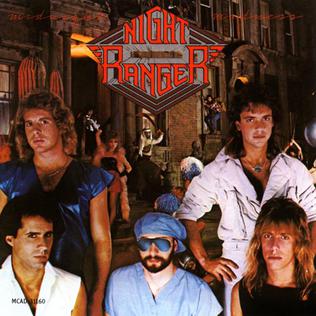
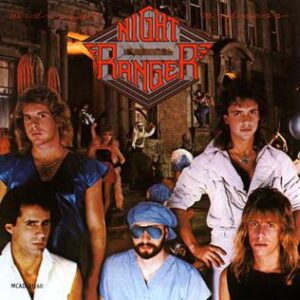
Night Ranger – Midnight Madness (1983) album cover

Night Ranger is the San Francisco hard-rock band, formed in 1982, best known for the 1984 power-ballad smash “Sister Christian” and the anthem “You Can Still Rock in America.” They mixed arena-rock muscle with real melodic craft, and their signature song has quietly become immortal.

The band and the breakthrough

Night Ranger formed in San Francisco in 1982 and rode the early-80s rock wave with a run of successful albums and hit singles. Their sound sat right in the sweet spot between hard rock and radio-friendly melody — twin lead guitars, big harmonies, and hooks built for stadiums. But the song that made them a household name was “Sister Christian,” from their 1983 album Midnight Madness, which climbed to No. 5 on the Billboard Hot 100 in 1984 and stayed on the charts for months.

The ballad written by the drummer — and misheard into history

Two great facts make “Sister Christian” special. First: it wasn’t written or sung by the frontman. It was written and sung by the band’s drummer, Kelly Keagy — a rarity in rock — as a heartfelt song about watching his younger sister grow up.

Second, and even better: the title itself is a mistake. Keagy’s sister’s real name was Christy, and the song was about her. But when bassist Jack Blades first heard Keagy singing it, he misheard “Christy” as “Christian” — and the misheard word stuck. One of the most famous ballad titles of the 80s exists because a bandmate didn’t quite catch the lyric. It’s the kind of lucky accident that great pop history is full of.

Remember when “Sister Christian” found a whole new life in the movies — its slow-burn build used to unforgettable, tension-soaked effect in a now-classic 90s film scene? A tender 80s ballad became a go-to for filmmakers, proof the song had a power that outlasted its era.

Why Night Ranger endures

Night Ranger might be filed by casual fans under their biggest hit, but “Sister Christian” is the kind of song that guarantees a band never gets forgotten — it plays at weddings, in movies, and on every 80s station, decade after decade. Add the charm of its backstory — the drummer who wrote it, the misheard title — and you’ve got one of the era’s most quietly enduring acts. The band still tours, and that piano intro still stops a room cold. Motorin’.

The players behind the hits

Night Ranger was stacked with serious talent, which is why they were more than a ballad band. Their twin-guitar attack featured Brad Gillis — a player good enough that he briefly toured with Ozzy Osbourne’s band in the early 80s, stepping in during one of metal’s most difficult moments — alongside Jeff Watson, giving the group real hard-rock firepower on anthems like “(You Can Still) Rock in America” and “Don’t Tell Me You Love Me.” Bassist Jack Blades went on to co-found the supergroup Damn Yankees in the 90s, scoring another big hit with “High Enough.” So the band behind that tender piano ballad was, under the hood, a group of accomplished rock musicians with connections running throughout the era. It’s a reminder that the acts casual fans file under a single song were often deeper and more skilled than their one hit suggests.

FAQ

What is Night Ranger’s biggest hit?
“Sister Christian,” which reached No. 5 on the Billboard Hot 100 in 1984.

Who wrote and sang “Sister Christian”?
Drummer Kelly Keagy wrote and sang it, about his younger sister — unusual for a band’s frontman not to take lead.

Why is the song called “Sister Christian”?
Keagy’s sister was actually named Christy; bassist Jack Blades misheard the word as “Christian,” and it stuck.

Where is Night Ranger from?
San Francisco, California, where the band formed in 1982.

What are Night Ranger’s other hits?
“(You Can Still) Rock in America” and “Sentimental Street” were among their other successful singles during their 1980s run.


Night Ranger gave us a timeless ballad — see the whole scene in our best 80s hair bands guide, or count down with Europe next.

If the Cabbage Patch Kids were the sweet, huggable face of the 80s toy craze, the Garbage Pail Kids were its evil twin — literally. Where one had dimpled cheeks and adoption papers, the other had a kid named Adam Bomb whose head was exploding into a mushroom cloud. And every 80s kid knew exactly which one was cooler.

Garbage Pail Kids Adam Bomb trading card (1985)

Garbage Pail Kids were a series of Topps sticker trading cards launched in 1985 as a deliberate parody of the wildly popular Cabbage Patch Kids dolls, featuring grotesque, darkly funny characters with punny names — a phenomenon that got the cards banned from schools and Topps sued by the doll’s rights holders. They were gross, they were brilliant, and they were exactly what kids wanted.

Born from a Cabbage Patch joke

The origin is perfect. When Topps was considering licensing the actual Cabbage Patch Kids for a card set, art director and future Pulitzer Prize winner Art Spiegelman — working with Mark Newgarden and Len Brown — hatched the idea of parodying them instead. Artist John Pound painted the first series of characters, each one a cartoonishly revolting send-up of the wholesome dolls.

The gimmick sealed it: every card had a character with two punny name variations — Adam Bomb and Blasted Billy, Nasty Nick and Evil Eddie — showing kids vomiting, oozing, smoking, and generally reveling in everything the Cabbage Patch Kids weren’t. They were stickers, so you could stick them everywhere, and the first series alone gave kids a whole cast of little monsters to collect and trade.

Banned, sued, and more popular for it

Naturally, the adults hated them — which naturally made kids love them more. Teachers banned the cards from many schools, citing them as classroom distractions and objecting to the grotesque art and the mischievous card backs that “encouraged” kids to skip school, stay up late, and misbehave.

Then came the lawsuit. In 1986, Original Appalachian Artworks — the company behind the Cabbage Patch Kids — sued Topps for infringement. Topps argued parody and fair use, but the court didn’t buy it, and the case settled out of court, with Topps agreeing to alter the characters’ appearance and change the logo so they less closely resembled the dolls. The controversy only made the cards more notorious.

Remember when trading a doubles for the one card you were missing felt like a high-stakes deal — and getting caught with them in class meant a one-way trip to the teacher’s desk drawer?

Why they became icons

Garbage Pail Kids tapped something real: kids’ delight in the gross, the forbidden, and the subversive. In a decade full of sanitized, marketing-driven toys, here was something that felt like it was made by the naughtiest kid in class. The craze cooled after the late-80s peak (a critically panned 1987 movie didn’t help), but the cards never truly died — Topps has revived the series again and again, and vintage cards are genuinely collectible today. Not bad for a bunch of stickers your teacher confiscated.

FAQ

What are Garbage Pail Kids?
Garbage Pail Kids are Topps sticker trading cards, first released in 1985, that parody the Cabbage Patch Kids with grotesque, darkly humorous characters and punny names.

Who created Garbage Pail Kids?
The concept came from Topps’ Art Spiegelman, working with Mark Newgarden and Len Brown, with artist John Pound painting the first series of characters.

Why were Garbage Pail Kids banned from schools?
Many schools banned them as classroom distractions and objected to their grotesque imagery and the mischievous messages printed on the card backs.

Did Cabbage Patch Kids sue Garbage Pail Kids?
Yes. In 1986, Cabbage Patch rights holder Original Appalachian Artworks sued Topps; the case settled out of court, with Topps agreeing to change the characters’ look and the logo.

Was there a Garbage Pail Kids movie?
Yes — a 1987 live-action film was released, but it was widely panned and is often cited as one of the worst movies of the era.


They existed only to mock their sweeter cousins — read about the Cabbage Patch Kids they parodied, or dig into more in our 80s pop culture icons guide.

A fresh-faced young redhead in a trench coat starts to dance, opens his mouth, and out comes this rich, deep, soulful baritone that sounds like it belongs to someone twice his age and size. That gap — between how Rick Astley looked and how he sounded — was the delightful surprise at the heart of one of the biggest songs of the entire decade. And little did anyone know the tune would get a wild second life decades later.

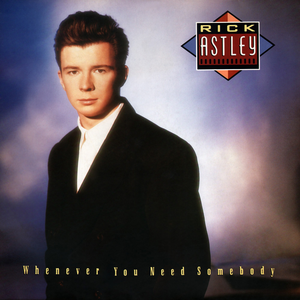
Rick Astley – Whenever You Need Somebody (1987) album cover

Rick Astley is the English singer whose 1987 debut single “Never Gonna Give You Up” became a worldwide No. 1, powered by his surprisingly deep, soulful voice and the hitmaking machine of producers Stock Aitken Waterman. It’s one of the most recognizable pop songs ever made.

A debut single that conquered the world

“Never Gonna Give You Up” was released in the summer of 1987 as the lead single from Astley’s debut album, Whenever You Need Somebody. Written and produced by the era’s dominant hit factory, Stock Aitken Waterman, it was a phenomenon: it spent five weeks at No. 1 in the UK, became the best-selling British single of the year, and hit No. 1 in more than 25 countries. It even won the 1988 Brit Award for Best British Single. For a debut, that’s about as big a splash as pop music allows.

The voice nobody expected

The magic of Rick Astley was the surprise. Here was this clean-cut, boyish 21-year-old, and yet his voice was this warm, full, soulful baritone that seemed to come from another era entirely. Audiences did a double-take — the sound simply didn’t match the face, in the most charming way. Combined with the irresistibly bouncy, danceable Stock Aitken Waterman production and a straightforward, heartfelt lyric about total devotion, it made for a song that was impossible to dislike. The concept itself reportedly came from producer Pete Waterman, after Astley spoke about his devotion to his girlfriend.

The song’s astonishing second life

Here’s the twist that makes Rick Astley’s story unique among 80s stars: decades after its release, “Never Gonna Give You Up” became one of the most famous internet phenomena of all time. “Rickrolling” — the prank of tricking someone into clicking a link that secretly leads to the song’s music video — turned a 1987 pop hit into a global running joke shared by millions who weren’t even born when it came out. Few 80s songs have found a bigger, weirder, more affectionate second act.

Remember when that video was just an earnest young guy in a trench coat doing his slightly awkward little dance — long before it became the internet’s favorite bait? The charm was always real, which is part of why the joke works: you genuinely don’t mind getting Rickrolled.

Why Rick Astley endures

Rick Astley’s 80s breakthrough gave the decade a genuinely great pop song and a voice that still stops people in their tracks. And thanks to its unexpected internet immortality, “Never Gonna Give You Up” is arguably more famous now than it was at its peak — a rare case of an 80s hit that keeps finding brand-new audiences. Astley has toured and recorded happily on the strength of it, fully in on the joke. Not bad for a song built on a simple, sincere promise.

FAQ

What is Rick Astley’s most famous song?
“Never Gonna Give You Up,” a 1987 worldwide No. 1 and his debut single.

Who produced “Never Gonna Give You Up”?
The hit-making British production trio Stock Aitken Waterman, the dominant pop factory of the era.

Why was Rick Astley’s voice surprising?
His deep, soulful baritone didn’t match his young, boyish appearance, creating a charming contrast that helped make the song a sensation.

What is “Rickrolling”?
An internet prank in which people are tricked into clicking a link that leads to the “Never Gonna Give You Up” music video, giving the song a huge second life.

How successful was “Never Gonna Give You Up” in 1987?
It hit No. 1 in more than 25 countries, was the UK’s best-selling single of the year, and won a Brit Award for Best British Single.

What are Rick Astley’s other 80s hits?
“Together Forever,” “Whenever You Need Somebody,” and “It Would Take a Strong Strong Man,” among others.


Rick Astley gave the 80s an immortal hit — explore more of the decade in our 80s pop culture guide, or read the story behind a-ha’s “Take On Me” next.

Scroll to top